
Vegetable
Celery
A low-calorie crunch for dogs and rabbits; the strings need care.
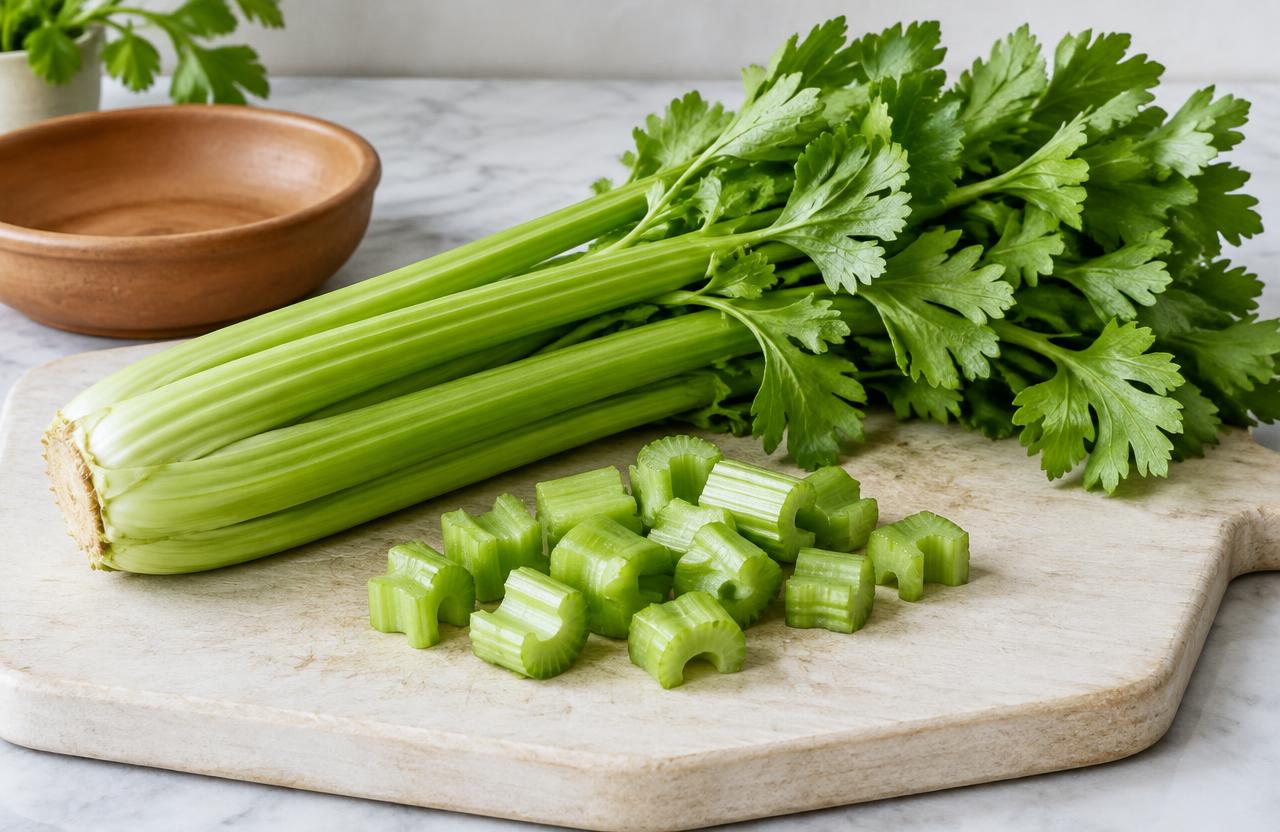
AI-generated editorial illustration; not a clinical demonstration or documentary photograph.
Who can eat it
Not suitable for
Benefits
- Very low calorie
- High water content
Risks
- Large or stringy pieces may be difficult to chew or swallow; cut across the fibres.
- Prepared dishes and dips may contain unsuitable ingredients.
- New foods can upset digestion; celery is not a treatment for urinary disease.
Preparation and serving
- Preparation
- Wash and chop into short lengths across the strings; leaves are fine for rabbits.
- Serving guidance
- Introduce a small amount within the species-appropriate diet; no universal piece count fits every animal.
Celery: texture and strings need attention
| Decision | Practical guidance |
|---|---|
| Whole long stalk | Cut across fibres before offering. |
| Plain short pieces | Supervise chewing and introduce gradually. |
| Dips or cooked mixtures | Assess all ingredients separately. |
| Rabbit feeding | Keep grass hay and the established ration primary. |
| Urinary changes | Not a diuretic remedy; arrange veterinary advice. |
This is general feeding information, not an individually formulated diet.
Celery: texture and strings need attention
Plain celery can be an occasional low-energy vegetable for some dogs and part of variety for certain herbivores. It does not replace a complete diet or the continuous suitable hay required by rabbits and guinea pigs.
Choose plain ingredients and treat the food as an optional addition rather than a substitute for the animal’s complete, species-appropriate everyday diet. Needs vary with species, age, body condition and health. Where the diet is restricted, the animal is growing, pregnant, or has ongoing illness, check with the treating veterinary team before making a routine change.
Preparation, portions and when to ask
Wash well and cut stalks across the fibres into short, manageable pieces to reduce stringy-texture and choking concerns. Offer gradually and observe chewing and digestion. Remove uneaten pieces before they spoil; consult a veterinarian for animals with swallowing or digestive disorders.
Make texture manageable without overstating benefits
Celery’s long stalks can encourage an animal to pull off a large piece rather than chew a small serving. Cut across the fibres into short pieces suited to the individual, and supervise the first offering. Do not present a whole stalk as a chew toy or use a stringy piece to test swallowing ability. Remove elastic bands, labels and packaging during preparation. Prepared celery sticks served with dips, stock or cooked meals need a separate ingredient assessment: the safety of plain celery does not extend to onion, garlic or a seasoned sauce.
For rabbits, celery is one possible component of varied greens, not a substitute for hay or a way to correct reduced eating. Observe hay intake and droppings as well as whether the new vegetable disappears. Guinea pigs still require an appropriate vitamin C plan across their whole diet. The water in celery does not replace a drinking-water supply, and there is no reason to use it as a diuretic or treatment for urinary disease. Sudden changes in drinking, urination or body weight warrant veterinary assessment rather than removing or increasing celery based on a presumed effect.
Sources for this reference
AI-assisted educational guidance, updated 19 October 2026. Not professionally reviewed; sources do not imply endorsement of this page.
Before offering celery
- Check the exact animal and preparation: the listed suitability is Dogs; Rabbits; Guinea pigs (small amounts). A food being edible does not make it a complete diet.
- Follow the preparation advice: Wash and chop into short lengths across the strings; leaves are fine for rabbits. Do not substitute a seasoned or processed version and assume the same safety.
- Portion guidance: Introduce a small amount within the species-appropriate diet; no universal piece count fits every animal. For a pet on a prescribed diet, discuss extras with the vet first.
- If your pet develops vomiting, diarrhoea or discomfort, stop offering the extra and seek advice. Suspected poisoning or breathing difficulty needs immediate veterinary help.
Educational reference, not an individual diagnosis or a verified professional review. Read our editorial policy.
Guidance libraries and further reading
These organisations publish relevant guidance. Their links are further reading, not evidence that they have reviewed this page.