
Dog breed · Herding / Pastoral
Collie (Rough)
The elegant, long-coated herding breed made famous by Lassie — gentle, devoted and highly attuned to its family's moods, with a strong instinct to watch over children and other animals.
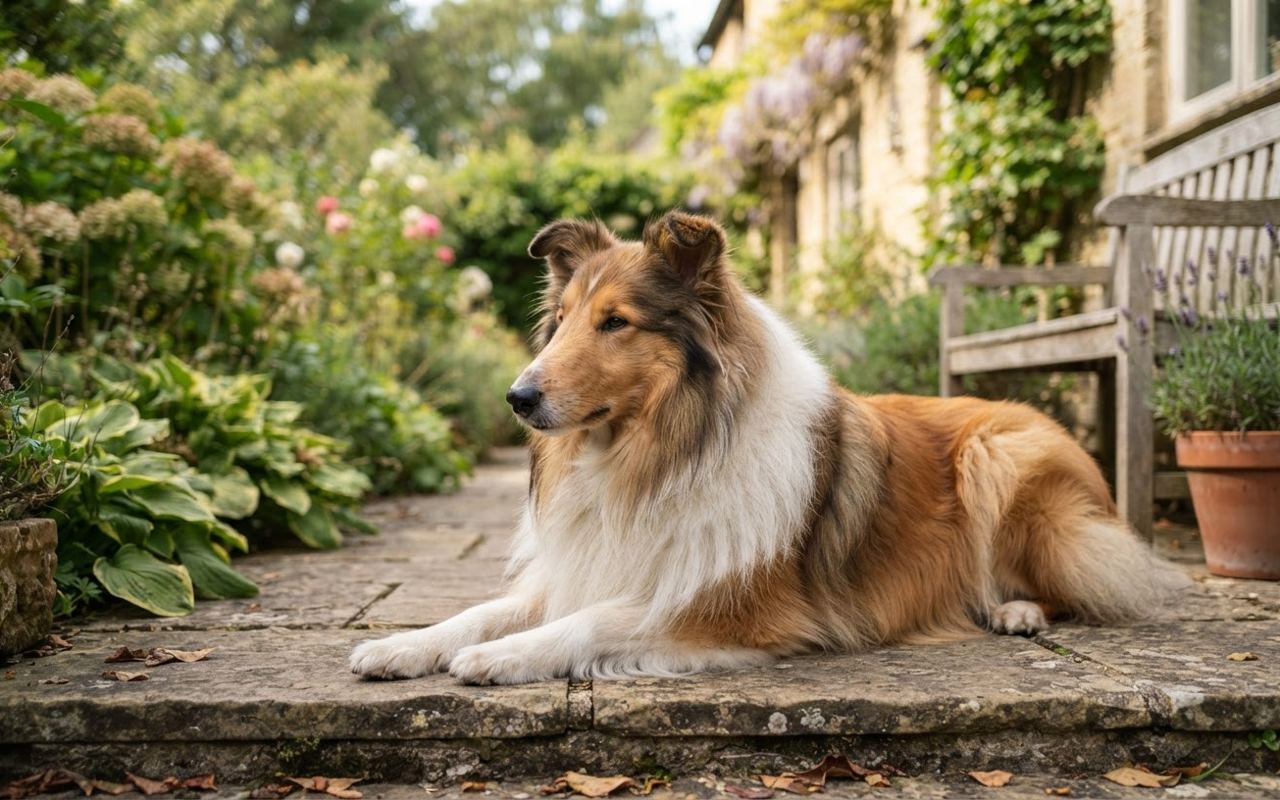
AI-generated editorial illustration of the subject; not a photograph of a specific animal, product or case.
Breed characteristics
- Group
- Herding / Pastoral
- Origin
- Scotland
- Size
- Large
- Weight
- 20–34 kg (45–75 lb)
- Height
- 51–61 cm
- Lifespan
- 12–14 years
- Coat
- Long, dense, straight outer coat with thick undercoat
- Temperament
- GentleDevotedSensitiveWatchful
History
Developed from Scottish and English herding dogs, refined in the nineteenth century and popularised worldwide after Queen Victoria took an interest in the breed.
Appearance
A tall, refined dog with a long, wedge-shaped head, small folded ears and a luxuriant mane-like coat.
Exercise and activity
An hour daily of walking, herding-style games or agility suits this active but not hyperactive breed.
Care and grooming
Brush two to three times weekly, more during heavy seasonal shedding, paying particular attention to the mane, trousers and behind the ears.
Health considerations
- Collie eye anomaly
- MDR1 drug sensitivity gene mutation
- Progressive retinal atrophy
- Hip dysplasia
- Dermatomyositis
Honest challenges
Before choosing a Collie (Rough)
- Treat the breed profile as a starting point, not a guarantee of temperament. Meet the individual and discuss its history, needs and behaviour with the rescue or responsible breeder.
- Check your routine can support the activity described here: An hour daily of walking, herding-style games or agility suits this active but not hyperactive breed. Allow for age, weather, health and recovery rather than imposing a fixed target.
- Ask the breeder or rescue and your vet about problems reported in this breed (such as Collie eye anomaly, MDR1 drug sensitivity gene mutation, Progressive retinal atrophy, Hip dysplasia, Dermatomyositis), which of them have recognised screening tests, and the parents' results where relevant. Screening reduces some uncertainty but cannot promise a healthy lifetime.
- Plan grooming, veterinary costs and care during holidays. Children and other pets still need careful introductions and supervision whatever a breed's typical rating.
Educational reference, not an individual diagnosis or a verified professional review. Read our editorial policy.
Guidance libraries and further reading
These organisations publish relevant guidance. Their links are further reading, not evidence that they have reviewed this page.
- RSPCA — animal care and welfare advice across species
- PDSA — veterinary charity pet health advice
- Dogs Trust — dog care, behaviour and welfare advice