
Dog breed · Herding / Pastoral
Cardigan Welsh Corgi
The older, tailed corgi — a Welsh cattle drover with a more reserved, thoughtful character than its Pembroke cousin.
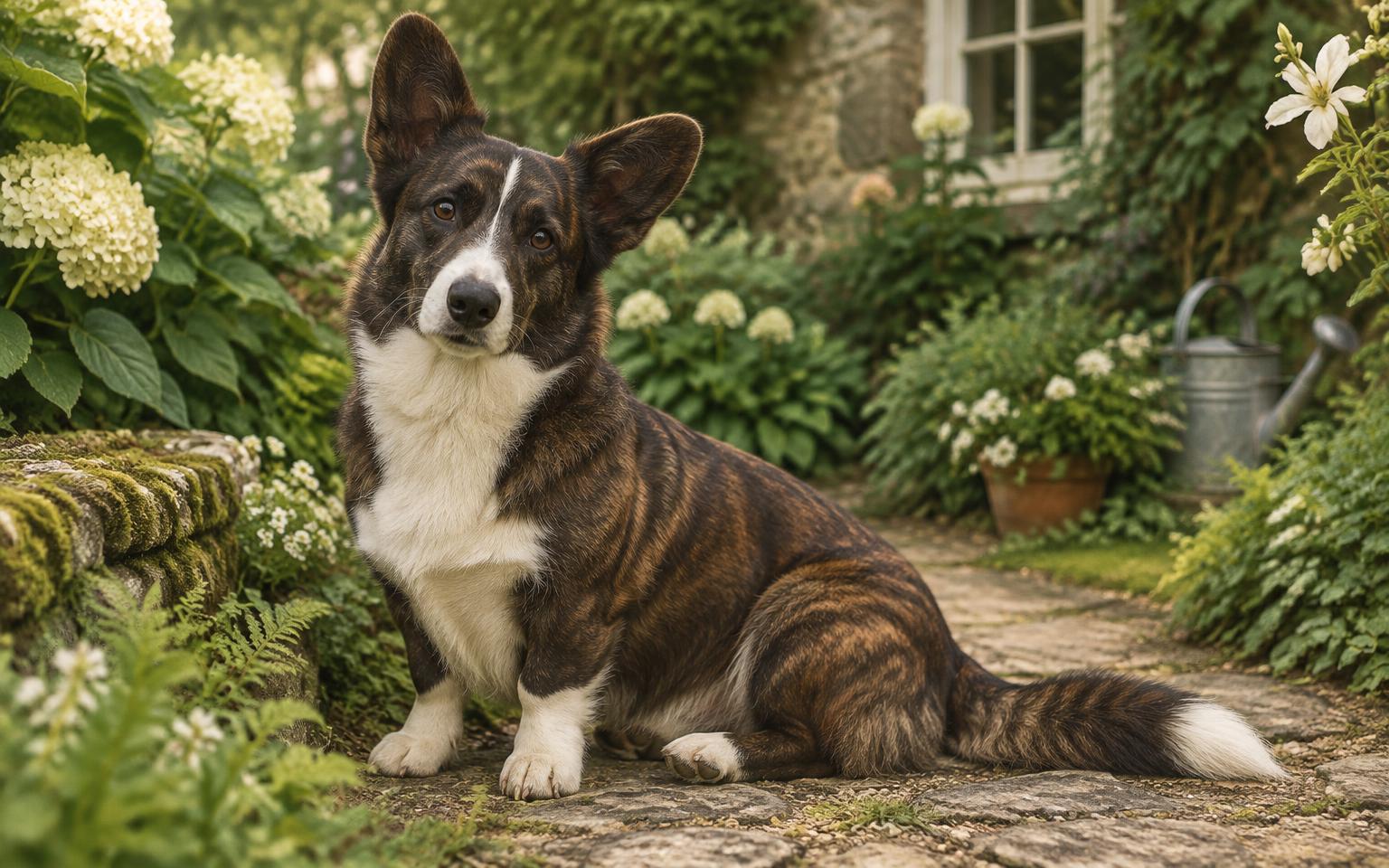
Illustrative cover using relevant category imagery; it does not depict the exact subject.
Breed characteristics
- Group
- Herding / Pastoral
- Origin
- Wales
- Size
- Small
- Weight
- 11–17 kg
- Height
- 27–32 cm
- Lifespan
- 12–15 years
- Coat
- Short or medium double coat; many colours including blue merle
- Temperament
- SteadyDevotedAlertSensible
History
Droving cattle in Cardiganshire for over a thousand years; recognised as separate from the Pembroke in 1934.
Appearance
Long, low, powerful dog with a bushy fox-like tail, large rounded ears and a weatherproof coat.
Exercise and activity
An hour daily; enjoys herding, obedience and long walks.
Care and grooming
Weekly brushing; the long back means managing weight and avoiding repeated stair and jump strain.
Health considerations
- Intervertebral disc disease (long-backed breed)
- Hip dysplasia
- Progressive retinal atrophy
- Degenerative myelopathy (tested)
Honest challenges
Before choosing a Cardigan Welsh Corgi
- Treat the breed profile as a starting point, not a guarantee of temperament. Meet the individual and discuss its history, needs and behaviour with the rescue or responsible breeder.
- Check your routine can support the activity described here: An hour daily; enjoys herding, obedience and long walks. Allow for age, weather, health and recovery rather than imposing a fixed target.
- Ask the breeder or rescue and your vet about problems reported in this breed (such as Intervertebral disc disease (long-backed breed), Hip dysplasia, Progressive retinal atrophy, Degenerative myelopathy (tested)), which of them have recognised screening tests, and the parents' results where relevant. Screening reduces some uncertainty but cannot promise a healthy lifetime.
- Plan grooming, veterinary costs and care during holidays. Children and other pets still need careful introductions and supervision whatever a breed's typical rating.
Educational reference, not an individual diagnosis or a verified professional review. Read our editorial policy.
Sources on this topic
Pages on this specific subject from recognised organisations. They are cited for further reading and do not mean the organisation has reviewed this page.
- Cardigan Welsh Corgi Dog Breed Information — American Kennel Club
Guidance libraries and further reading
These organisations publish relevant guidance. Their links are further reading, not evidence that they have reviewed this page.
- RSPCA — animal care and welfare advice across species
- PDSA — veterinary charity pet health advice
- Dogs Trust — dog care, behaviour and welfare advice