
Dog breed · Working / Guardian
Cane Corso
A large Italian mastiff-type guardian, descended from Roman war dogs and later used to guard farms and drive livestock. Cane Corsos are watchful and devoted to their family but need an experienced, consistent handler.
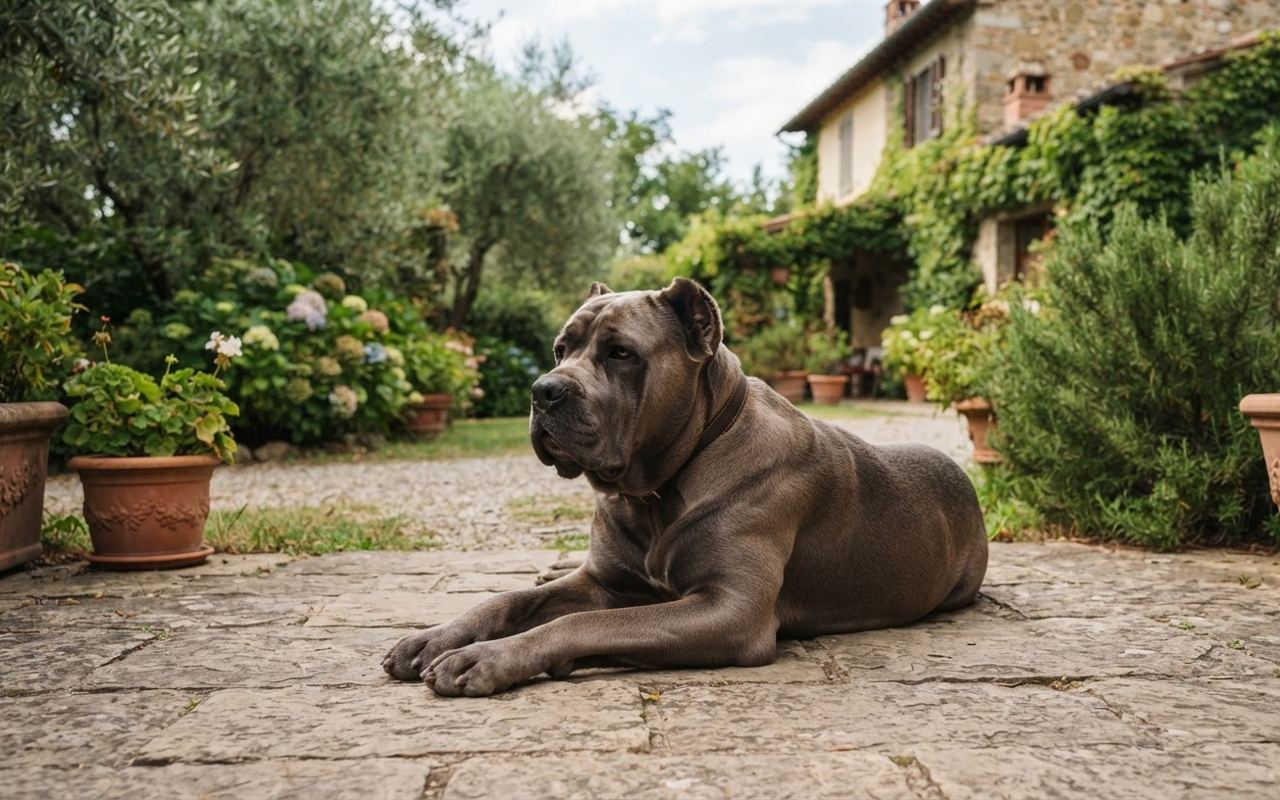
AI-generated editorial illustration of the subject; not a photograph of a specific animal, product or case.
Breed characteristics
- Group
- Working / Guardian
- Origin
- Italy
- Size
- Large
- Weight
- 40–50 kg (88–110 lb)
- Height
- 58–70 cm
- Lifespan
- 9–12 years
- Coat
- Short, stiff, dense double coat
- Temperament
- ConfidentProtectiveCalm indoorsLoyal
History
Descended from Roman canis pugnax war and hunting dogs, the breed nearly vanished in the twentieth century before Italian enthusiasts revived it from surviving farm dogs in the 1970s and 1980s.
Appearance
A muscular, square-built mastiff with a broad head, hanging jowls and a short coat in black, grey, fawn or brindle.
Exercise and activity
At least an hour of structured exercise daily, plus consistent training; without enough outlet a Cane Corso can become pushy or bored indoors.
Care and grooming
Coat care is minimal — occasional brushing and wiping of facial wrinkles. Early, extensive socialisation with people, dogs and everyday situations is essential given the breed's guarding instincts.
Health considerations
- Hip and elbow dysplasia
- Gastric dilatation-volvulus (bloat)
- Entropion and ectropion
- Idiopathic epilepsy
- Cardiomyopathy
Honest challenges
Before choosing a Cane Corso
- Treat the breed profile as a starting point, not a guarantee of temperament. Meet the individual and discuss its history, needs and behaviour with the rescue or responsible breeder.
- Check your routine can support the activity described here: At least an hour of structured exercise daily, plus consistent training; without enough outlet a Cane Corso can become pushy or bored indoors. Allow for age, weather, health and recovery rather than imposing a fixed target.
- Ask the breeder or rescue and your vet about problems reported in this breed (such as Hip and elbow dysplasia, Gastric dilatation-volvulus (bloat), Entropion and ectropion, Idiopathic epilepsy, Cardiomyopathy), which of them have recognised screening tests, and the parents' results where relevant. Screening reduces some uncertainty but cannot promise a healthy lifetime. Bloat has no screening test: learn its emergency signs and ask about prevention.
- Plan grooming, veterinary costs and care during holidays. Children and other pets still need careful introductions and supervision whatever a breed's typical rating.
Educational reference, not an individual diagnosis or a verified professional review. Read our editorial policy.
Guidance libraries and further reading
These organisations publish relevant guidance. Their links are further reading, not evidence that they have reviewed this page.
- RSPCA — animal care and welfare advice across species
- PDSA — veterinary charity pet health advice
- Dogs Trust — dog care, behaviour and welfare advice