
Handling & choice
Helping Fearful Small Pets Through Choice and Trust
Distinguish stillness from comfort and build voluntary contact with rabbits and guinea pigs without forced handling.
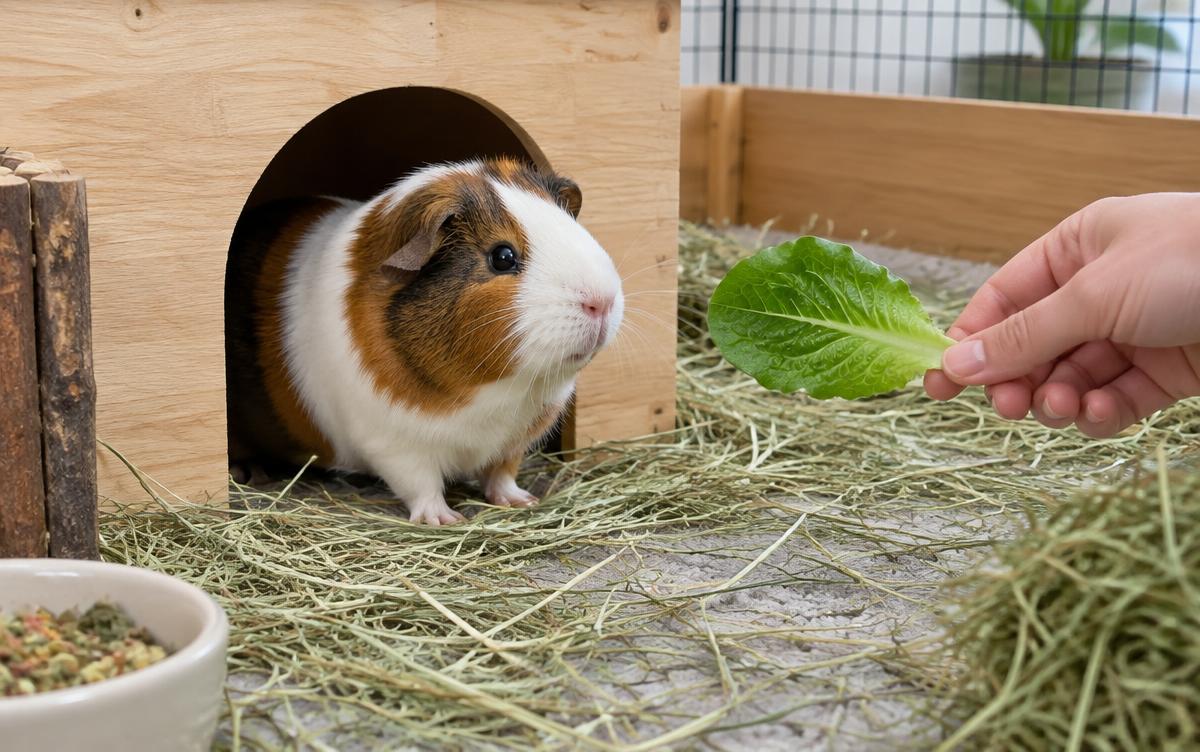
AI-generated editorial image; illustrative, not a clinical demonstration or documentary photograph.
Stillness does not always mean relaxation
A small pet that becomes motionless when lifted may be frightened rather than enjoying a cuddle. Interpret posture alongside breathing, willingness to approach, appetite and what happens after the interaction. No single behaviour establishes an animal's emotional state or a psychological diagnosis.
Rabbits placed on their backs can show tonic immobility, a fear response sometimes wrongly described as trancing. Do not use it as a bonding exercise. Veterinary handling may sometimes be necessary, but routine interaction should preserve the animal's ability to move away.
Start with a secure environment
Provide hiding places, appropriate companionship and predictable feeding before expecting confident contact. An animal with nowhere to retreat may tolerate your presence because it lacks options. Several hides with suitable exits can make an enclosure easier to navigate.
Approach quietly at ground level and avoid reaching suddenly from above. Keep dogs, cats, shouting children and loud household equipment away from the session. Let the animal investigate you rather than pulling it out of a shelter.
- Sit outside or beside the enclosure
- Offer a suitable small food reward
- Keep a clear route back to a hide
- End before the animal becomes overwhelmed
- Record small changes in voluntary approach
Reward a small voluntary step
Begin with an animal choosing to remain nearby. Later you may reward approaching a hand, entering a carrier or standing on a low platform. Change only one challenge at a time. Food should come from the normal suitable diet, not from withholding meals to make the pet comply.
If a hand causes the animal to retreat, move the hand farther away and make the next session easier. Short, predictable interactions are usually more useful than prolonged attempts to make contact. Progress varies with species, past experience, health and individual temperament.
Separate essential care from social contact
Nail care, health checks and treatment sometimes require handling. Ask a veterinary team to demonstrate safe support of the body and hindquarters. Rabbits can injure themselves badly when struggling; lifting by the ears, scruff or unsupported limbs is not acceptable.
Train practical care behaviours gradually, such as entering a carrier voluntarily. When a procedure cannot wait, seek help rather than repeatedly attempting it unsuccessfully. Do not allow children to carry a frightened small animal around the home.
Rule out pain and illness
New avoidance, reduced eating, fewer droppings, unusual posture or reluctance to move can indicate a medical problem. Contact a species-experienced veterinarian; do not treat a sudden change as stubbornness or assume training will resolve it.
Rabbits that stop eating need urgent veterinary advice. A comfortable environment and trust-building complement healthcare but cannot diagnose or treat dental disease, gut problems or other causes of withdrawal.
Frequently asked questions
- My rabbit freezes during cuddles. Is that trust?
- Not necessarily. Stillness may reflect fear. Look for voluntary approach and normal behaviour, avoid placing rabbits on their backs and ask a vet about sudden changes.
- Should I remove the hide to encourage contact?
- No. A safe retreat supports welfare. Reward voluntary contact while leaving the option to withdraw.
References
- Rabbit handling guidance — RSPCA