
Welfare standards
The Five Freedoms in Practice: A Welfare Checklist for Every Pet
The framework behind modern animal welfare law, turned into practical questions you can ask about your own pet's life.
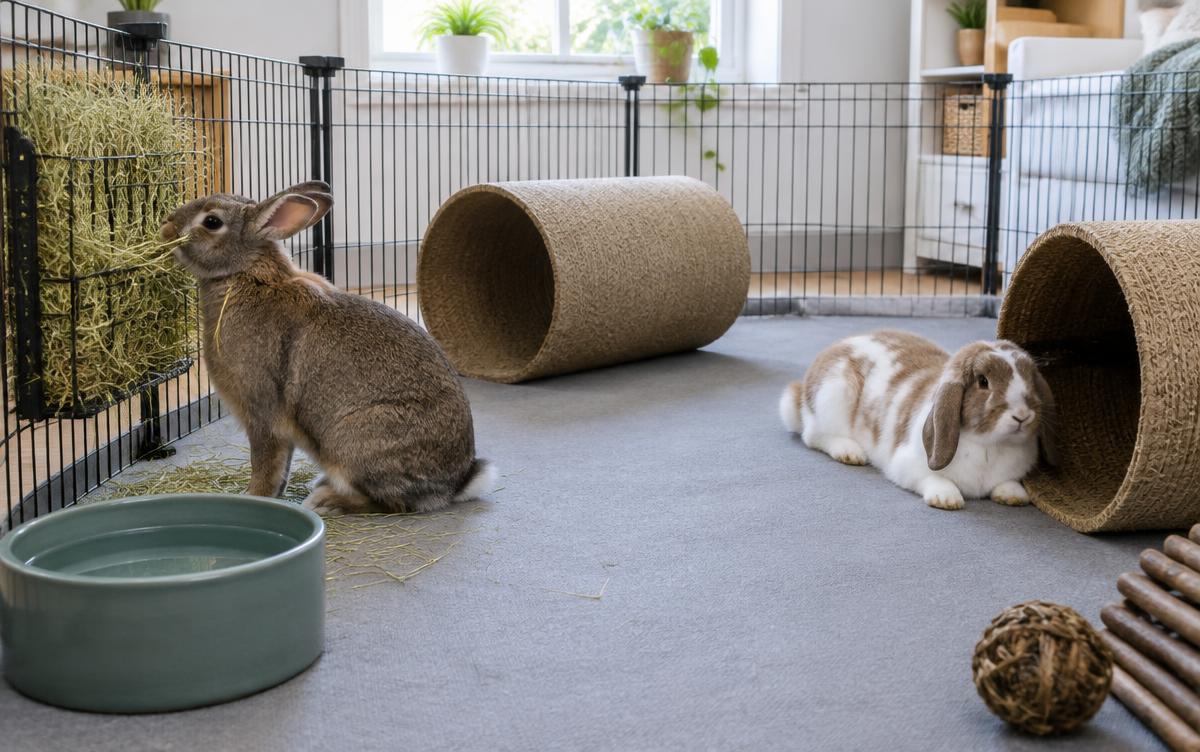
AI-generated editorial image; illustrative, not a clinical demonstration or documentary photograph.
Five welfare questions for daily observation
| Welfare area | Ask about the individual animal |
|---|---|
| Hunger and thirst | Can every animal reach appropriate food and clean, working water sources? |
| Discomfort | Can the animal rest comfortably and move away from unwanted conditions? |
| Pain, injury and disease | Are changes recognised and assessed promptly? |
| Normal behaviour | Are safe, species-appropriate activities and social needs provided for? |
| Fear and distress | Are handling, protected rest and opportunities for choice appropriate? |
This is a welfare framework, not a legal certification. Consider positive experiences too; needs and legal duties vary.
A welfare framework, not a guarantee
The Five Freedoms are a widely used framework for considering animal welfare: freedom from hunger and thirst; discomfort; pain, injury and disease; fear and distress; and freedom to express normal behaviour. They guide questions about care rather than promising a life without any unpleasant experience. Necessary treatment can briefly cause discomfort while protecting longer-term welfare.
Do not confuse this framework with a legal checklist. Laws vary by jurisdiction, and the UK's five welfare needs are related but differently worded. Modern approaches such as the Five Domains also consider how nutrition, environment, health and behavioural interactions influence mental experience, including positive experiences. A checklist supports observation; it does not replace evidence about the individual animal.
Food and water must meet actual needs
Ask whether the diet suits the species, life stage and health, and whether each animal can reach it. A full bowl does not ensure fair access in a group: another animal may guard the feeding area. Watch body condition, appetite and drinking alongside the feeding plan. Keep water clean and check that containers and drinkers work.
Consider species-specific details, such as fibre for rabbits and guinea pigs, appropriate complete food for cats or suitable feeding arrangements for fish. Human ethical preferences do not remove an animal's nutritional requirements. Diet changes for a medical condition or a proposed alternative diet need competent professional advice rather than assumptions based on an ingredient label.
Comfort depends on usable choice
A sheltered resting space must be accessible, suitably sized and comfortable for the animal. Older or painful pets may struggle with stairs or high beds. Reptiles need a correctly managed environment rather than a room temperature that feels pleasant to a person. Social groups need enough resources that one animal cannot monopolise every good resting place.
Look for the ability to move away from noise, heat, light or unwanted contact. More equipment is not necessarily better if it crowds the usable space. Check surfaces, ventilation, cleanliness and escape hazards. Watch where the animal actually rests; an expensive bed does not demonstrate comfort if the pet consistently avoids it.
Health care includes early recognition
Prevention and prompt assessment both matter. Make a species-appropriate plan for vaccination, parasite control, dental care and monitoring with the veterinarian. Daily observation can reveal a change in eating, toileting, movement or social behaviour before illness becomes obvious. Do not wait for an animal to cry before considering pain.
Avoid treating a quiet animal as automatically content. Fear, exhaustion and illness can also reduce movement. Record meaningful changes and seek advice. Necessary treatment should minimise distress where possible, but welfare does not mean refusing urgent care because handling is temporarily uncomfortable.
Behavioural needs are more than entertainment
Provide safe opportunities for important behaviours: exploring and sniffing for dogs, hiding and climbing for cats, foraging and digging for rabbits, and suitable movement and social opportunities for birds. Needs differ by species and individual. An activity should not require hunger, fear or forced contact to make the animal participate.
Normal behaviour is not permission for every potentially dangerous action. Predation, chewing cables and uncontrolled roaming need humane management. Offer safer alternatives, suitable space and predictable routines. Observe whether an enrichment item is used comfortably, ignored or actively avoided rather than assuming it helps because it was marketed for that species.
Review fear, distress and positive experiences
Use gentle handling and reward-based learning. Allow appropriate choice and protected rest, and supervise children and visitors. Persistent avoidance, aggression or repetitive behaviour merits assessment of health and environment. Build positive experiences through compatible companionship, exploration and comfortable interaction when wanted. Revisit the checklist after a move, illness or household change; welfare is an ongoing process, not a badge earned once.
Frequently asked questions
- Are the Five Freedoms the same as UK law?
- No. The UK's statutory welfare needs are related but differently worded; legal duties depend on jurisdiction.
- Does a quiet pet always have good welfare?
- No. Quietness can also reflect fear, pain or illness. Consider behaviour, health and the environment together.
- Do the freedoms exclude uncomfortable treatment?
- No. Necessary treatment may involve temporary discomfort while protecting health; use proportionate, low-stress care.
- Why consider positive experiences too?
- Avoiding suffering is essential, but welfare also includes opportunities for comfortable rest, choice and rewarding species-appropriate activity.
References
- Updating animal welfare thinking: moving beyond the Five Freedoms — Animals / PubMed Central
- Animal Welfare Act 2006, section 9 — UK legislation