
Foundation skills
Teaching a Recall That Works When It Matters
A step-by-step reward-based plan for building a recall that holds up against squirrels, other dogs and open fields — and the habits that quietly destroy one.
Why recalls break down
Almost every unreliable recall has the same history: the word was used when the dog was unlikely to come, repeated when it did not, and followed by something the dog disliked — a lead clipped on, a bath, the end of a walk. The dog has learned exactly what the word predicts.
A recall is a trained behaviour with a value problem. The question is never whether the dog heard you; it is whether coming back pays better than what it is currently doing.
Build the word from scratch
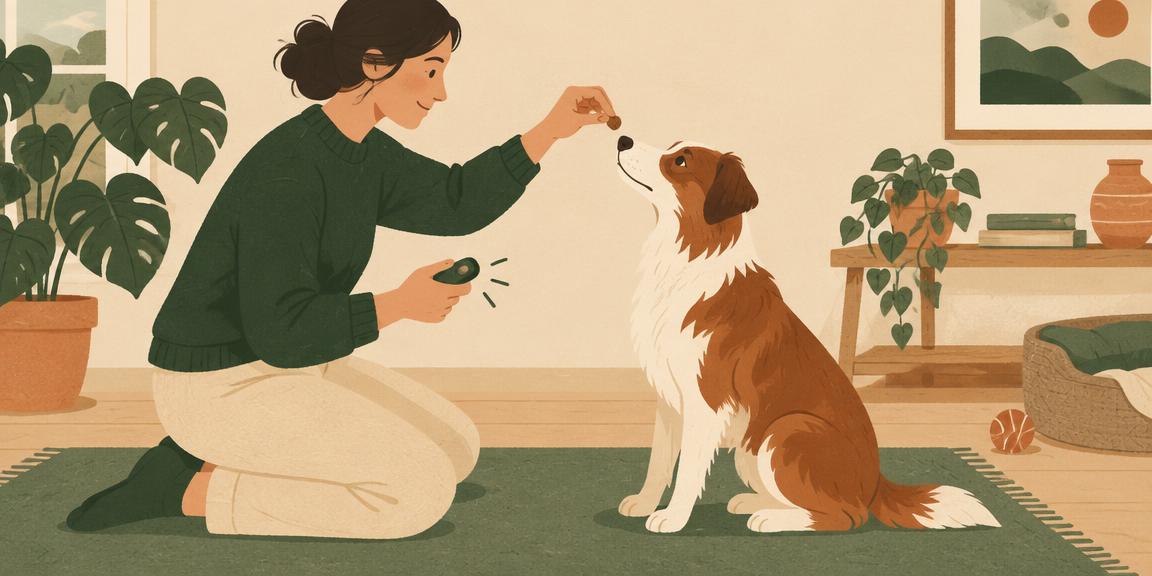
Pick a fresh cue — 'here', a whistle, anything the dog has no history with — and pair it with food the dog rarely gets otherwise. Start indoors with no distraction: say the cue once, then deliver several small pieces of food in succession rather than one. Repetition of payment, not size of payment, builds enthusiasm.
- Stage 1: Indoors, dog already looking at you, cue then multiple treats
- Stage 2: Indoors from another room, so the dog must move to you
- Stage 3: Garden or quiet enclosed space, short distance, long line attached
- Stage 4: Quiet outdoor space with mild distractions, on a long line
- Stage 5: Busier spaces, still on a long line, cueing before distractions escalate
- Stage 6: Off-lead in safe legal areas only, keeping the reward rate high
The long line is not a failure
A five- to ten-metre line on a harness lets a dog make choices while removing the possibility of rehearsing a failed recall. Every successful ignore is practice; the line prevents that practice. Keep it on for weeks longer than feels necessary. Never attach a long line to a collar — the shock of a sudden stop can injure the neck.
Protect the cue
Call once. If nothing happens, walk towards the dog and make the situation easier rather than repeating the word. Never call a dog to do something it dislikes — go and collect it instead. Reward every single recall for the first several months, and after clipping the lead on, sometimes release the dog back to play so the cue does not reliably predict the end of freedom.
When something else is going on
A dog that cannot disengage from other dogs, wildlife or joggers may have a motivation or an anxiety issue rather than a training gap. Sighthounds and many scent hounds are bred for independent pursuit, and a fully reliable off-lead recall may not be a realistic goal for every individual. Long lines and enclosed secure fields are honest, humane solutions.
Frequently asked questions
- Should I use an electronic collar for recall?
- No. They suppress behaviour through discomfort, are associated with increased fear and stress responses, are banned in a number of jurisdictions, and are unnecessary when the reward history is built properly.
- How long does this take?
- A usable recall in low distraction takes a few weeks. A recall that holds in genuinely exciting environments takes months of consistent practice.