
Foundation skills
Crate Training a Puppy: A Gradual, Reward-Based Plan
Build positive crate associations in small steps so the crate becomes a safe den rather than a place of confinement or punishment.
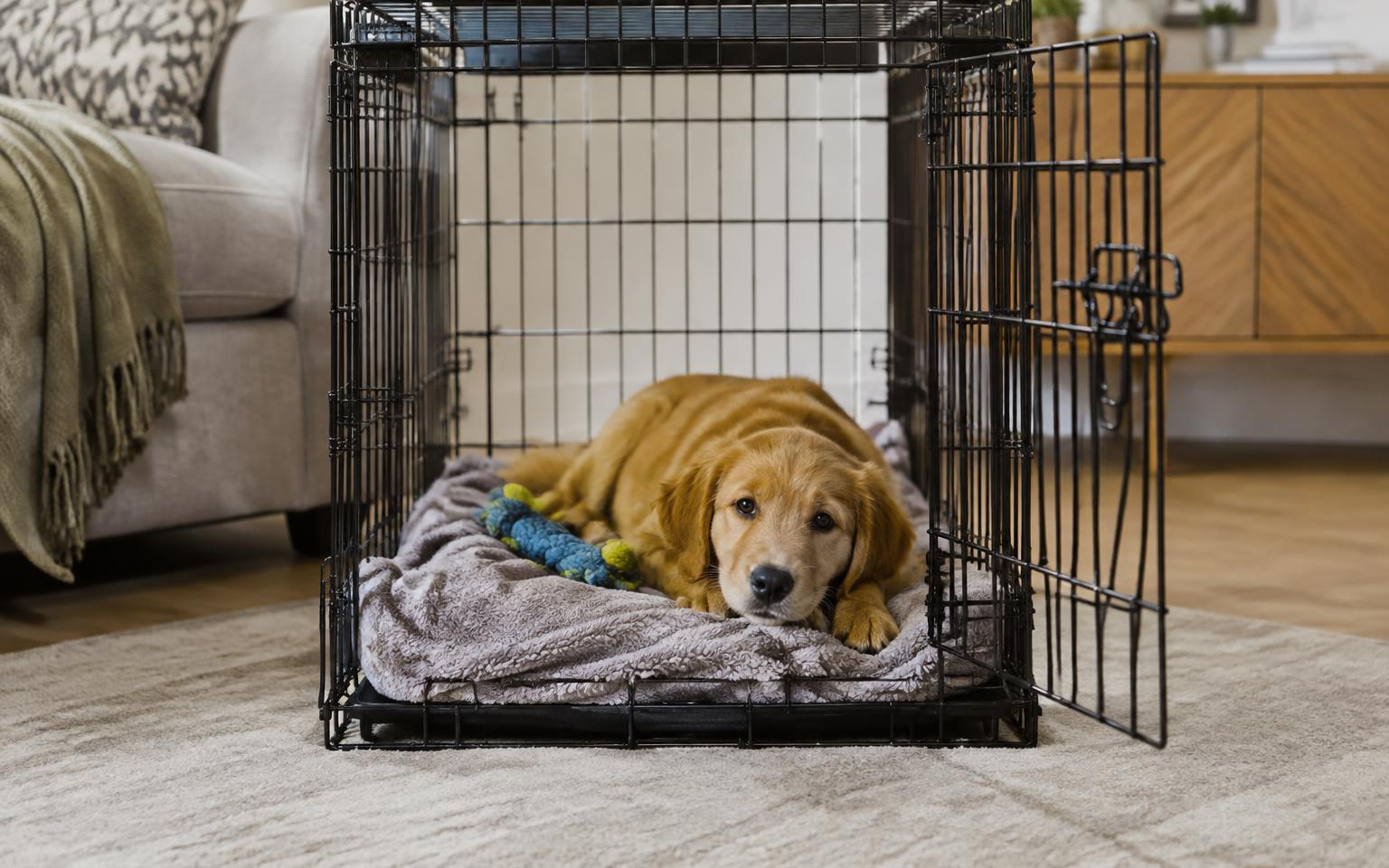
AI-generated editorial image; illustrative, not a clinical demonstration or documentary photograph.
Choose the right crate and location
Pick a crate sized so the puppy can stand, turn around and lie down comfortably, without excess space that might encourage soiling one end. Many crates come with dividers to adjust the usable size as a puppy grows, which can save buying multiple crates.
Place the crate somewhere the puppy can still feel part of household activity rather than isolated in a separate room, at least during the early training phase. Add comfortable, washable bedding and ensure good ventilation and a stable temperature.
Introduce the crate without closing the door
Begin with the door open or removed, and scatter treats, meals or a stuffed food toy inside so the puppy chooses to enter voluntarily. Never physically push or force a puppy into a crate; the goal is for the crate to predict good things, not restraint.
Allow the puppy to come and go freely over several short sessions across a few days before attempting to close the door at all. Rushing this early stage is the most common reason crate training later fails.
- Scatter treats inside the open crate
- Feed some meals inside with the door open
- Let the puppy exit whenever it wants at first
- Avoid using the crate for punishment at any stage
Add short, calm door closures
Once the puppy settles calmly inside with the door open, close it briefly while you remain nearby, then open it again before any whining escalates. Gradually extend the duration across many short sessions rather than jumping to long closures.
Build up to brief periods out of sight in another room, checking that the puppy stays settled rather than distressed. If the puppy cries, avoid returning while the crying is happening; wait for a brief pause, however short, before approaching, so you are not reinforcing the noise itself.
Extend to real absences and overnight use
Practise short departures from the home, starting with a few minutes and extending gradually based on how settled the puppy appears, rather than a fixed schedule. A puppy should never be crated for a duration beyond its reasonable bladder control for its age, and very young puppies need overnight toileting breaks.
For overnight use, position the crate near your bedroom initially so the puppy can hear you, which often reduces distress, and move it gradually if a different long-term location is wanted. A consistent bedtime and wake routine supports faster settling.
Recognise when to pause and troubleshoot
Persistent, escalating distress, panting, drooling, or attempts to escape by chewing or scratching at the crate door may indicate the steps progressed too quickly, or that the puppy has an underlying anxiety needing a more gradual plan or professional input. Scale back to the last comfortable step and progress more slowly rather than persisting through distress.
A crate should never be used as punishment, and a puppy should not be confined for excessive periods purely for the owner's convenience. If training stalls despite a gradual approach, a force-free trainer or veterinary behaviourist can help identify and address the specific cause.
Frequently asked questions
- How long can a puppy stay in a crate?
- This depends on age and individual bladder control; very young puppies need frequent breaks, often hourly in the earliest weeks, extending gradually as they mature. Always prioritise welfare over convenience.
- Is it cruel to crate train a puppy?
- Used correctly, with gradual positive introduction and reasonable duration limits, a crate can provide a secure den-like space many dogs come to enjoy. Used as punishment or for excessive confinement, it can cause distress.
- What if my puppy cries every time I close the door?
- Go back to a step where the puppy was calm, shorten the duration, and rebuild more slowly. Persistent distress across many sessions warrants professional advice.
- Should the crate door stay open when not training?
- Many owners leave the door open outside formal sessions so the puppy can use it as a voluntary resting space, which helps reinforce the crate as a comfortable choice rather than a place it is forced into.
References
- Crate training your dog — American Veterinary Medical Association
- How to crate train your puppy or dog — ASPCA