
Updated 2026-10-15
Settling comfortably in public places
Build voluntary relaxed mat behaviour in gradually busier places while respecting the dog's need for space and an easy exit.
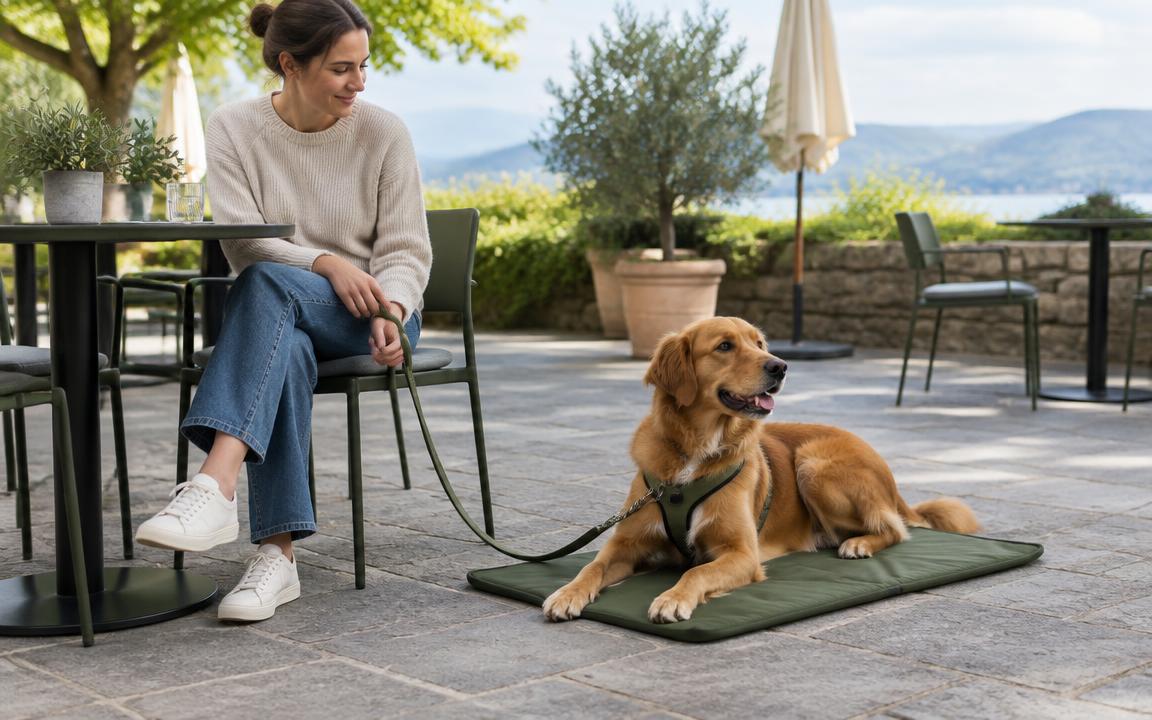
AI-generated editorial illustration; not a clinical demonstration or documentary photograph.
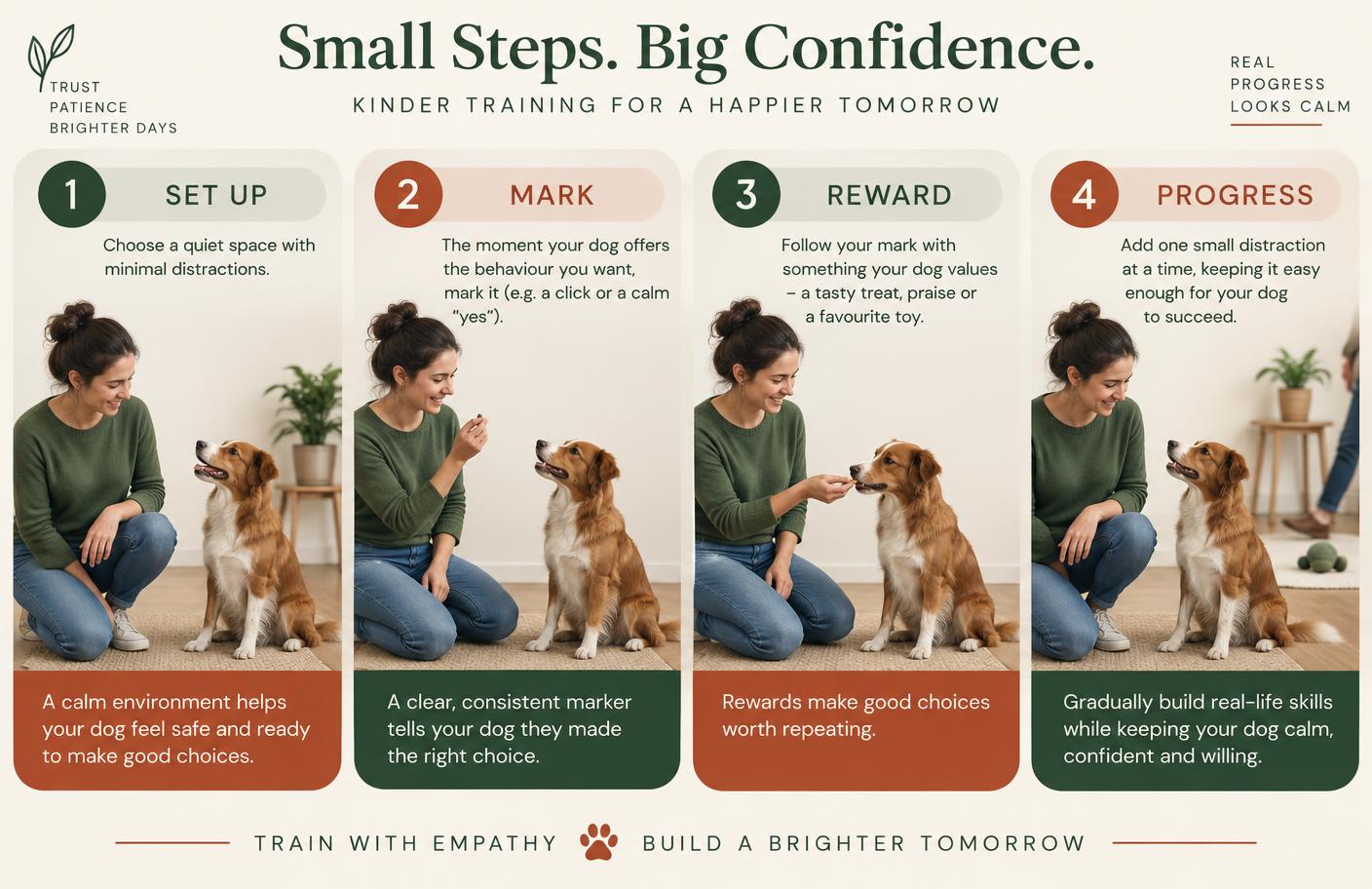
Step by step
Step 1
Choose an easy starting environment
Begin at home, then a familiar quiet outdoor area. Avoid launching the exercise in a crowded café or busy clinic. Allow toileting and comfortable movement first. Select a position away from traffic, entrances and other dogs, with space to leave. A location being dog-friendly does not mean every dog enjoys it.
Step 2
Offer the mat without restraint
Place a stable mat on a comfortable surface and reward voluntary approach or resting. Do not hold the dog in a down position or shorten the lead to prevent movement. Keep the lead secure but slack when possible. A relaxed stand or sit may be a useful first step; insistence on lying down can miss pain or anxiety.
Step 3
Reward comfortable pauses
Deliver suitable small rewards near the dog's paws while watching for loose posture and the ability to disengage from distractions. Pause briefly between rewards only when the dog remains comfortable. A chew is optional, not essential, and may be unsuitable around other animals or if guarding is a concern. Account for rewards in the feeding plan.
Step 4
Increase one challenge at a time
Try a slightly different location or a little more activity at a distance, not a longer stay and a busier place together. Re-establish easy successes in each new setting. If staring, pulling, hiding or tension increases, move farther away or end the visit rather than waiting for the dog to give up.
Step 5
Leave while the experience is manageable
Finish before the dog is exhausted or distressed. Record which distance, location and length of visit worked. Do not judge success by motionlessness alone: freezing can reflect fear. Seek veterinary advice for sudden reluctance to lie down or move, and a qualified reward-based behaviour professional for persistent fear or reactivity.
Troubleshooting
- If rewards are refused, consider stress, heat, illness or competing distractions; make the setting easier rather than forcing the exercise.
- Repeated scanning or inability to rest means more distance or a different location may be needed.
- Panting can reflect heat, exertion or distress; assess the context and leave if welfare is uncertain.
- A dog that dislikes group settings can have a good life without café visits. Arrange appropriate care at home instead.
Public settling: progress or leave?
| Observation | Decision |
|---|---|
| Loose posture and voluntary rest | Maintain an easy short session and reward calmly. |
| Increasing scanning or tension | Add distance or move somewhere quieter. |
| Repeated refusal or attempts to leave | End the session; assess the setting and welfare. |
| Sudden difficulty moving or lying down | Arrange veterinary assessment for discomfort. |
| Public places remain unpleasant | Choose suitable alternatives rather than forcing attendance. |
Stillness alone is not evidence of relaxation. A secure lead and easy exit remain necessary.
A comfortable visit is optional
Train for the life the individual dog can comfortably enjoy, not an image of the perfect café companion. A quiet walk, rest at home with suitable care or a less busy meeting place may meet its needs better. If a dog repeatedly struggles despite sensible gradual practice, reconsider the setting rather than extending each visit until it stops reacting.
Compare sessions by location, distance from activity and body language, not only minutes stayed. A useful success is the ability to choose rest, take suitable rewards and leave calmly. Keep the dog's access to water, shade and toileting separate from any training target. A mat cue must not be used to keep an animal in heat, pain or fear.
Building duration step by step
Begin in a quiet spot outdoors before trying a café. Place the mat, reward the dog for lying on it and add calm rewards at intervals while it stays relaxed. Gradually lengthen gaps between rewards and visit slightly busier places only when the previous level is easy. A long-lasting chew can help some dogs settle. Leave before the dog becomes restless, so that sessions end on a calm note.
Sources for this reference
AI-assisted educational guidance, updated 15 October 2026. Not professionally reviewed; sources do not imply endorsement of this page.
When to progress or pause
- Your target is: Build voluntary relaxed mat behaviour in gradually busier places while respecting the dog's need for space and an easy exit. Observe voluntary participation and relaxed movement, not simply completion under restraint.
- Use the listed session guidance (Brief sessions, ending before fatigue or distress) as a starting point, not a requirement to continue when the animal is tired. Finish with an achievable repetition.
- Change one challenge at a time: location, distraction, distance or duration. If performance deteriorates, return to an easier successful version rather than escalating pressure.
- Sudden refusal, pain, panic or aggression warrants professional assessment. Do not withhold essential food or force handling to obtain compliance.
Educational reference, not an individual diagnosis or a verified professional review. Read our editorial policy.
Guidance libraries and further reading
These organisations publish relevant guidance. Their links are further reading, not evidence that they have reviewed this page.
- Animal Behaviour and Training Council — standards for trainers and behaviourists
- RSPCA — animal care and welfare advice across species
- AVMA — American Veterinary Medical Association owner resources