
Updated 2026-09-29
Teaching a rabbit to accept handling
Build a rabbit's confidence with being touched and briefly lifted for health checks and nail trims.

Illustrative cover using relevant category imagery; it does not depict the exact subject.
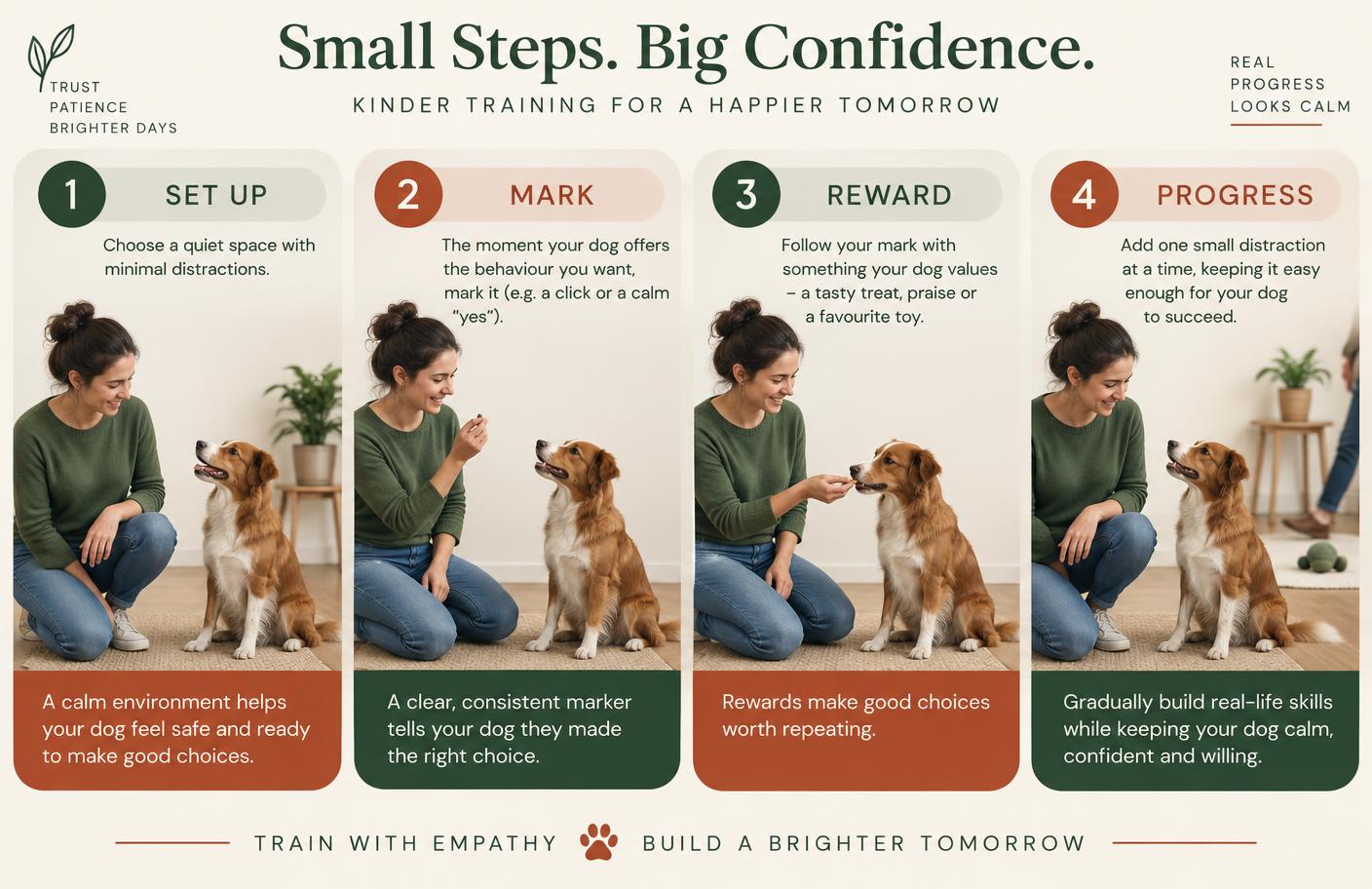
Step by step
Step 1
Start on the floor
Sit at the rabbit's level and let it approach. Stroke the forehead and cheeks — areas rabbits enjoy — and reward.
Step 2
Add brief body touches
Over days, extend strokes along the back and sides, pairing each with a treat.
Step 3
Practise the lift position
Place hands in lifting position — one under the chest, one under the hindquarters — without lifting, then treat.
Step 4
Lift an inch, then down
Raise the rabbit barely off the ground for a second, supporting all four feet against your body, then lower and reward.
Step 5
Build duration slowly
Increase height and time only as the rabbit stays relaxed. Most handling should stay at floor level.
Troubleshooting
- Kicking rabbits must be lowered immediately — a dropped or twisting rabbit can break its spine.
- Some rabbits never enjoy lifting; train cooperative floor-level care instead.
When to progress or pause
- Your target is: Build a rabbit's confidence with being touched and briefly lifted for health checks and nail trims. Observe voluntary participation and relaxed movement, not simply completion under restraint.
- Use the listed session guidance (2–5 minutes daily) as a starting point, not a requirement to continue when the animal is tired. Finish with an achievable repetition.
- Change one challenge at a time: location, distraction, distance or duration. If performance deteriorates, return to an easier successful version rather than escalating pressure.
- Sudden refusal, pain, panic or aggression warrants professional assessment. Do not withhold essential food or force handling to obtain compliance.
Educational reference, not an individual diagnosis or a verified professional review. Read our editorial policy.
Guidance libraries and further reading
These organisations publish relevant guidance. Their links are further reading, not evidence that they have reviewed this page.
- Animal Behaviour and Training Council — standards for trainers and behaviourists
- RSPCA — animal care and welfare advice across species
- AVMA — American Veterinary Medical Association owner resources