
Updated 2026-09-29
Indoor flight recall for parrots
Teach a flighted parrot to fly to your hand on cue — a safety behaviour as much as a trick.
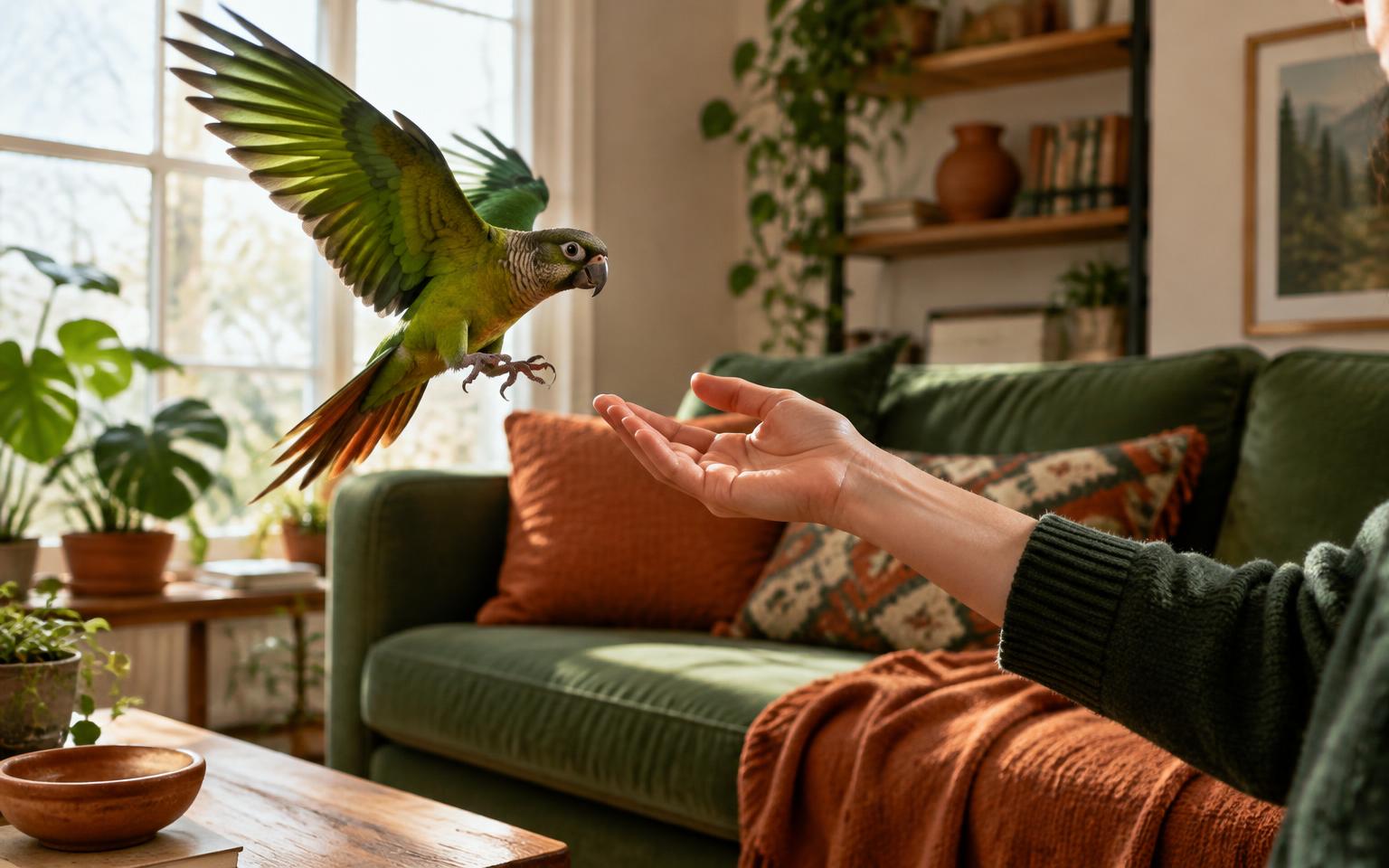
Illustrative cover using relevant category imagery; it does not depict the exact subject.
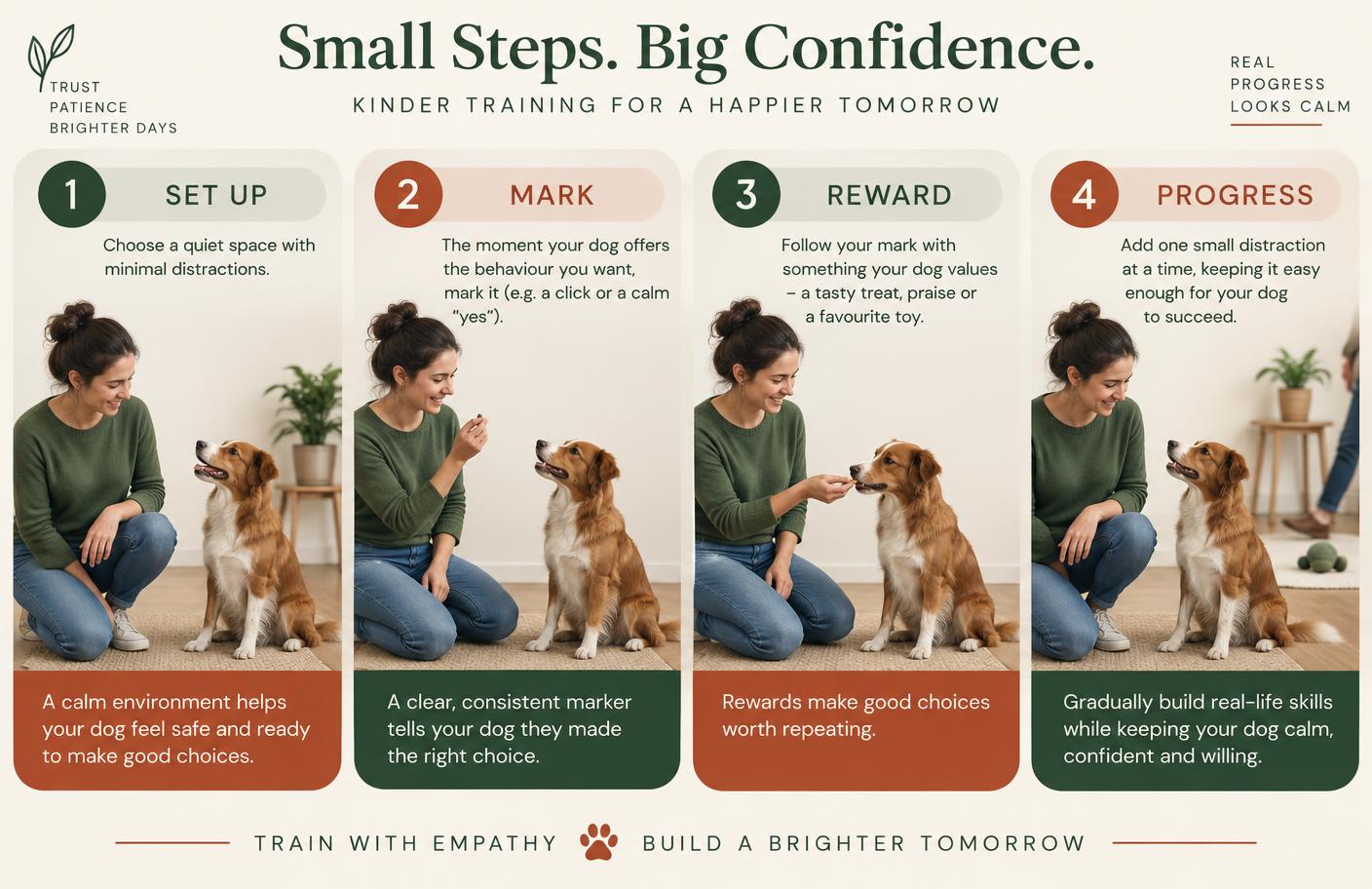
Step by step
Step 1
Start at arm's length
Hold your hand just beyond stepping distance with a visible treat. Cue 'come' as the bird hops or flutters to you.
Step 2
Increase distance gradually
Move a little further each success so short flights grow into across-the-room recalls.
Step 3
Practise from different spots
Recall from perches, the cage top and different rooms so the cue generalises.
Step 4
Add a second person
Recalls between two people build enthusiasm and reliability.
Step 5
Keep it unpredictable and rewarding
Always reward; occasionally offer a jackpot. Never use recall to do something the bird dislikes.
Troubleshooting
- A bird that will not fly to you may be unfit, clipped or unsure — shorten the distance and raise the reward value.
- Never chase a reluctant bird; it teaches avoidance.
When to progress or pause
- Your target is: Teach a flighted parrot to fly to your hand on cue — a safety behaviour as much as a trick. Observe voluntary participation and relaxed movement, not simply completion under restraint.
- Use the listed session guidance (2–3 short sessions of 2–5 minutes) as a starting point, not a requirement to continue when the animal is tired. Finish with an achievable repetition.
- Change one challenge at a time: location, distraction, distance or duration. If performance deteriorates, return to an easier successful version rather than escalating pressure.
- Sudden refusal, pain, panic or aggression warrants professional assessment. Do not withhold essential food or force handling to obtain compliance.
Educational reference, not an individual diagnosis or a verified professional review. Read our editorial policy.
Guidance libraries and further reading
These organisations publish relevant guidance. Their links are further reading, not evidence that they have reviewed this page.
- Animal Behaviour and Training Council — standards for trainers and behaviourists
- RSPCA — animal care and welfare advice across species
- AVMA — American Veterinary Medical Association owner resources