
Updated 2026-09-20
Loose-lead walking
Help a dog walk with a slack lead through reinforcement rather than pain or intimidation.
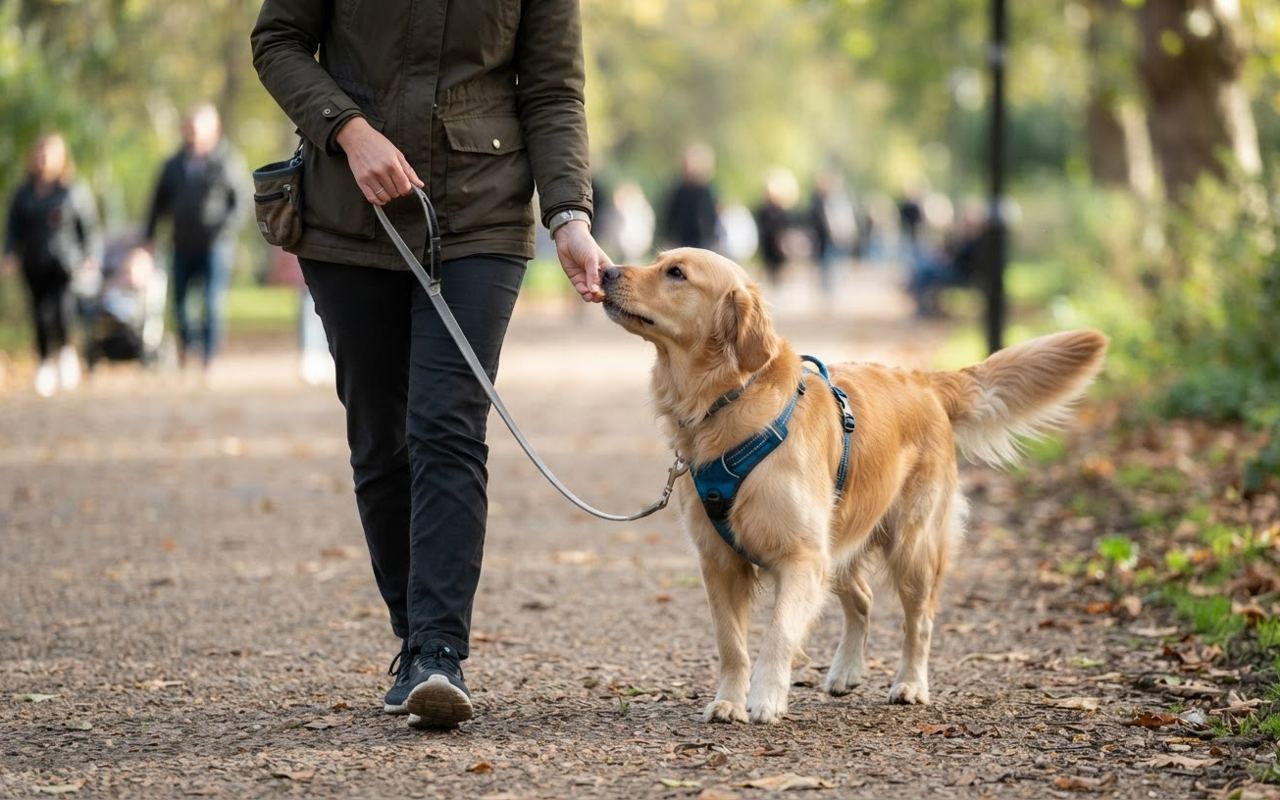
AI-generated editorial illustration of the subject; not a photograph of a specific animal, product or case.
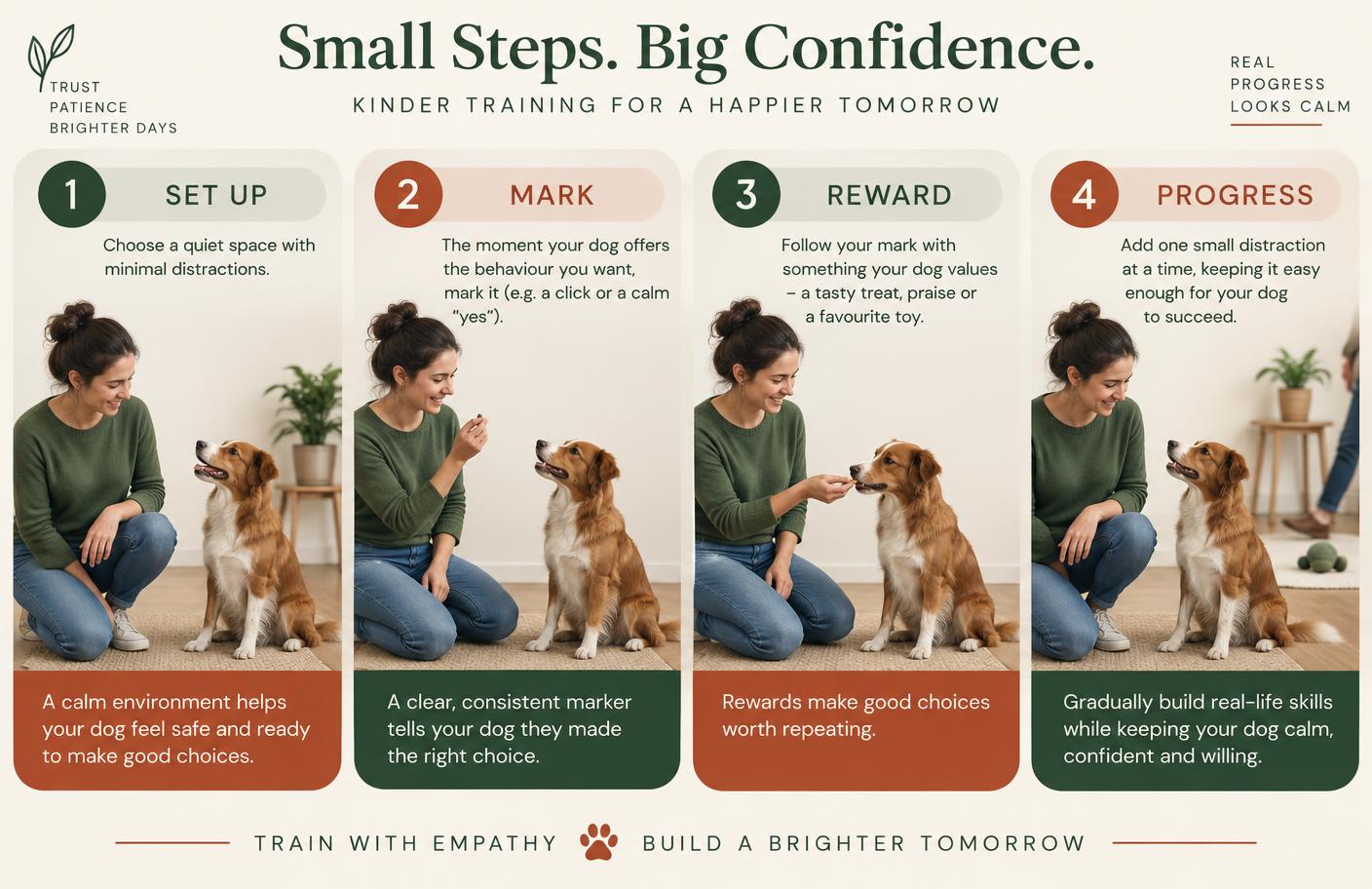
Step by step
Step 1
Reward the zone
In a quiet place, reward the dog frequently beside you while the lead remains loose.
Step 2
Take a few steps
Move two or three steps, mark the slack lead and reward. Change direction before pulling starts.
Step 3
Use the environment
Release the dog to sniff as a reward for a few loose-lead steps.
Step 4
Add difficulty gradually
Increase distance and distraction separately, returning to easier practice when tension rises.
Troubleshooting
- If pulling is constant, the environment is too difficult or the pace is too slow.
- Avoid jerking the lead; stop or smoothly change direction.
When to progress or pause
- Your target is: Help a dog walk with a slack lead through reinforcement rather than pain or intimidation. Observe voluntary participation and relaxed movement, not simply completion under restraint.
- Use the listed session guidance (5–10 minute focused sessions) as a starting point, not a requirement to continue when the animal is tired. Finish with an achievable repetition.
- Change one challenge at a time: location, distraction, distance or duration. If performance deteriorates, return to an easier successful version rather than escalating pressure.
- Sudden refusal, pain, panic or aggression warrants professional assessment. Do not withhold essential food or force handling to obtain compliance.
Educational reference, not an individual diagnosis or a verified professional review. Read our editorial policy.
Guidance libraries and further reading
These organisations publish relevant guidance. Their links are further reading, not evidence that they have reviewed this page.
- Animal Behaviour and Training Council — standards for trainers and behaviourists
- RSPCA — animal care and welfare advice across species
- AVMA — American Veterinary Medical Association owner resources