
Updated 2026-09-21
Guinea pig handling confidence
Reduce fear of being approached and lifted by building voluntary contact first.
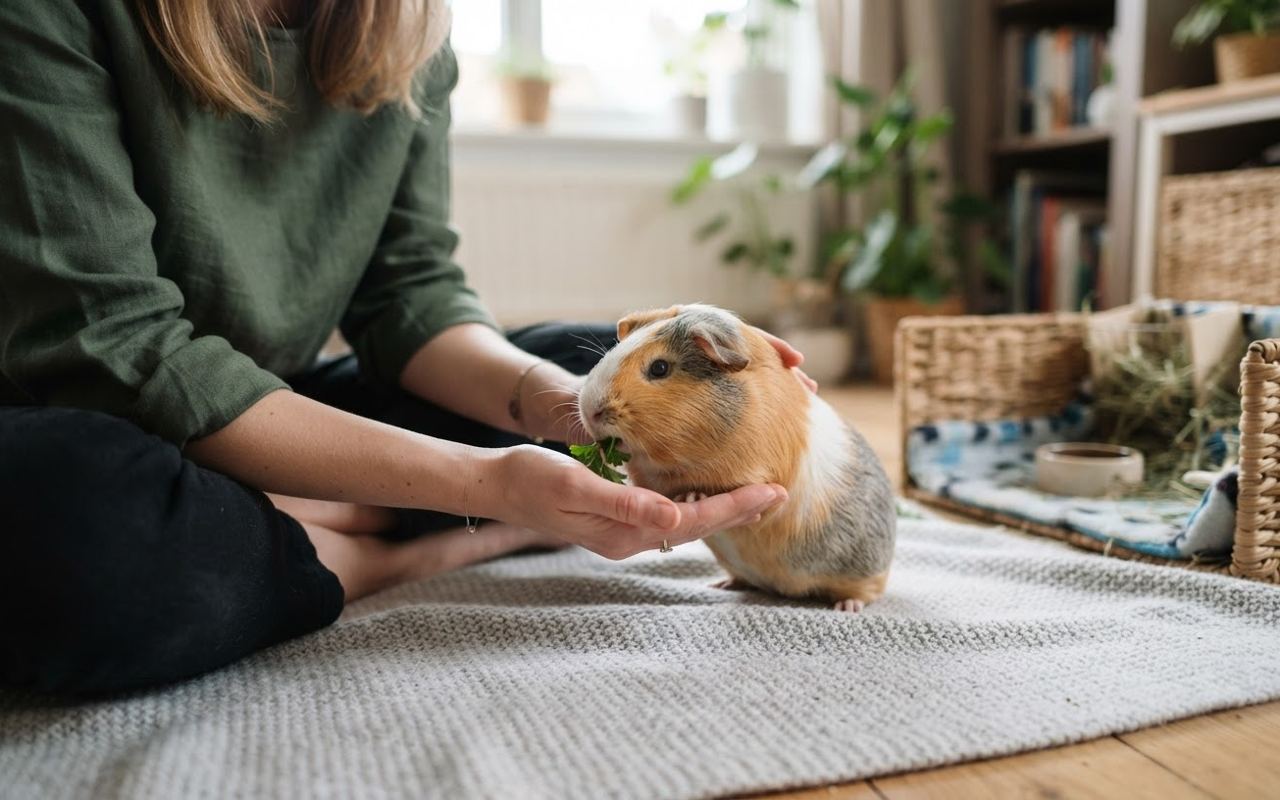
AI-generated editorial illustration of the subject; not a photograph of a specific animal, product or case.
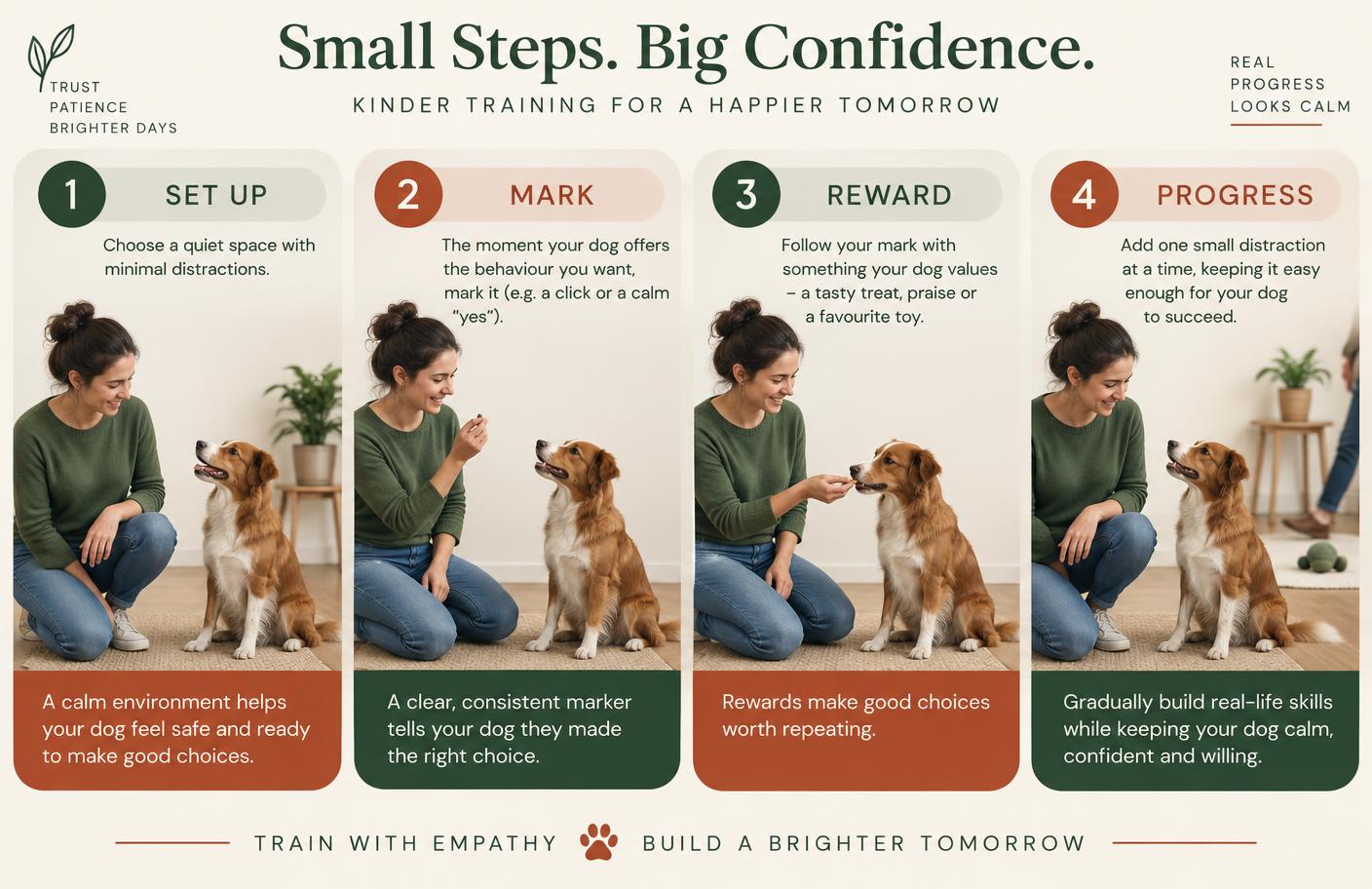
Step by step
Step 1
Be predictable
Sit quietly at floor level and place forage near you without reaching towards the animal.
Step 2
Reward approach
Let the guinea pig take food from a flat hand at their own pace, several sessions in a row.
Step 3
Use a tunnel
Teach them to walk into a tunnel or open carrier for food so transport does not require chasing.
Step 4
Support lifts
Lift with both hands supporting chest and hindquarters, hold for a few seconds, return and reward.
Troubleshooting
- Freezing or hiding means slowing down, not persisting.
- Keep sessions to one small step so the pen stays a safe place.
When to progress or pause
- Your target is: Reduce fear of being approached and lifted by building voluntary contact first. Observe voluntary participation and relaxed movement, not simply completion under restraint.
- Use the listed session guidance (2–4 minutes) as a starting point, not a requirement to continue when the animal is tired. Finish with an achievable repetition.
- Change one challenge at a time: location, distraction, distance or duration. If performance deteriorates, return to an easier successful version rather than escalating pressure.
- Sudden refusal, pain, panic or aggression warrants professional assessment. Do not withhold essential food or force handling to obtain compliance.
Educational reference, not an individual diagnosis or a verified professional review. Read our editorial policy.
Guidance libraries and further reading
These organisations publish relevant guidance. Their links are further reading, not evidence that they have reviewed this page.
- Animal Behaviour and Training Council — standards for trainers and behaviourists
- RSPCA — animal care and welfare advice across species
- AVMA — American Veterinary Medical Association owner resources