
Updated 2026-09-29
Teaching a relaxed down
Teach a dog to lie down calmly on a word or hand signal, using reward-based steps.
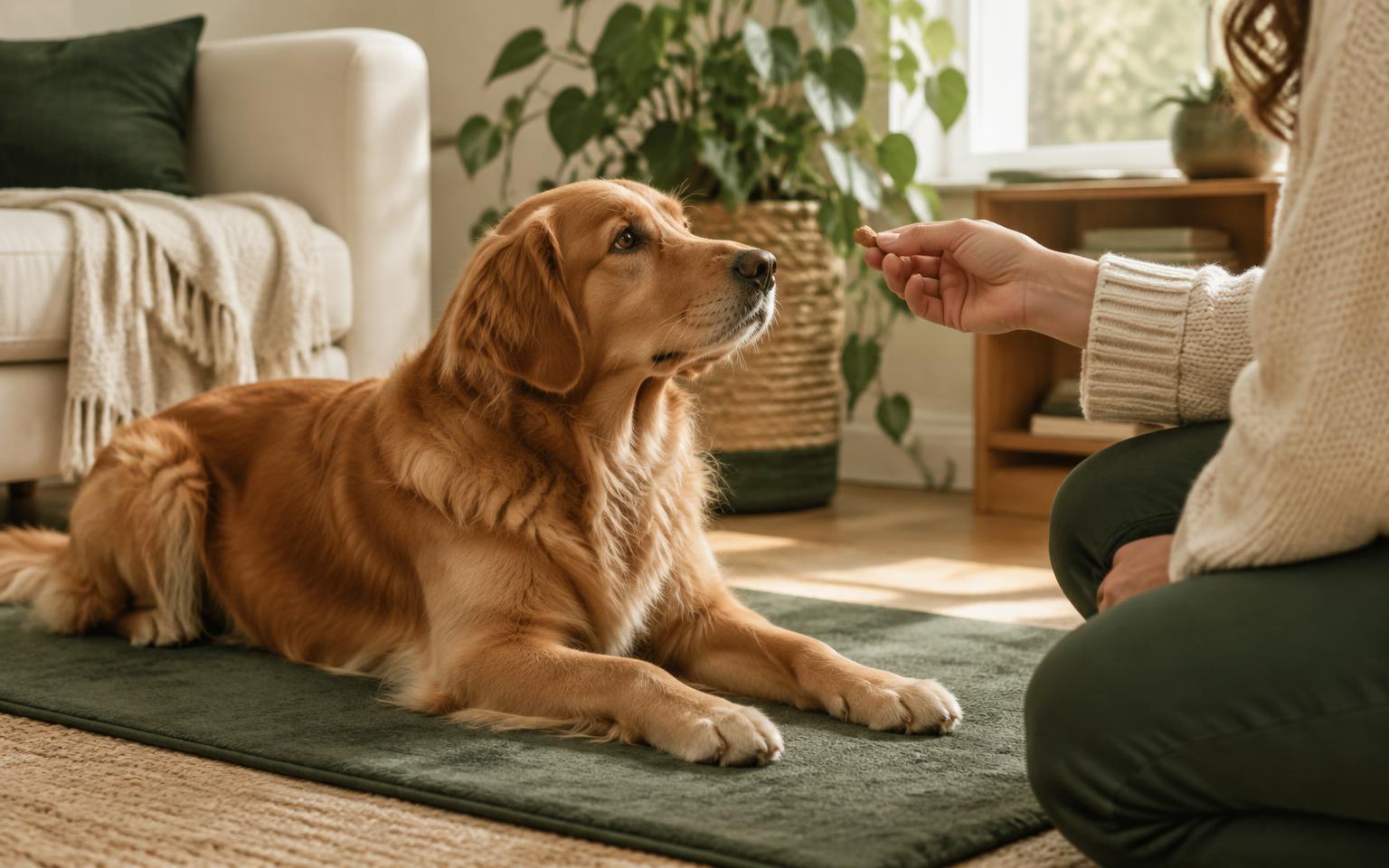
Illustrative cover using relevant category imagery; it does not depict the exact subject.
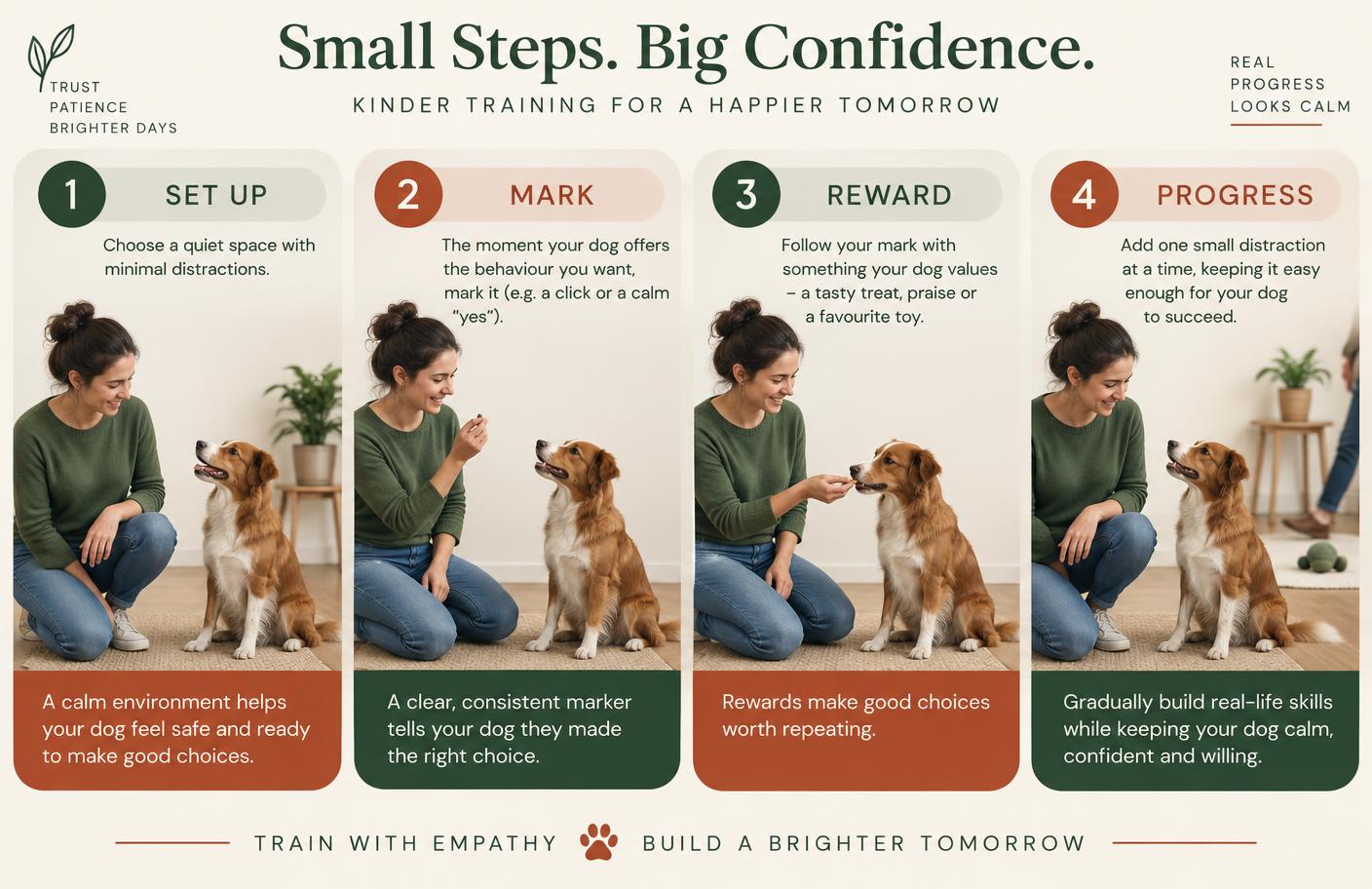
Step by step
Step 1
Lure from a sit
Hold a treat at the dog's nose and move it slowly down between the front paws, then along the floor.
Step 2
Reward the moment elbows touch
Mark with 'yes' and give the treat on the floor.
Step 3
Fade the lure
After several successes, make the same movement with an empty hand and reward from the other hand.
Step 4
Add the word
Say 'down' just before the hand signal once the dog is lying down reliably.
Step 5
Practise in new places
Start again with easy steps in each new location.
Troubleshooting
- If the dog stands up, move the lure more slowly and closer to the floor.
- Some dogs find cold or slippery floors uncomfortable — use a mat.
When to progress or pause
- Your target is: Teach a dog to lie down calmly on a word or hand signal, using reward-based steps. Observe voluntary participation and relaxed movement, not simply completion under restraint.
- Use the listed session guidance (3–5 minutes, a few times a day) as a starting point, not a requirement to continue when the animal is tired. Finish with an achievable repetition.
- Change one challenge at a time: location, distraction, distance or duration. If performance deteriorates, return to an easier successful version rather than escalating pressure.
- Sudden refusal, pain, panic or aggression warrants professional assessment. Do not withhold essential food or force handling to obtain compliance.
Educational reference, not an individual diagnosis or a verified professional review. Read our editorial policy.
Guidance libraries and further reading
These organisations publish relevant guidance. Their links are further reading, not evidence that they have reviewed this page.
- Animal Behaviour and Training Council — standards for trainers and behaviourists
- RSPCA — animal care and welfare advice across species
- AVMA — American Veterinary Medical Association owner resources