
Updated 2026-09-29
Recall for cats
Teach a cat to come to a sound, useful at mealtimes and emergencies.
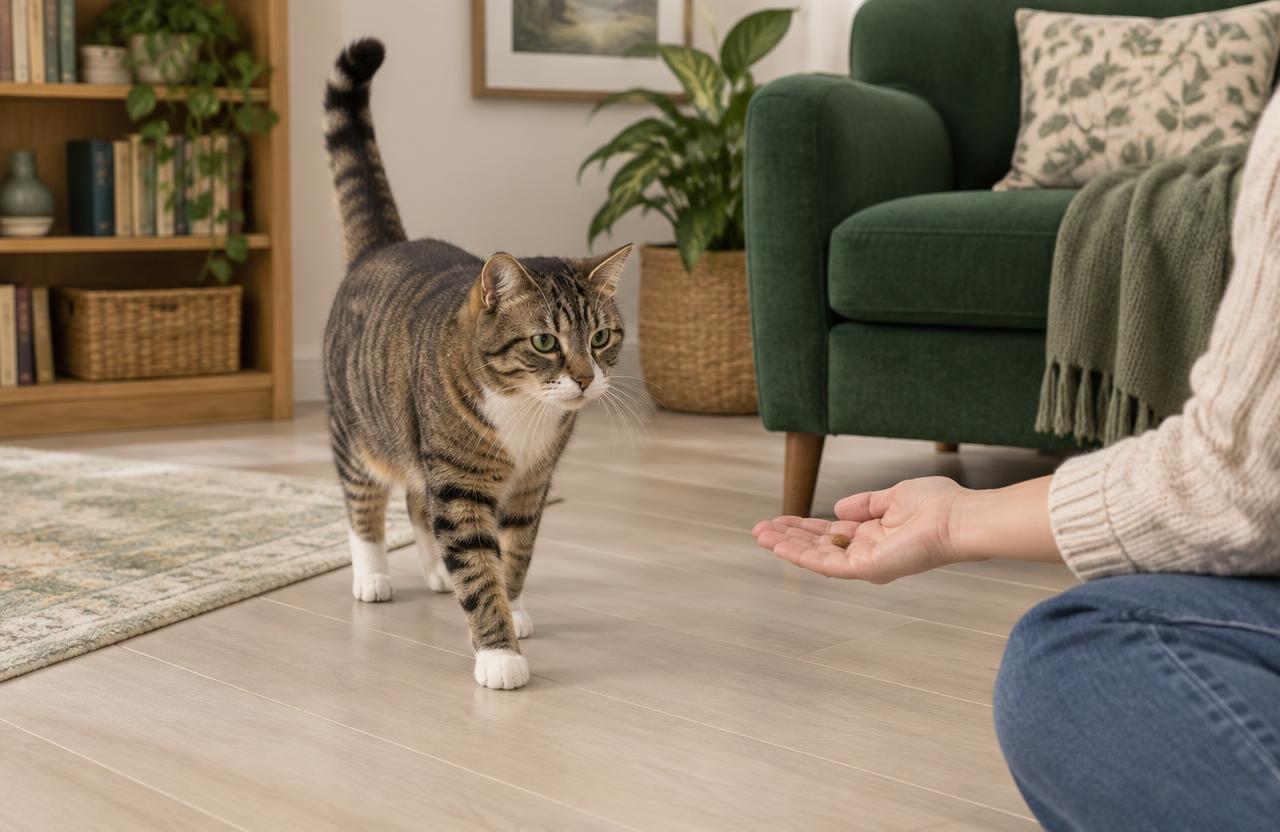
AI-generated editorial illustration; not a clinical demonstration or documentary photograph.
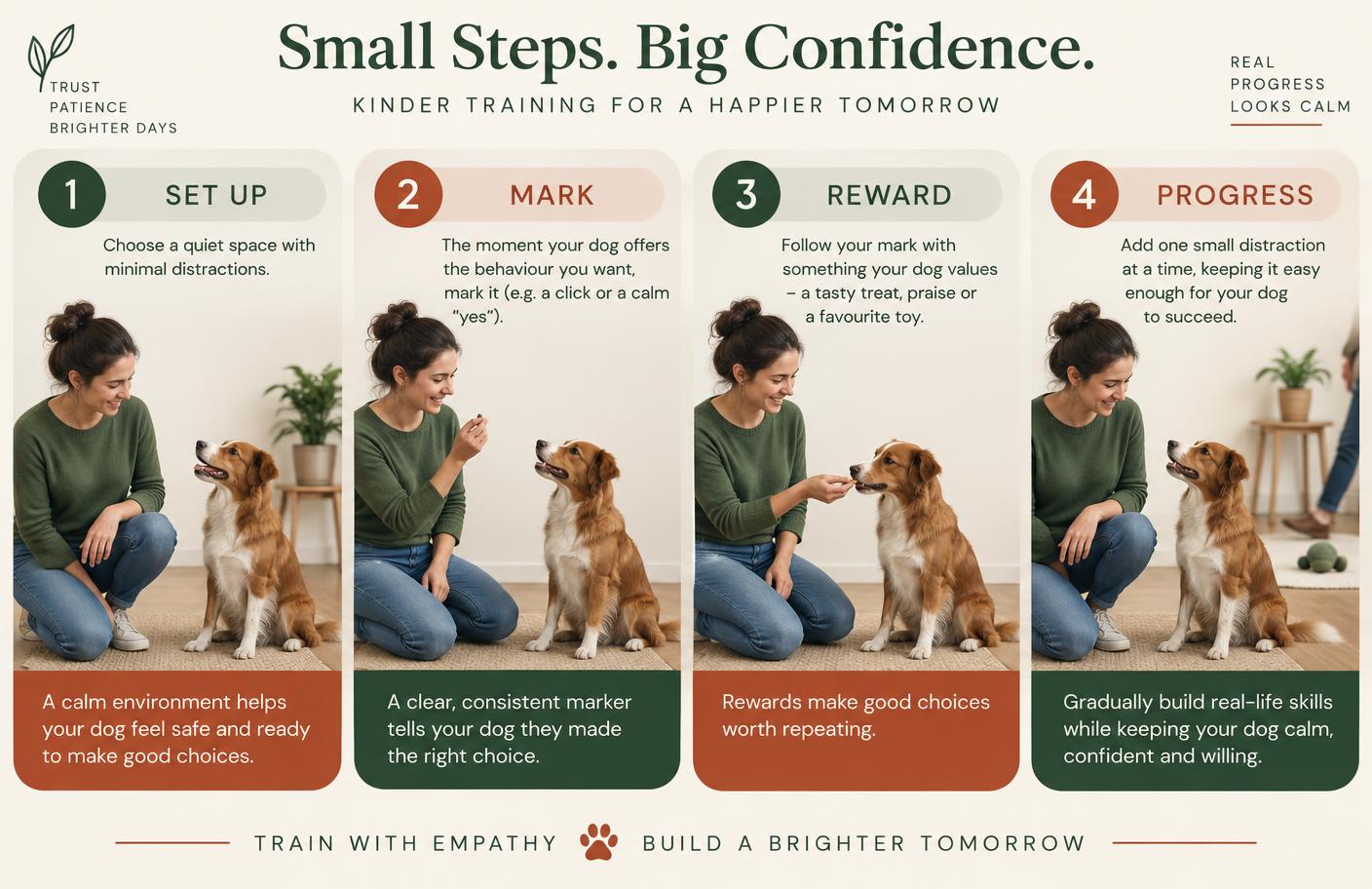
Step by step
Step 1
Pair the sound with food
Make the sound, then immediately give a treat, with the cat close by.
Step 2
Add a little distance
Make the sound from a metre or two away and reward on arrival.
Step 3
Call from other rooms
Increase distance gradually.
Step 4
Keep it rewarding
Never use the sound before something the cat dislikes, like the carrier.
Troubleshooting
- Practise when the cat is slightly hungry, not straight after a meal.
Cat recall: make the cue rewarding
| Stage | Practice |
|---|---|
| Choose a cue | One consistent sound or word. |
| Begin close | Quiet room; reward voluntary approach. |
| Build gradually | Add distance or distraction one at a time. |
| No response | Make the next repetition easier; do not chase. |
| Safety | Never rely on recall instead of secure barriers. |
Recall is a trained behaviour, not a guarantee; protect cats from outdoor hazards.
Build a cue the cat can choose to answer
Recall can be useful for moving a cat indoors, calling it to a carrier or inviting it to a familiar location, but it is not a substitute for secure containment. Choose one short sound or word and pair it consistently with something the cat values, such as a small portion of its normal food.
Start nearby in a quiet, familiar room when the cat is awake and comfortable. Say the cue once, then reward any voluntary turn, look or approach. Avoid repeatedly calling, chasing, grabbing or punishing a cat that does not come; those responses can make the cue predict pressure rather than a positive outcome.
Practise gradually and protect safety
When the cat is responding readily at close range, practise from slightly farther away and in other familiar rooms. Change one challenge at a time and keep sessions brief. If the cat does not respond, reduce distraction or distance rather than escalating the call. Finish while the cat remains engaged and willing.
Never test recall near an open door, road, balcony or other hazard. Keep external access secure and use a carrier for transport. Make coming to you worthwhile even when the next activity is not a favourite; occasionally reward and release the cat. If the cat suddenly stops responding, consider hearing, pain or illness and ask a veterinarian.
Protect the cue during real household use
Practise reward-and-release repetitions so coming does not always predict a closed door or an unwanted procedure. Place a reward where the cat can reach it without being grabbed, and leave a comfortable route away. In a multi-cat household, begin with separate sessions to avoid competition for food or one cat blocking another. Choose a reward allowed by the feeding plan; withholding meals to force participation is inappropriate. When recall will lead to a carrier, first build comfortable voluntary carrier entry as a separate skill rather than trapping the cat after a successful approach.
Keep a simple note of the room, distance and distraction level where the cat responds comfortably. Return to easier practice after a move, illness or a change in hearing or mobility. A response indoors does not show that the cue will override fear, prey chasing or traffic outdoors. Microchip registration, secure windows and doors, and appropriate transport remain necessary. If the cat ignores a cue during an emergency, use calm safe management rather than escalating sound or chasing it into danger. Training can improve cooperation, but it never removes the owner’s responsibility for containment.
Sources for this reference
AI-assisted educational guidance, updated 19 October 2026. Not professionally reviewed; sources do not imply endorsement of this page.
When to progress or pause
- Your target is: Teach a cat to come to a sound, useful at mealtimes and emergencies. Observe voluntary participation and relaxed movement, not simply completion under restraint.
- Use the listed session guidance (1–2 minutes before meals) as a starting point, not a requirement to continue when the animal is tired. Finish with an achievable repetition.
- Change one challenge at a time: location, distraction, distance or duration. If performance deteriorates, return to an easier successful version rather than escalating pressure.
- Sudden refusal, pain, panic or aggression warrants professional assessment. Do not withhold essential food or force handling to obtain compliance.
Educational reference, not an individual diagnosis or a verified professional review. Read our editorial policy.
Guidance libraries and further reading
These organisations publish relevant guidance. Their links are further reading, not evidence that they have reviewed this page.
- Animal Behaviour and Training Council — standards for trainers and behaviourists
- RSPCA — animal care and welfare advice across species
- AVMA — American Veterinary Medical Association owner resources