
Plant-based diets
Plant-Based Diet Benefits: What the Evidence Really Supports
Potential heart, metabolic and digestive benefits explained alongside the importance of food quality, fortification and adequate intake.
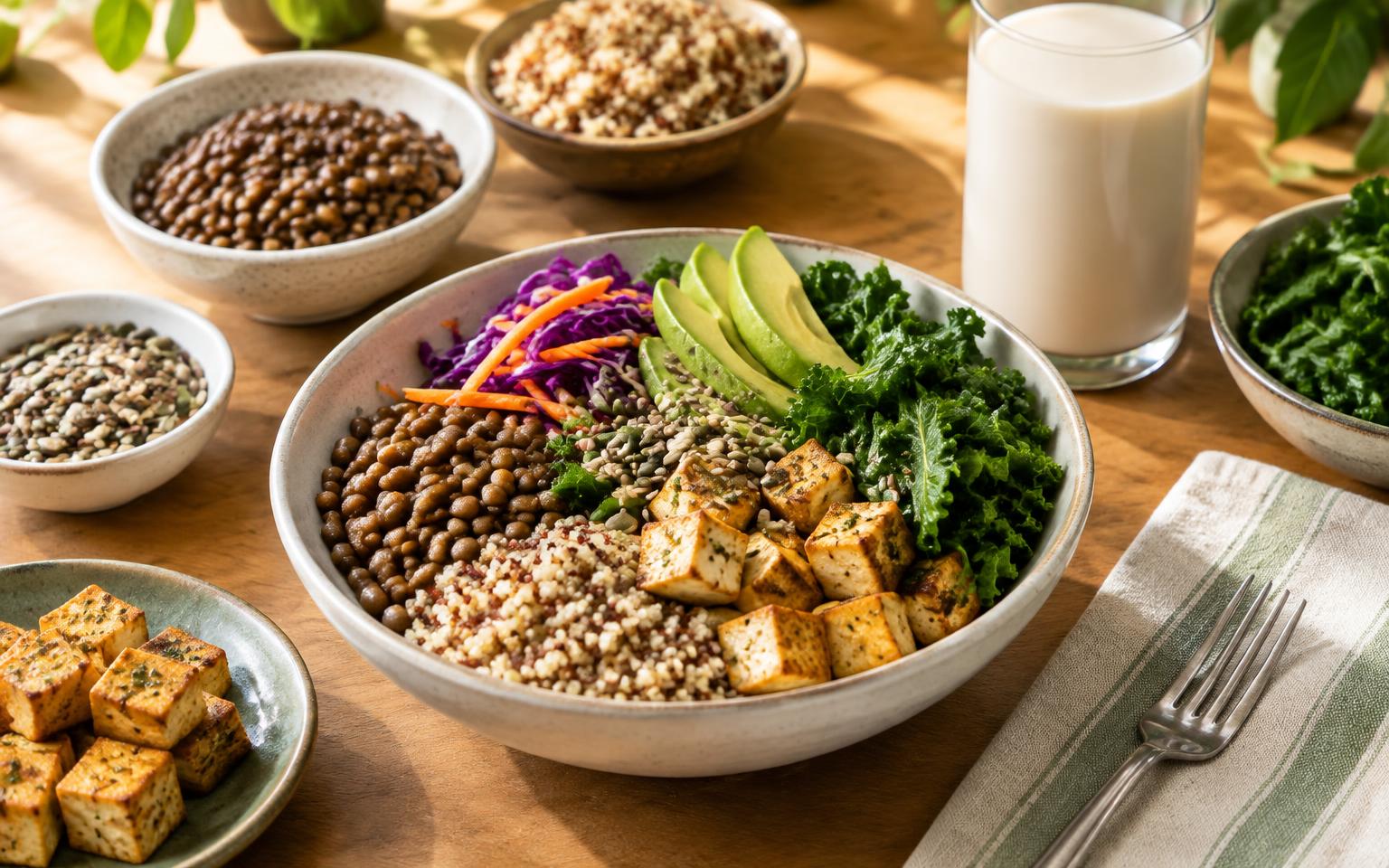
Plant-based is a pattern, not one menu
A plant-based diet emphasises vegetables, fruit, wholegrains, pulses, nuts and seeds. It may be vegan or include some animal foods. Health effects depend on what is added, not only what is removed.
Where benefits may come from
Well-planned patterns tend to provide more fibre, unsaturated fat and a wider range of plant foods, and less saturated fat. Observational and trial evidence links healthy plant-rich patterns with better cardiovascular risk factors and lower rates of type 2 diabetes; this does not make every vegan product protective.
Food quality changes the result
- Build meals around minimally processed staple foods
- Include a meaningful protein source at each main meal
- Use fortified alternatives rather than assuming all plant milks are equivalent
- Limit foods high in salt, free sugar and saturated coconut or palm fat
Benefits do not cancel deficiency risk
Vitamin B12 has no reliable unfortified plant source. Iodine, vitamin D, calcium, iron, selenium and long-chain omega-3 need deliberate planning. Speak to a dietitian for medical conditions, pregnancy or restricted eating.
Frequently asked questions
- Is vegan food automatically healthy?
- No. A vegan label says which ingredients are absent, not whether the food is balanced, high in fibre or low in salt.
References
- The vegan diet — NHS
- Vegetarian, vegan and plant-based diets — British Dietetic Association