
Respiratory system · Updated 2026-09-21
Respiratory infection in reptiles
Airway or lung infection that often develops when temperature, humidity, stress or underlying health are unsuitable.

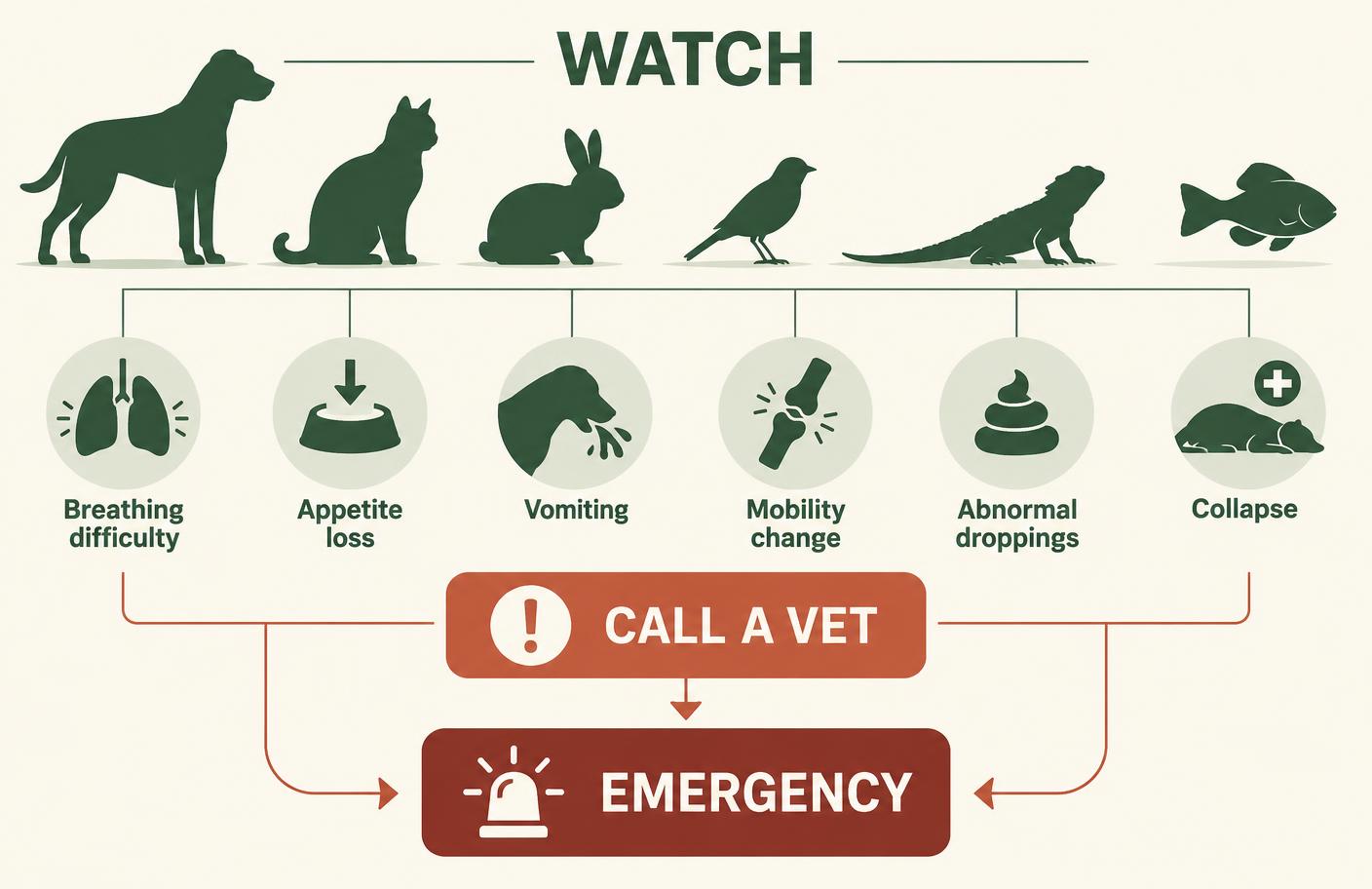
Signs to watch for
- Open-mouth breathing
- Nasal bubbles
- Wheezing or clicking
- Extended neck
- Reduced appetite
- Lethargy
Causes and risk factors
Bacteria, viruses or fungi may be involved; incorrect temperatures, poor ventilation and stress commonly impair immune defence.
How veterinarians diagnose it
A reptile veterinarian reviews exact husbandry, examines breathing and may use imaging, blood tests and respiratory samples.
Treatment and management
Treatment corrects the environment and uses targeted veterinary medication, fluids and nutritional support where indicated.
Prevention
Maintain measured species-specific heat and humidity gradients, quarantine additions and clean without creating persistently damp stagnant air.
Outlook
Often favourable when caught early; advanced pneumonia can be life-threatening.