
Nutritional and skeletal · Updated 2026-09-21
Metabolic bone disease in reptiles
Weakened, deformed bones caused by calcium, vitamin D3 or UVB deficiency and incorrect calcium-to-phosphorus balance.

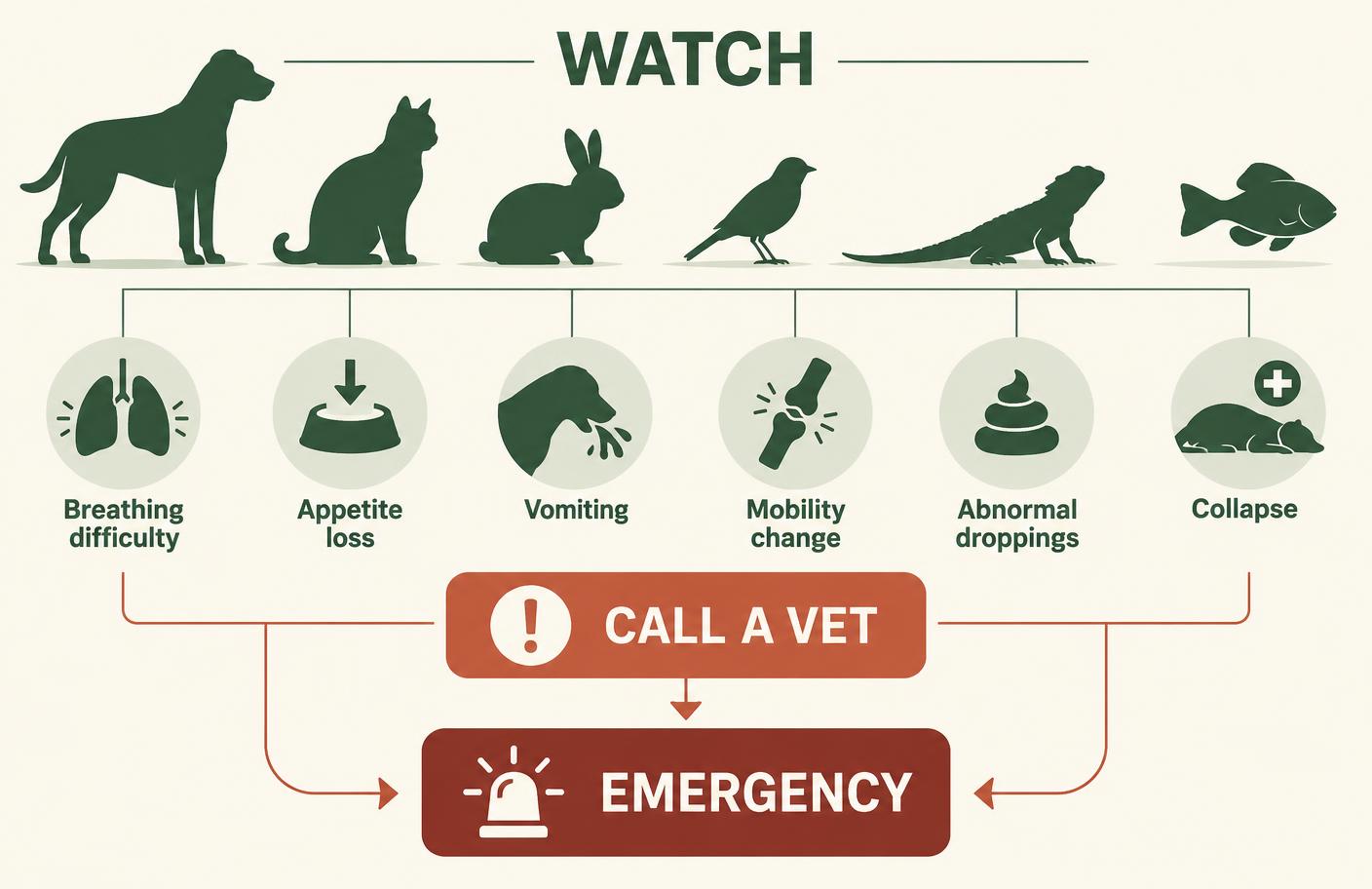
Signs to watch for
- Swollen or rubbery jaw
- Tremors or twitching
- Difficulty lifting the body
- Bent limbs or spine
- Lethargy
- Poor appetite
Causes and risk factors
Absent or expired UVB lighting, unsupplemented diets, incorrect temperatures preventing digestion, and phosphorus-heavy feeding.
How veterinarians diagnose it
Husbandry review, physical examination, blood calcium and phosphorus levels and radiographs showing reduced bone density or fractures.
Treatment and management
Immediate husbandry correction plus veterinary calcium therapy, fluids, pain relief and nutritional support; fractures need careful handling.
Prevention
Correct species-specific UVB replaced on schedule, measured basking gradients, dusted appropriate prey or greens and routine weight checks.
Outlook
Early cases often improve well; established deformities are permanent even once progression stops.