
Infectious disease · Updated 2026-09-29
Myxomatosis in rabbits
A severe viral disease spread by biting insects and direct contact; often fatal in unvaccinated domestic rabbits.
Emergency veterinary attentionRabbits
Signs to watch for
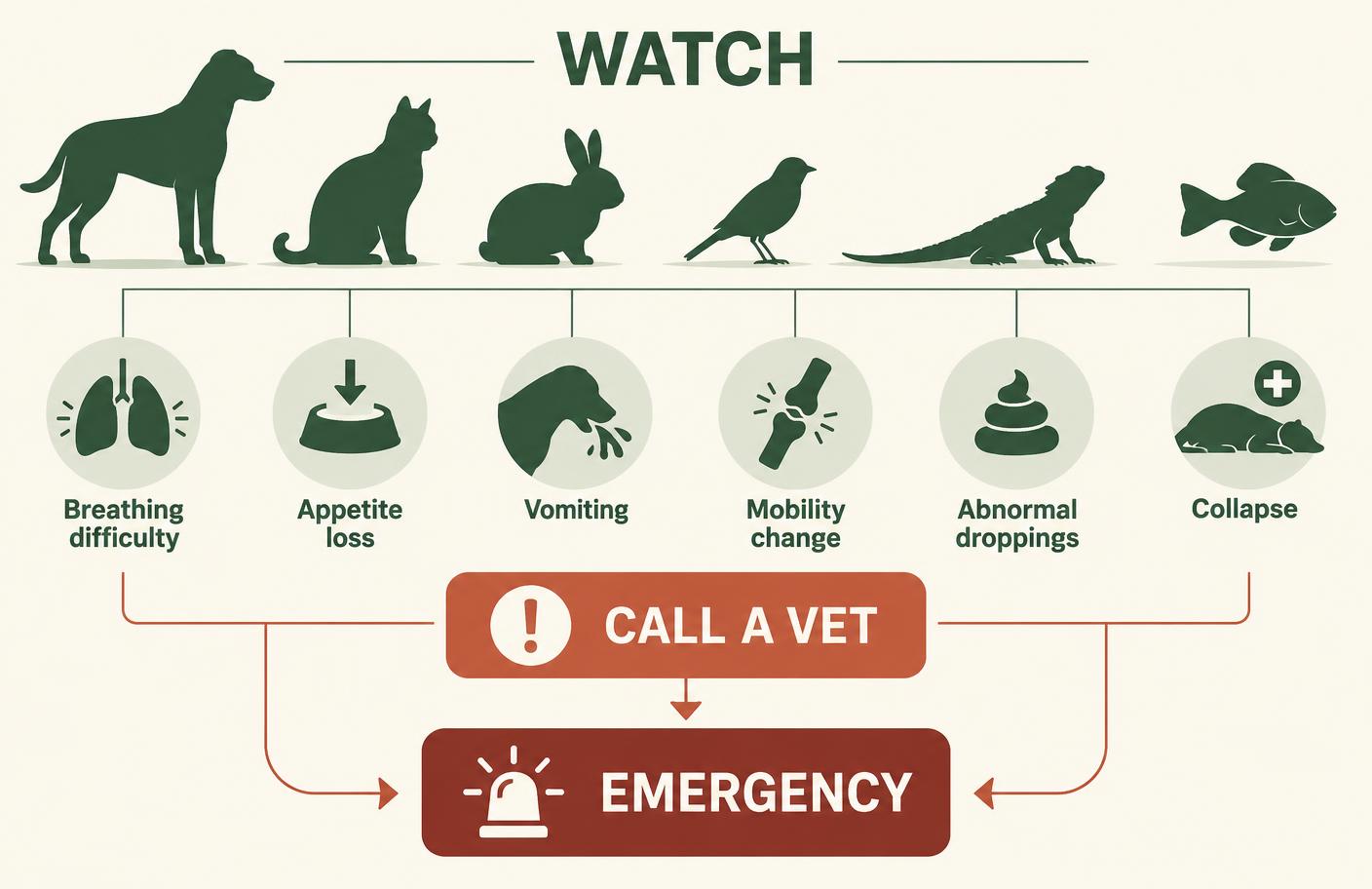
- Swollen eyes, nose and genitals
- Pus-like eye discharge
- Fever and lethargy
- Loss of appetite
- Breathing difficulty
- Skin lumps
Causes and risk factors
Myxoma virus transmitted by fleas, mosquitoes and mites, or by contact with infected rabbits.
How veterinarians diagnose it
Usually based on the characteristic appearance; laboratory confirmation is possible.
Treatment and management
Supportive nursing, pain relief, assisted feeding and antibiotics for secondary infection. Vaccinated rabbits have far better survival.
Prevention
Annual vaccination, insect-proof housing, mosquito netting and prompt flea control for all pets in the home.
Outlook
Poor in unvaccinated rabbits; vaccinated rabbits usually develop a milder, survivable form.
Common questions
- What are the signs of myxomatosis in rabbits?
- Swollen eyes, nose and genitals; Pus-like eye discharge; Fever and lethargy; Loss of appetite; Breathing difficulty; Skin lumps.
- What causes myxomatosis in rabbits?
- Myxoma virus transmitted by fleas, mosquitoes and mites, or by contact with infected rabbits.
- How is myxomatosis in rabbits diagnosed?
- Usually based on the characteristic appearance; laboratory confirmation is possible.
- How is myxomatosis in rabbits treated?
- Supportive nursing, pain relief, assisted feeding and antibiotics for secondary infection. Vaccinated rabbits have far better survival.
- Can myxomatosis in rabbits be prevented?
- Annual vaccination, insect-proof housing, mosquito netting and prompt flea control for all pets in the home.
- When should I contact a veterinarian?
- Isolate the rabbit and call your vet immediately. Do not bring a suspected case into a waiting room without warning the practice.