
Digestive system · Updated 2026-09-21
Gastrointestinal stasis in rabbits
A dangerous slowing of gut movement that is usually secondary to pain, illness, stress, dehydration or unsuitable diet.
Signs to watch for
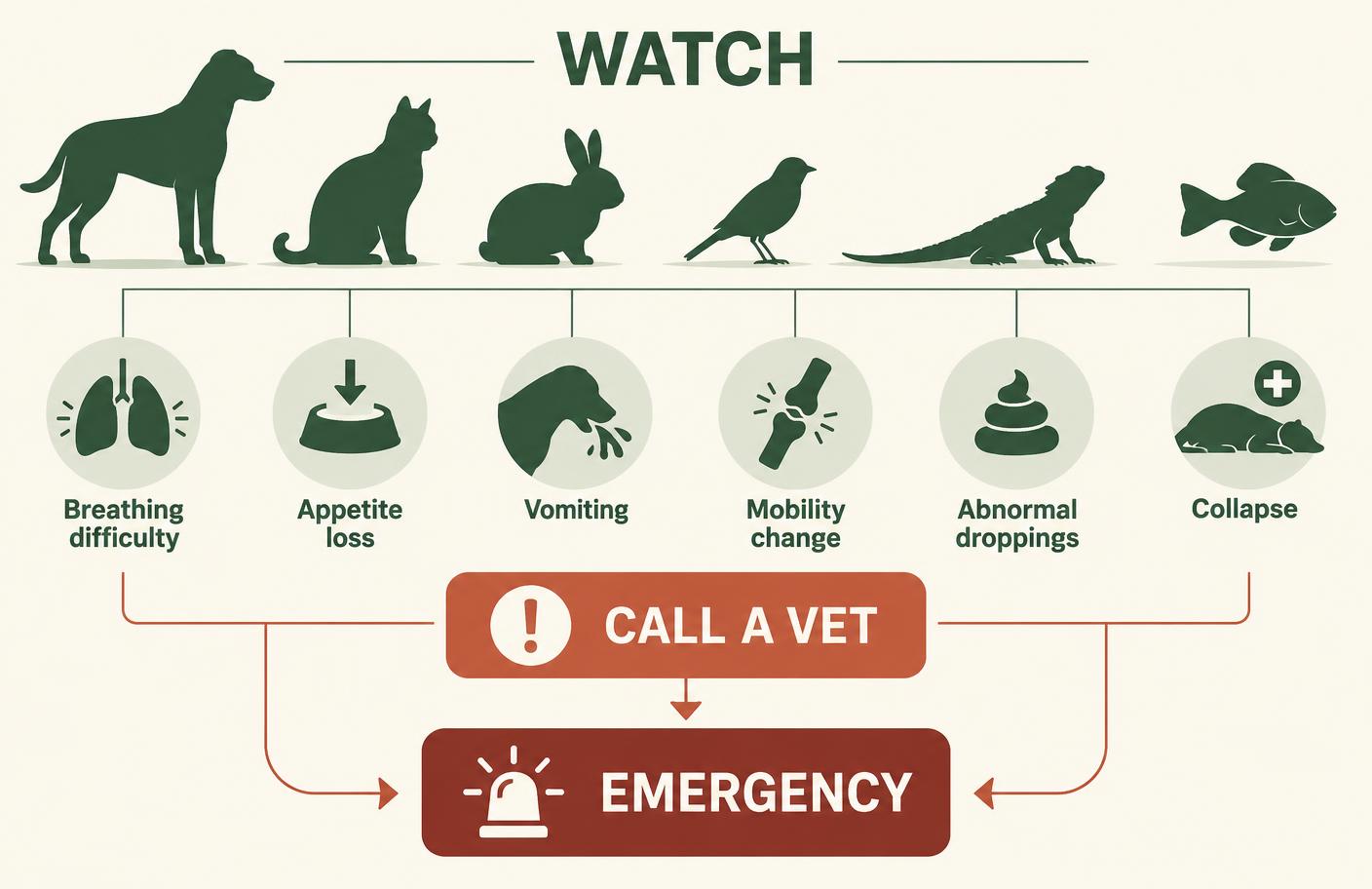
- Eating less or stopping
- Fewer or smaller droppings
- Hunched posture
- Tooth grinding
- Bloated abdomen
- Lethargy
Causes and risk factors
Dental pain, low-fibre intake, obstruction, dehydration, stress and many systemic diseases can trigger reduced gut movement.
How veterinarians diagnose it
A rabbit-experienced veterinarian assesses hydration, pain and abdomen and may use radiographs and blood tests to distinguish stasis from obstruction.
Treatment and management
Urgent treatment targets the cause and may include fluids, pain relief, assisted nutrition and motility medicines when obstruction has been excluded.
Prevention
Provide unlimited grass hay, gradual diet changes, exercise, routine dental care and daily observation of eating and droppings.
Outlook
Good when treated early and the cause is reversible; delay or obstruction can be fatal.