
Parasites · Updated 2026-09-29
Flystrike in rabbits
Flies lay eggs on soiled fur and maggots eat into the skin — a rapidly fatal summer emergency.
Emergency veterinary attentionRabbitsGuinea pigs

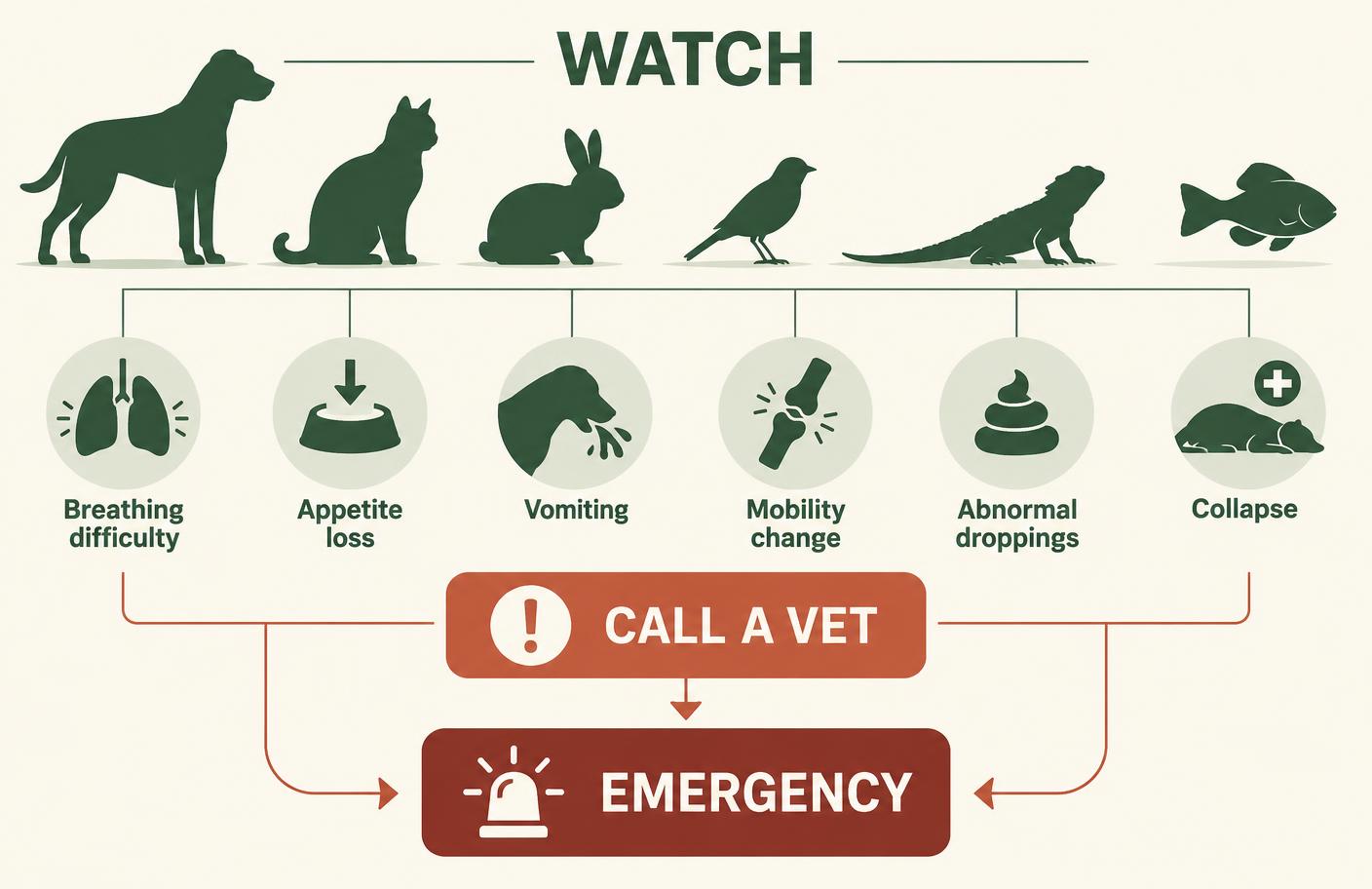
Signs to watch for
- Maggots around the tail
- Wet, dirty bottom
- Lethargy
- Not eating
- A strong smell
Causes and risk factors
Soiled fur from uneaten caecotrophs, obesity, dental disease, arthritis or dirty bedding.
How veterinarians diagnose it
Seen on examination; the vet checks for underlying causes.
Treatment and management
Clipping, removing maggots, pain relief, fluids and antibiotics under veterinary care.
Prevention
Check bottoms twice daily in warm weather, clean litter daily, keep rabbits slim and ask about fly-prevention products.
Outlook
Guarded; good if caught early.
Common questions
- What are the signs of flystrike in rabbits?
- Maggots around the tail; Wet, dirty bottom; Lethargy; Not eating; A strong smell.
- What causes flystrike in rabbits?
- Soiled fur from uneaten caecotrophs, obesity, dental disease, arthritis or dirty bedding.
- How is flystrike in rabbits diagnosed?
- Seen on examination; the vet checks for underlying causes.
- How is flystrike in rabbits treated?
- Clipping, removing maggots, pain relief, fluids and antibiotics under veterinary care.
- Can flystrike in rabbits be prevented?
- Check bottoms twice daily in warm weather, clean litter daily, keep rabbits slim and ask about fly-prevention products.
- When should I contact a veterinarian?
- Phone your vet immediately — do not bathe the rabbit first.