
Infectious disease · Updated 2026-09-29
E. cuniculi in rabbits
A common parasite that can lie dormant, then cause head tilt, balance loss, kidney disease or eye problems.
Urgent veterinary attentionRabbits
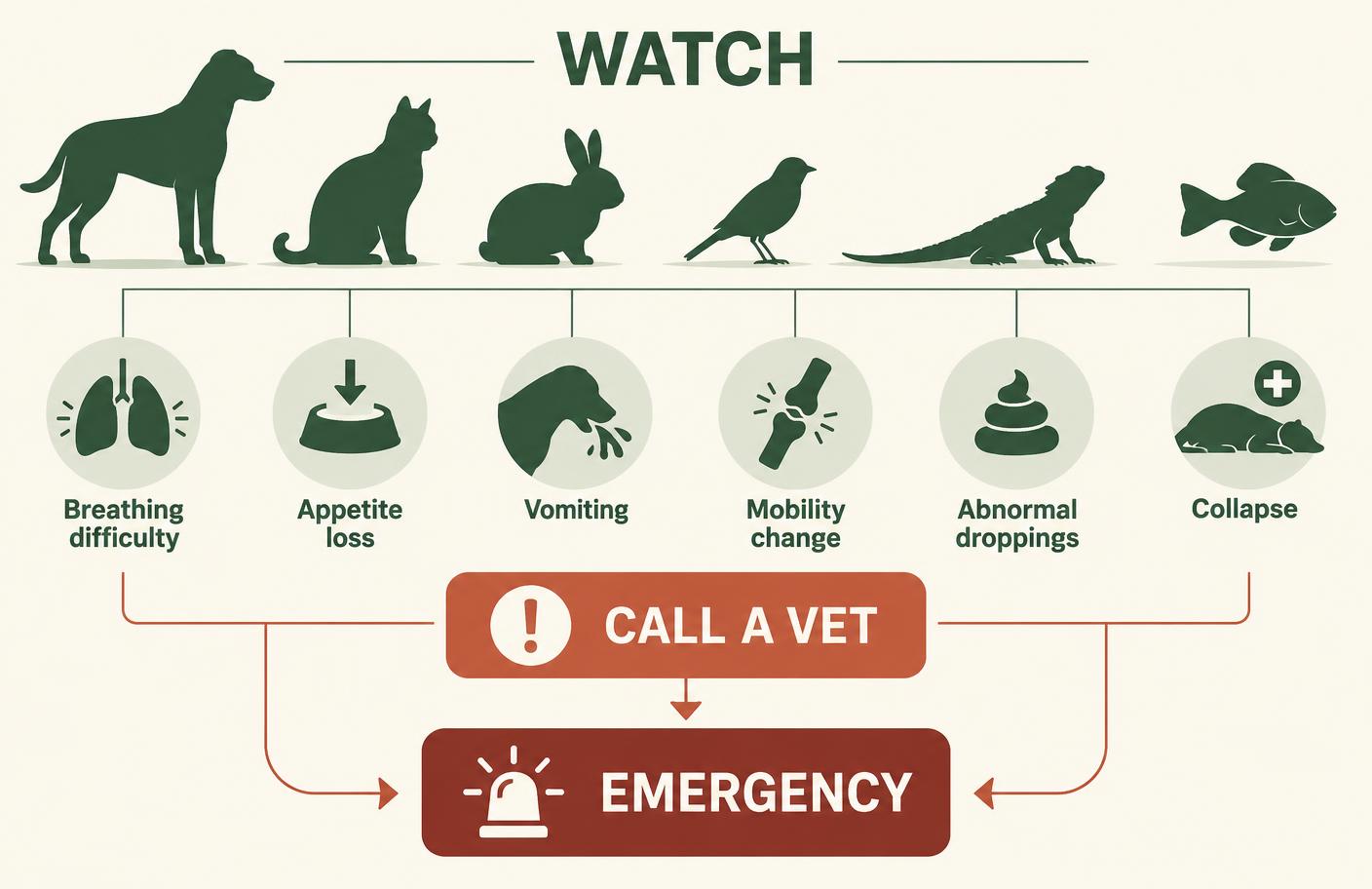
Signs to watch for
- Head tilt
- Rolling or loss of balance
- Flicking eyes
- Weakness in the back legs
- Increased thirst
- White mass in the eye
Causes and risk factors
The spores spread in urine; many rabbits carry the parasite without ever becoming ill.
How veterinarians diagnose it
Blood tests and ruling out ear infection and other causes of head tilt.
Treatment and management
Antiparasitic medication, anti-inflammatories, supportive nursing and help with eating if needed.
Prevention
Hygiene, testing or treating new rabbits before introduction, and vet-advised preventive courses.
Outlook
Many rabbits improve and adapt well, even with a lasting head tilt.
Common questions
- What are the signs of e. cuniculi in rabbits?
- Head tilt; Rolling or loss of balance; Flicking eyes; Weakness in the back legs; Increased thirst; White mass in the eye.
- What causes e. cuniculi in rabbits?
- The spores spread in urine; many rabbits carry the parasite without ever becoming ill.
- How is e. cuniculi in rabbits diagnosed?
- Blood tests and ruling out ear infection and other causes of head tilt.
- How is e. cuniculi in rabbits treated?
- Antiparasitic medication, anti-inflammatories, supportive nursing and help with eating if needed.
- Can e. cuniculi in rabbits be prevented?
- Hygiene, testing or treating new rabbits before introduction, and vet-advised preventive courses.
- When should I contact a veterinarian?
- Sudden head tilt or rolling needs same-day exotic-vet care; keep the rabbit in a padded, low enclosure.