
Behaviour and skin · Updated 2026-09-21
Feather destructive behaviour in parrots
Self-directed plucking or chewing of feathers with medical, environmental and behavioural causes that must be untangled together.
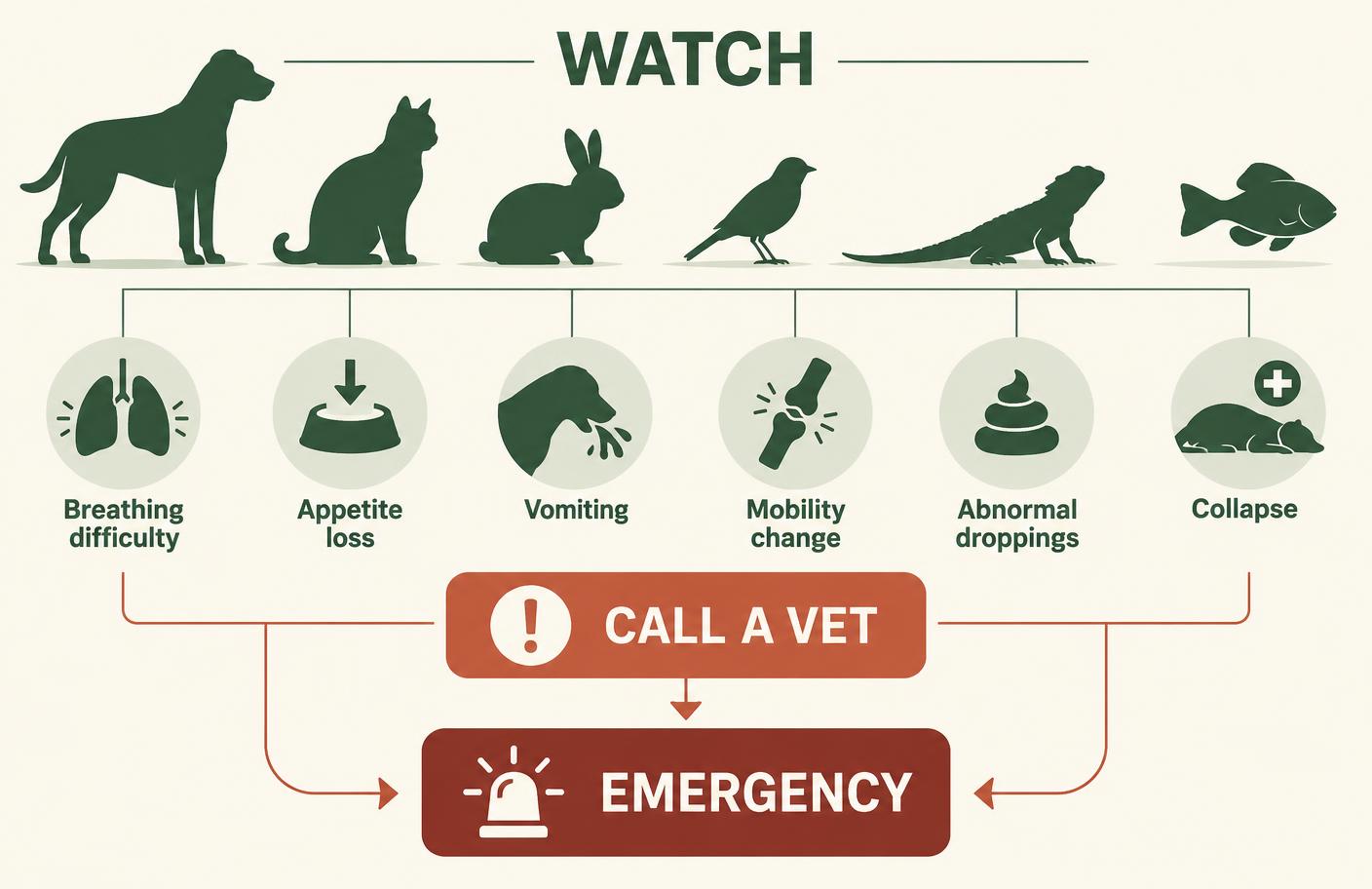
Signs to watch for
- Bare patches the beak can reach
- Chewed feather shafts
- Skin damage
- Restlessness
- Screaming or withdrawal
- Feathers on the cage floor
Causes and risk factors
Skin disease, pain, nutritional deficiency, hormones and infection, combined with boredom, isolation, poor sleep and unsuitable housing.
How veterinarians diagnose it
An avian vet rules out medical causes with examination, blood tests, imaging and sometimes skin or feather sampling before behavioural work.
Treatment and management
Treat identified disease, correct diet and light cycles, expand foraging and social time, and follow a structured behaviour plan; collars are a last resort.
Prevention
Species-appropriate diet, ten to twelve hours of dark sleep, daily foraging, safe chewing outlets and consistent companionship.
Outlook
Improvement is often gradual and partial; early intervention gives the best chance of regrowth.