
Infectious disease · Updated 2026-09-29
Lyme disease in dogs
A tick-borne bacterial infection; most exposed dogs never become ill, but some develop lameness, fever or, rarely, kidney disease.
Prompt veterinary attentionDogsPeople

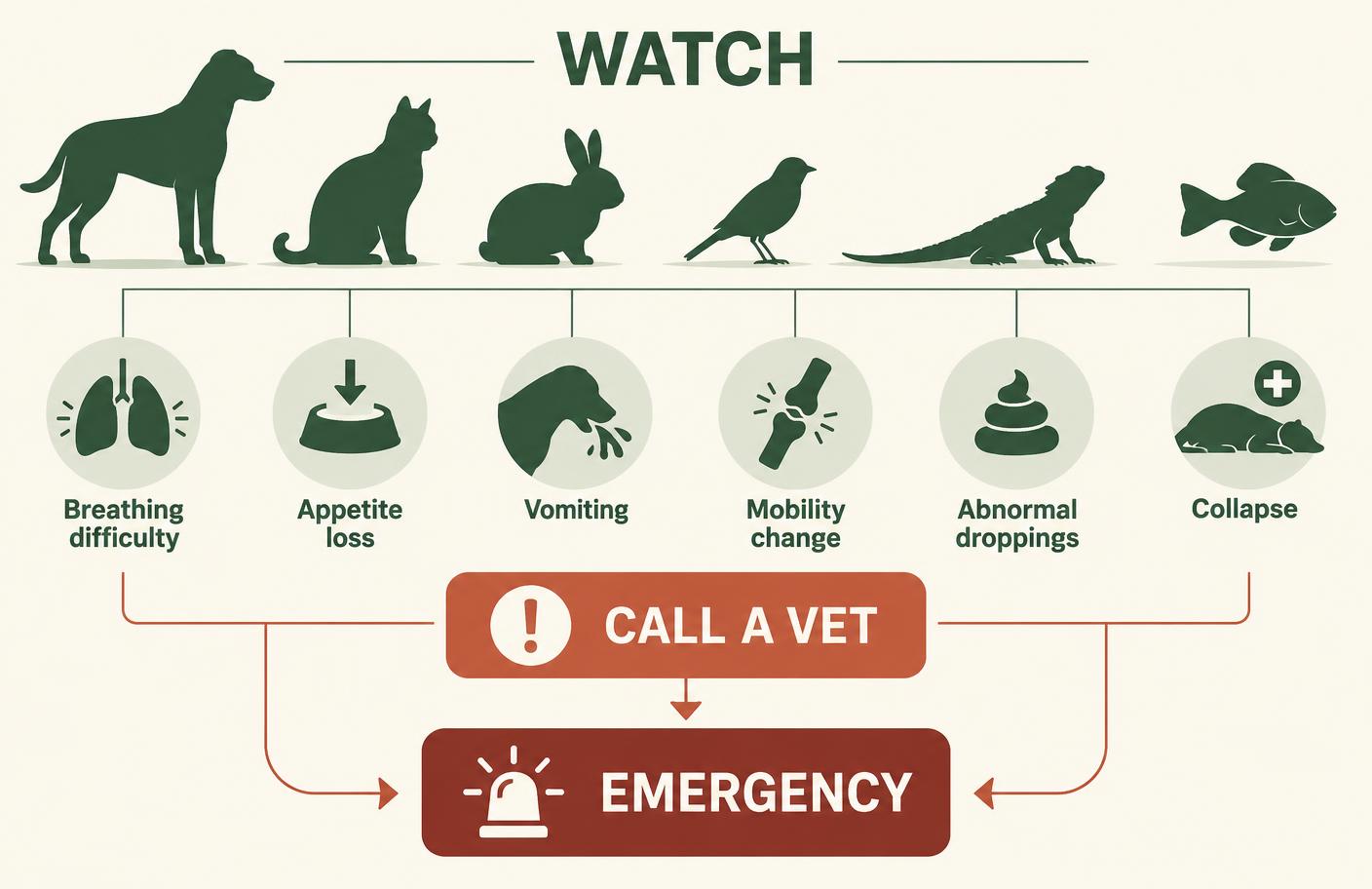
Signs to watch for
- Shifting-leg lameness
- Swollen, painful joints
- Fever
- Lethargy and poor appetite
- Rarely: increased thirst from kidney involvement
Causes and risk factors
Borrelia bacteria passed by infected ticks, usually after the tick has fed for 24–48 hours.
How veterinarians diagnose it
Blood tests combined with signs and exposure history; a positive test alone does not mean disease.
Treatment and management
A course of antibiotics, usually with quick improvement in joint signs, plus pain relief where needed.
Prevention
Year-round vet-recommended tick prevention, daily tick checks after walks and correct tick removal with a tick hook.
Outlook
Good for joint disease; the rare kidney form is serious.
Common questions
- What are the signs of lyme disease in dogs?
- Shifting-leg lameness; Swollen, painful joints; Fever; Lethargy and poor appetite; Rarely: increased thirst from kidney involvement.
- What causes lyme disease in dogs?
- Borrelia bacteria passed by infected ticks, usually after the tick has fed for 24–48 hours.
- How is lyme disease in dogs diagnosed?
- Blood tests combined with signs and exposure history; a positive test alone does not mean disease.
- How is lyme disease in dogs treated?
- A course of antibiotics, usually with quick improvement in joint signs, plus pain relief where needed.
- Can lyme disease in dogs be prevented?
- Year-round vet-recommended tick prevention, daily tick checks after walks and correct tick removal with a tick hook.
- When should I contact a veterinarian?
- Dogs do not pass Lyme disease directly to people, but they share tick exposure — check yourself too.