Buoyancy and mobility · Updated 2026-09-29
Swim bladder disorder in fish
Buoyancy problems — floating, sinking or swimming sideways — usually a symptom of diet, water quality or infection rather than a disease in itself.

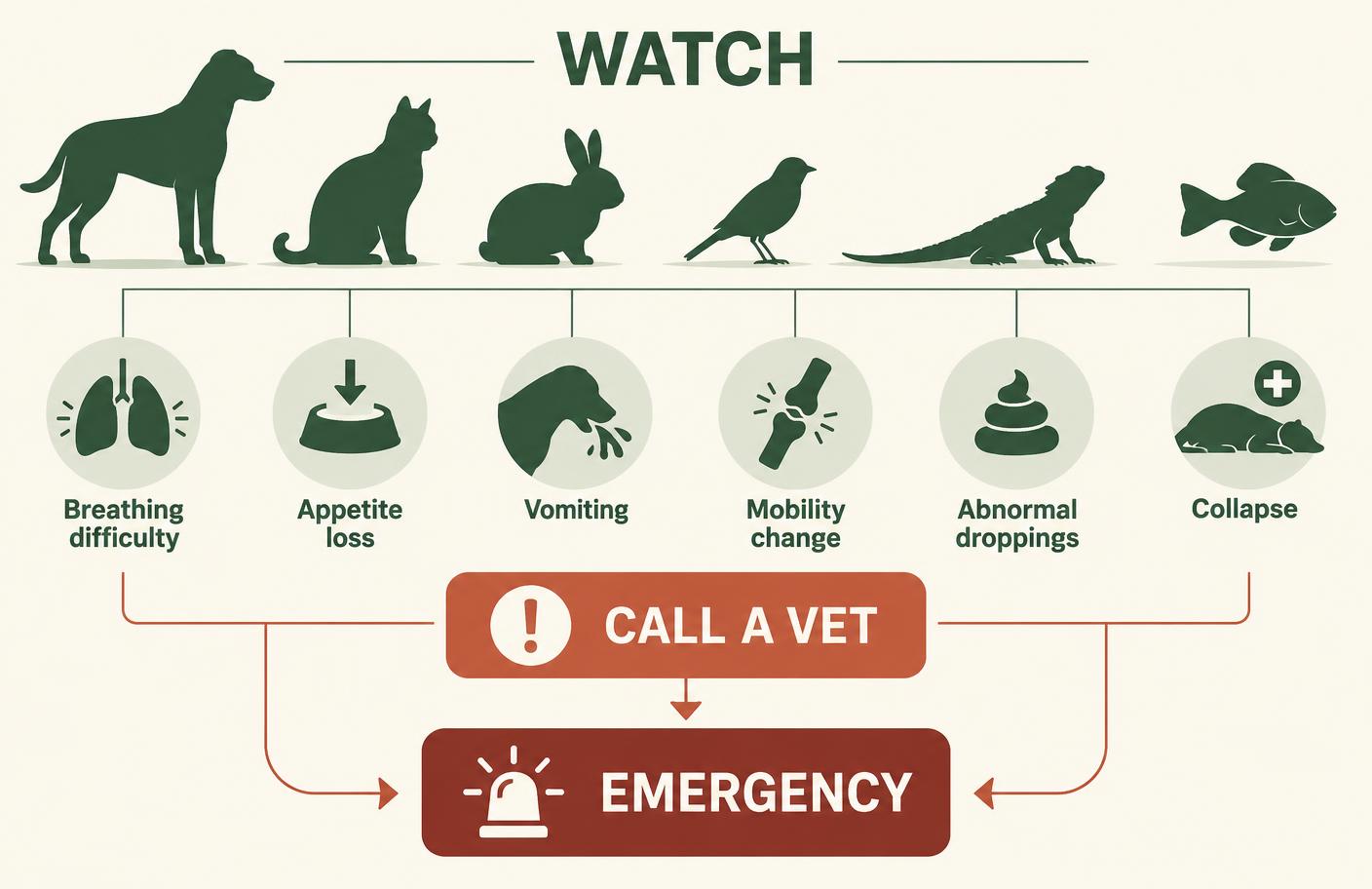
Signs to watch for
- Floating at the surface
- Sinking to the bottom
- Swimming on one side or upside down
- Swollen abdomen
- Struggling to reach food
Causes and risk factors
Overfeeding, constipation, gulped air with floating foods, poor water quality, bacterial infection or physical deformity. Fancy goldfish are especially prone.
How veterinarians diagnose it
Water testing comes first, then examination; an aquatic vet may use imaging for persistent cases.
Treatment and management
Correct water quality, fast the fish briefly, then offer easily digested foods; infections may need vet-prescribed treatment.
Prevention
Feed measured portions of quality sinking or soaked foods, avoid overfeeding and keep up water changes.
Outlook
Good for dietary causes; recurrent or deformity-related cases may need permanent management.
Common questions
- What are the signs of swim bladder disorder in fish?
- Floating at the surface; Sinking to the bottom; Swimming on one side or upside down; Swollen abdomen; Struggling to reach food.
- What causes swim bladder disorder in fish?
- Overfeeding, constipation, gulped air with floating foods, poor water quality, bacterial infection or physical deformity. Fancy goldfish are especially prone.
- How is swim bladder disorder in fish diagnosed?
- Water testing comes first, then examination; an aquatic vet may use imaging for persistent cases.
- How is swim bladder disorder in fish treated?
- Correct water quality, fast the fish briefly, then offer easily digested foods; infections may need vet-prescribed treatment.
- Can swim bladder disorder in fish be prevented?
- Feed measured portions of quality sinking or soaked foods, avoid overfeeding and keep up water changes.
- When should I contact a veterinarian?
- Seek aquatic-vet advice if the fish stops eating, develops pinecone-like raised scales, or several fish are affected.