
Skin and fins · Updated 2026-09-21
Fin rot in aquarium fish
Progressive fin damage associated with bacterial infection, commonly enabled by injury, stress or poor water quality.
Signs to watch for
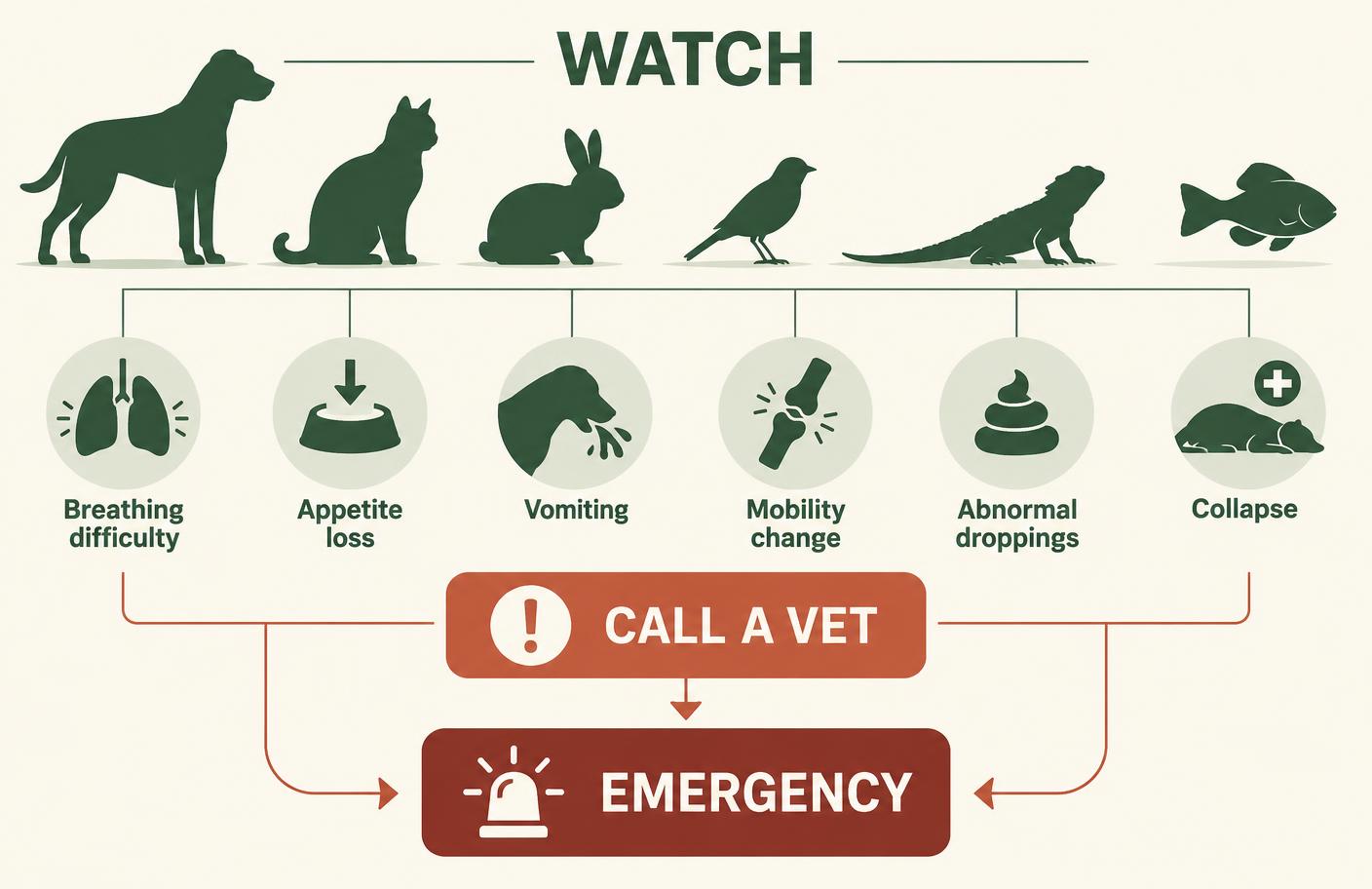
- Frayed fin edges
- White or red fin margins
- Fin loss
- Hiding
- Reduced appetite
- Rapid breathing
Causes and risk factors
Ammonia or nitrite exposure, unstable conditions, aggression, injury and crowding can damage tissue and permit opportunistic infection.
How veterinarians diagnose it
Water testing and examination of the whole group are essential; microscopy or culture may be needed because trauma and parasites can look similar.
Treatment and management
Correct water quality and aggression first. An aquatic veterinarian can advise whether supportive care, salt or an appropriate antimicrobial is indicated for the species and system.
Prevention
Cycle aquariums fully, test water routinely, quarantine additions and provide compatible stocking and cover.
Outlook
Usually good before infection reaches the fin base or body; systemic disease is more serious.