
Hormonal disease · Updated 2026-09-29
Adrenal disease in ferrets
Overactive adrenal glands causing hair loss and hormonal changes; very common in middle-aged neutered ferrets.
Prompt veterinary attentionFerrets
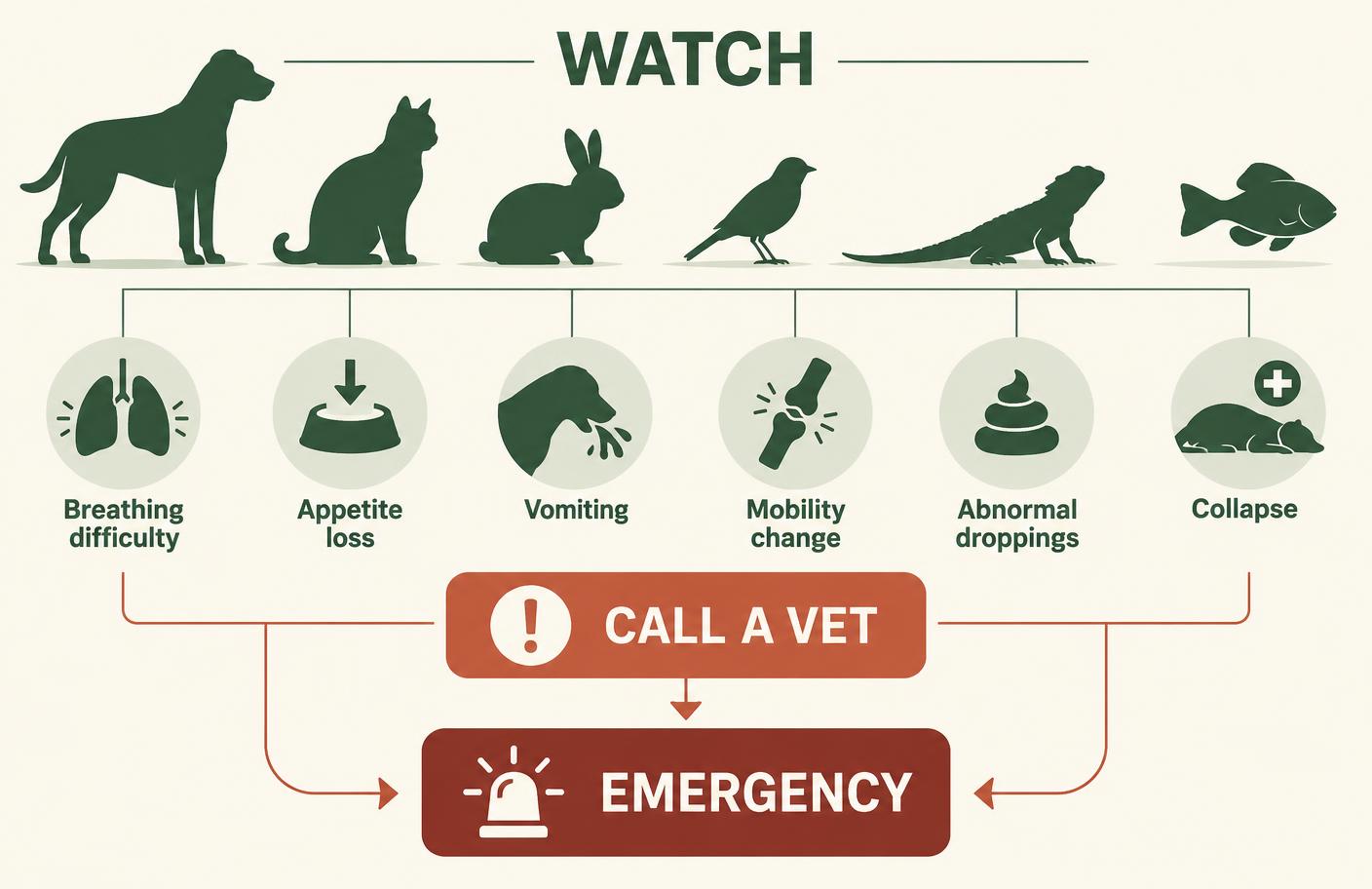
Signs to watch for
- Symmetrical hair loss starting at the tail
- Itchy skin
- Swollen vulva in females
- Difficulty urinating in males (an emergency)
- Muscle loss
Causes and risk factors
Linked to early neutering and hormonal factors in pet ferrets.
How veterinarians diagnose it
Signs, ultrasound of the adrenal glands and hormone testing by an exotic vet.
Treatment and management
Hormone implants to control signs, or surgery in selected cases.
Prevention
Discuss hormone implants as an alternative to surgical neutering with an exotic vet.
Outlook
Usually well managed; treatment controls signs rather than curing the disease.
Common questions
- What are the signs of adrenal disease in ferrets?
- Symmetrical hair loss starting at the tail; Itchy skin; Swollen vulva in females; Difficulty urinating in males (an emergency); Muscle loss.
- What causes adrenal disease in ferrets?
- Linked to early neutering and hormonal factors in pet ferrets.
- How is adrenal disease in ferrets diagnosed?
- Signs, ultrasound of the adrenal glands and hormone testing by an exotic vet.
- How is adrenal disease in ferrets treated?
- Hormone implants to control signs, or surgery in selected cases.
- Can adrenal disease in ferrets be prevented?
- Discuss hormone implants as an alternative to surgical neutering with an exotic vet.
- When should I contact a veterinarian?
- A male ferret straining to urinate needs emergency care.