
Infectious disease · Updated 2026-09-29
Cat flu (upper respiratory infection)
Sneezing, runny eyes and nose caused mainly by feline herpesvirus and calicivirus; especially serious in kittens.
Prompt veterinary attentionCats

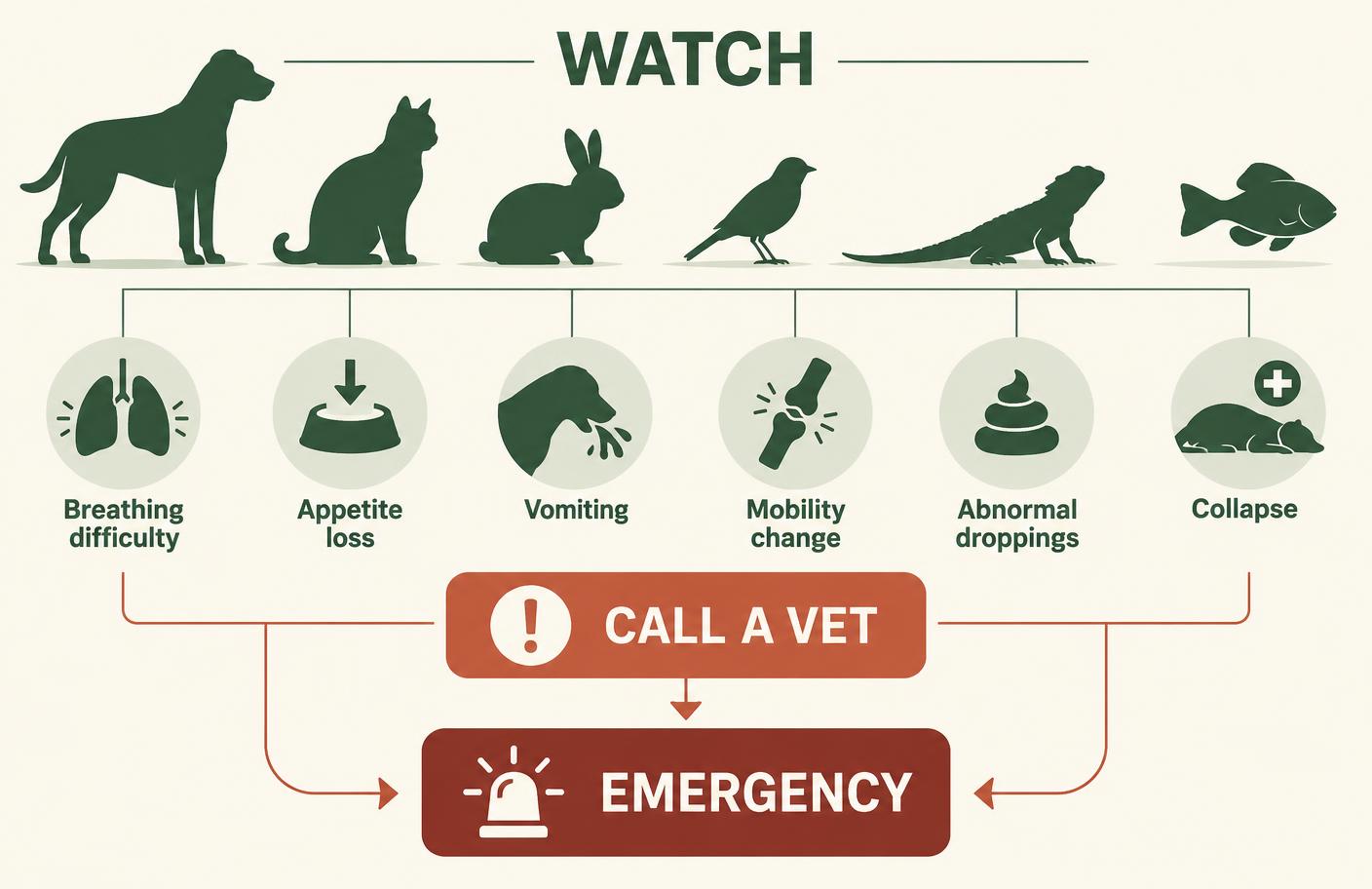
Signs to watch for
- Sneezing
- Runny eyes and nose
- Mouth ulcers
- Fever
- Loss of appetite (cats that cannot smell often stop eating)
Causes and risk factors
Highly contagious viruses and some bacteria spread by direct contact, sneezes and shared bowls.
How veterinarians diagnose it
Usually based on signs; swabs can identify the organism in shelters or severe cases.
Treatment and management
Supportive care: fluids, appetite support, cleaning discharge, pain relief and antibiotics for secondary infection.
Prevention
Core vaccination reduces severity. Herpesvirus stays in the body and can flare with stress.
Outlook
Most adult cats recover in one to three weeks; kittens can become seriously ill.
Common questions
- What are the signs of cat flu (upper respiratory infection)?
- Sneezing; Runny eyes and nose; Mouth ulcers; Fever; Loss of appetite (cats that cannot smell often stop eating).
- What causes cat flu (upper respiratory infection)?
- Highly contagious viruses and some bacteria spread by direct contact, sneezes and shared bowls.
- How is cat flu (upper respiratory infection) diagnosed?
- Usually based on signs; swabs can identify the organism in shelters or severe cases.
- How is cat flu (upper respiratory infection) treated?
- Supportive care: fluids, appetite support, cleaning discharge, pain relief and antibiotics for secondary infection.
- Can cat flu (upper respiratory infection) be prevented?
- Core vaccination reduces severity. Herpesvirus stays in the body and can flare with stress.
- When should I contact a veterinarian?
- A cat that has not eaten for 24 hours, or a kitten with cat flu, should see a vet the same day.