
Dental · Updated 2026-09-29
Tooth resorption in cats
A common, painful condition in which a cat's own cells break down tooth structure; many adult cats are affected.
Prompt veterinary attentionCats

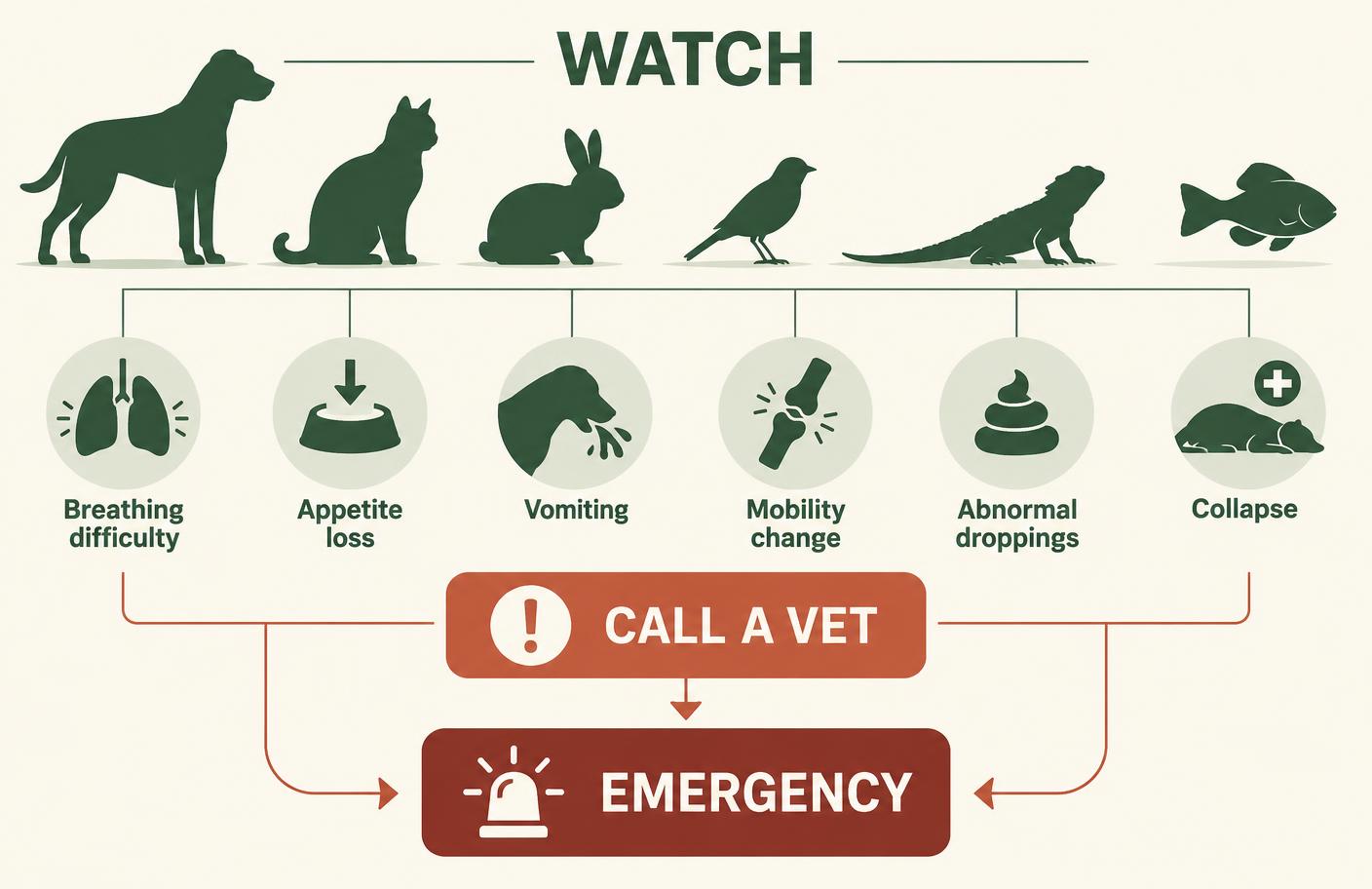
Signs to watch for
- Dropping food or chewing on one side
- Jaw chattering
- Drooling
- Red gum line over part of a tooth
- Often no obvious signs
Causes and risk factors
The cause is not fully understood; it becomes more common with age.
How veterinarians diagnose it
Examination under anaesthetic with dental X-rays, which show damage below the gum line.
Treatment and management
Affected teeth are extracted, or the crown removed in some types. Cats usually eat well afterwards.
Prevention
No known prevention; annual dental checks catch lesions early.
Outlook
Excellent after treatment, though new lesions may appear on other teeth.
Common questions
- What are the signs of tooth resorption in cats?
- Dropping food or chewing on one side; Jaw chattering; Drooling; Red gum line over part of a tooth; Often no obvious signs.
- What causes tooth resorption in cats?
- The cause is not fully understood; it becomes more common with age.
- How is tooth resorption in cats diagnosed?
- Examination under anaesthetic with dental X-rays, which show damage below the gum line.
- How is tooth resorption in cats treated?
- Affected teeth are extracted, or the crown removed in some types. Cats usually eat well afterwards.
- Can tooth resorption in cats be prevented?
- No known prevention; annual dental checks catch lesions early.
- When should I contact a veterinarian?
- Cats hide dental pain well. Any change in eating deserves a dental check.