
Heart disease · Updated 2026-09-29
Hypertrophic cardiomyopathy in cats
Thickening of the heart muscle — the most common heart disease in cats, often hidden until a crisis.
Urgent veterinary attentionCats

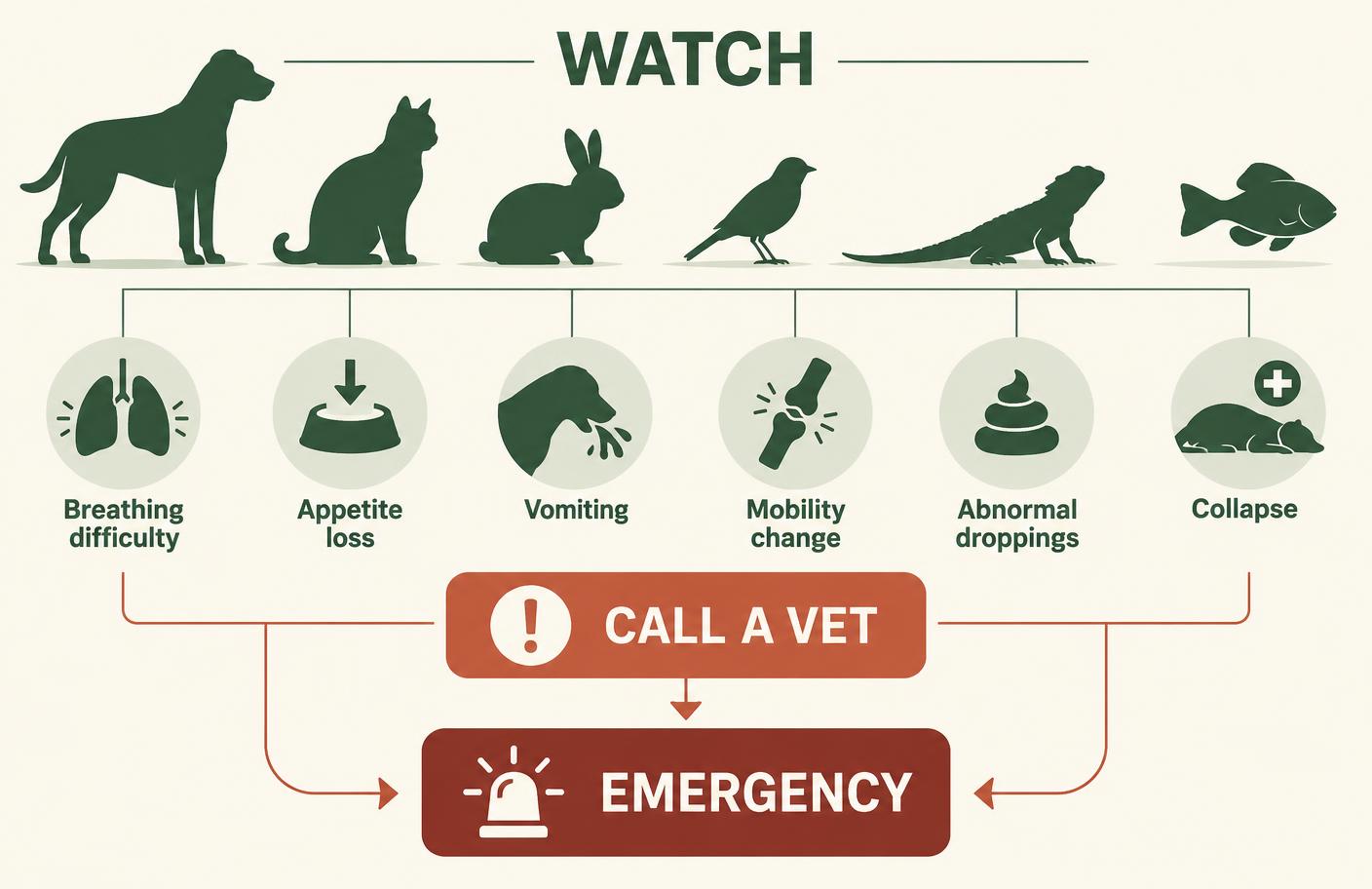
Signs to watch for
- Often none
- Fast or laboured breathing
- Open-mouth breathing
- Sudden back-leg paralysis and pain (blood clot)
- Lethargy
Causes and risk factors
Often inherited (Maine Coons and Ragdolls have known genetic forms); high blood pressure and hyperthyroidism can cause similar changes.
How veterinarians diagnose it
Heart ultrasound, blood tests and chest X-rays.
Treatment and management
Medication to reduce clot risk and manage heart failure where present.
Prevention
Screening of breeding cats; regular checks for at-risk breeds.
Outlook
Very variable — some cats never develop signs, others develop heart failure.
Common questions
- What are the signs of hypertrophic cardiomyopathy in cats?
- Often none; Fast or laboured breathing; Open-mouth breathing; Sudden back-leg paralysis and pain (blood clot); Lethargy.
- What causes hypertrophic cardiomyopathy in cats?
- Often inherited (Maine Coons and Ragdolls have known genetic forms); high blood pressure and hyperthyroidism can cause similar changes.
- How is hypertrophic cardiomyopathy in cats diagnosed?
- Heart ultrasound, blood tests and chest X-rays.
- How is hypertrophic cardiomyopathy in cats treated?
- Medication to reduce clot risk and manage heart failure where present.
- Can hypertrophic cardiomyopathy in cats be prevented?
- Screening of breeding cats; regular checks for at-risk breeds.
- When should I contact a veterinarian?
- Open-mouth breathing or sudden back-leg weakness in a cat is an emergency.