
Infectious disease · Updated 2026-09-29
FIV and FeLV in cats
Two retrovirus infections that weaken the immune system. Both are manageable, and many infected cats live comfortably for years.
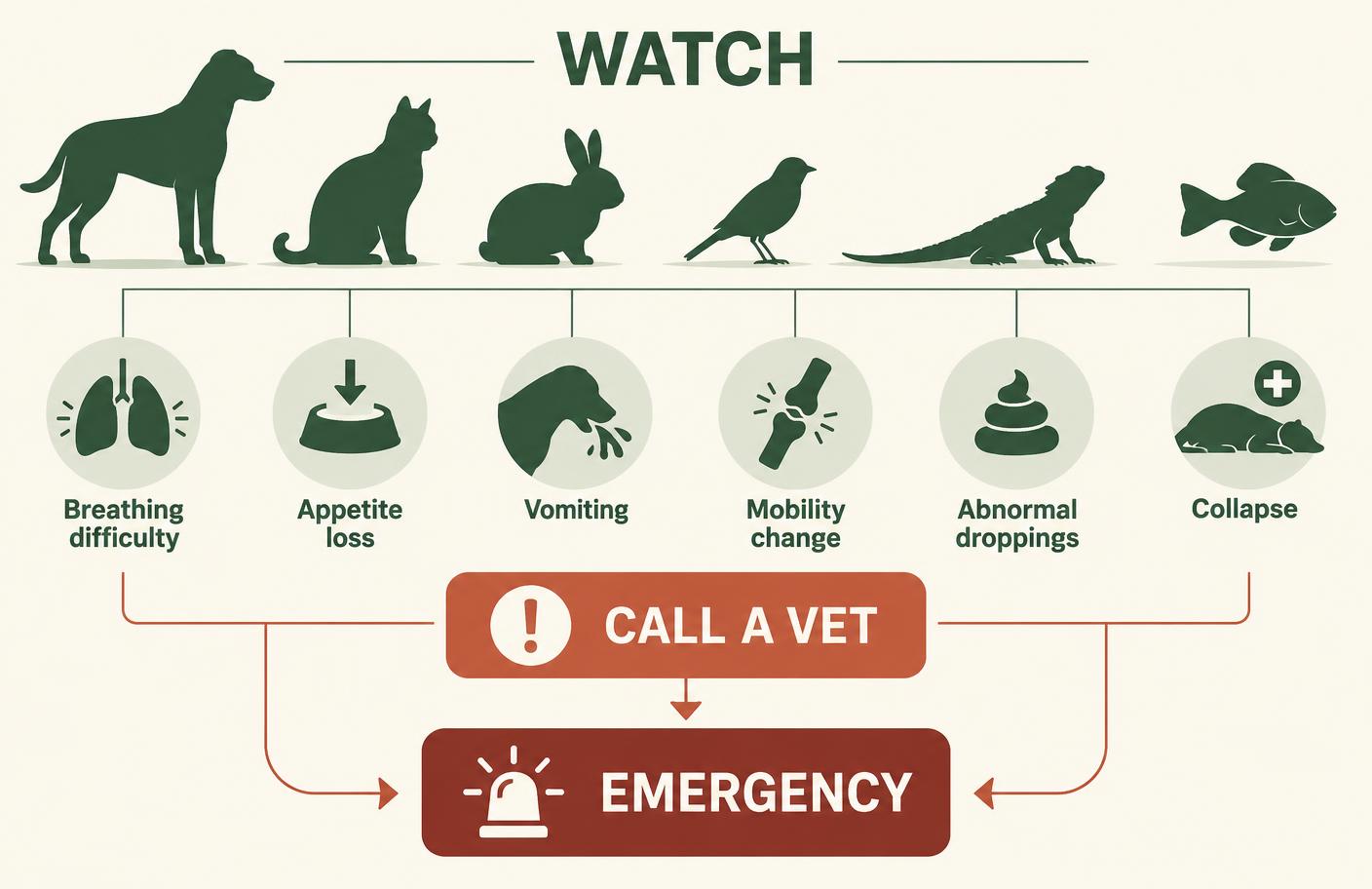
Signs to watch for
- Recurrent infections
- Mouth inflammation
- Weight loss
- Poor coat
- Fever episodes
- Often no signs for years
Causes and risk factors
FIV spreads mainly through deep bite wounds; FeLV spreads through prolonged close contact, grooming and shared bowls, and from mother to kitten.
How veterinarians diagnose it
A vet blood test screens for both; positive screening results are confirmed with further testing before any conclusions.
Treatment and management
No cure exists, so care focuses on prompt treatment of secondary infections, good nutrition, dental care and indoor life to protect the cat and others.
Prevention
Test new cats before introductions, keep infected cats indoors and separate, and vaccinate against FeLV where risk justifies it.
Outlook
FIV cats often live a normal lifespan with care. FeLV is more serious, but many cats still enjoy years of good quality life.
Common questions
- What are the signs of fiv and felv in cats?
- Recurrent infections; Mouth inflammation; Weight loss; Poor coat; Fever episodes; Often no signs for years.
- What causes fiv and felv in cats?
- FIV spreads mainly through deep bite wounds; FeLV spreads through prolonged close contact, grooming and shared bowls, and from mother to kitten.
- How is fiv and felv in cats diagnosed?
- A vet blood test screens for both; positive screening results are confirmed with further testing before any conclusions.
- How is fiv and felv in cats treated?
- No cure exists, so care focuses on prompt treatment of secondary infections, good nutrition, dental care and indoor life to protect the cat and others.
- Can fiv and felv in cats be prevented?
- Test new cats before introductions, keep infected cats indoors and separate, and vaccinate against FeLV where risk justifies it.
- When should I contact a veterinarian?
- A positive test is not a reason for euthanasia on its own. Discuss the individual cat's health and household situation with your vet.