
Respiratory · Updated 2026-09-29
Feline asthma
Allergic airway inflammation causing coughing, wheezing and breathing difficulty, often mistaken for hairballs.
Urgent veterinary attentionCats

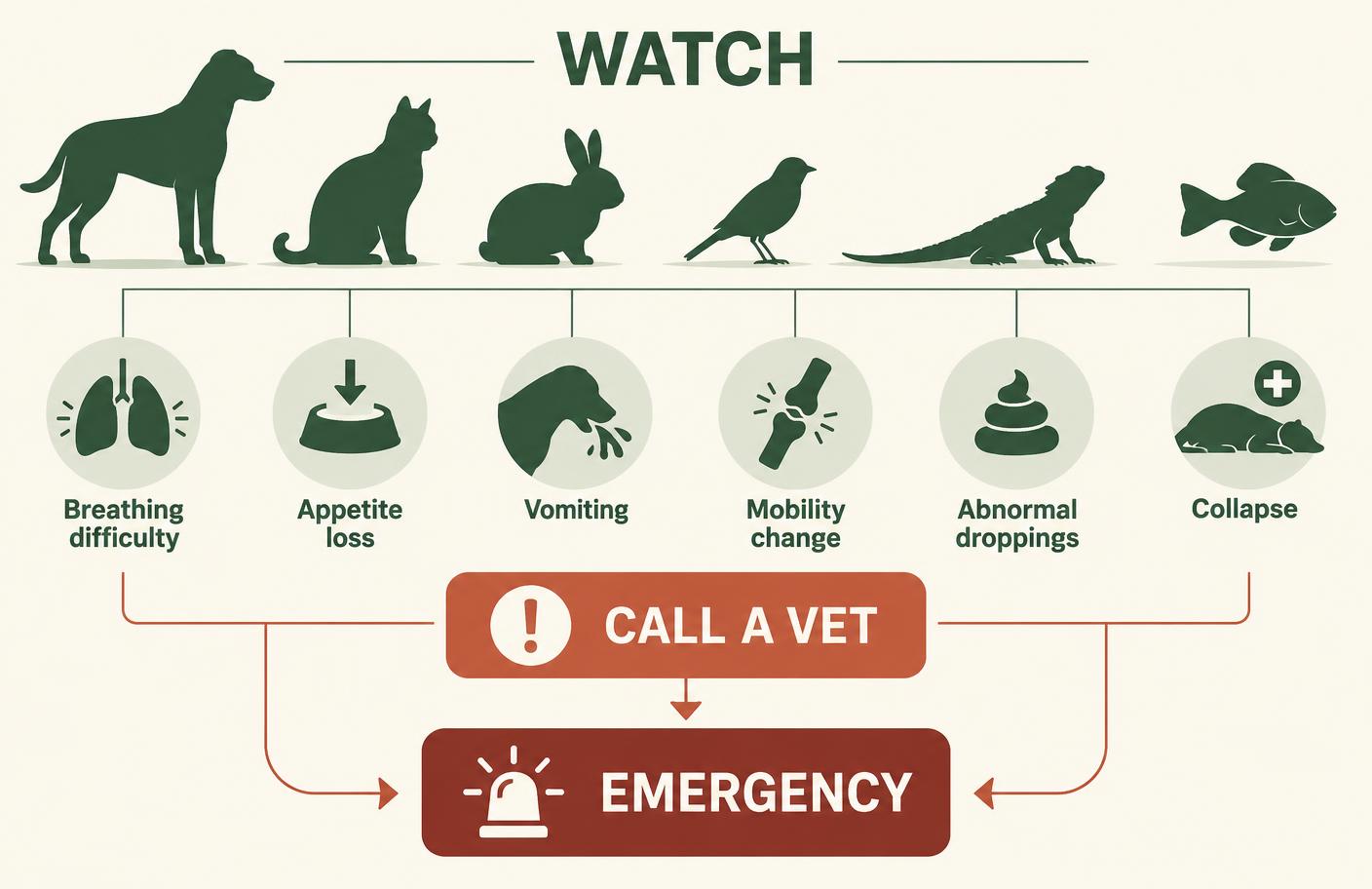
Signs to watch for
- Coughing or hacking with no hairball produced
- Wheezing
- Rapid or laboured breathing
- Crouched posture with extended neck while coughing
- Lethargy during episodes
Causes and risk factors
Airway hypersensitivity to inhaled triggers such as dust, smoke, scented products and pollens. Stress can worsen episodes.
How veterinarians diagnose it
Chest imaging and airway sampling help distinguish asthma from heart disease, parasites and infection.
Treatment and management
Typically inhaled corticosteroids delivered by a feline spacer chamber, sometimes with bronchodilators, plus trigger reduction at home.
Prevention
Use dust-free litter, avoid smoking and aerosols indoors, and keep weight healthy to reduce episode frequency.
Outlook
Usually well controlled long-term, though severe untreated episodes can be life-threatening.
Common questions
- What are the signs of feline asthma?
- Coughing or hacking with no hairball produced; Wheezing; Rapid or laboured breathing; Crouched posture with extended neck while coughing; Lethargy during episodes.
- What causes feline asthma?
- Airway hypersensitivity to inhaled triggers such as dust, smoke, scented products and pollens. Stress can worsen episodes.
- How is feline asthma diagnosed?
- Chest imaging and airway sampling help distinguish asthma from heart disease, parasites and infection.
- How is feline asthma treated?
- Typically inhaled corticosteroids delivered by a feline spacer chamber, sometimes with bronchodilators, plus trigger reduction at home.
- Can feline asthma be prevented?
- Use dust-free litter, avoid smoking and aerosols indoors, and keep weight healthy to reduce episode frequency.
- When should I contact a veterinarian?
- Open-mouth breathing, blue-tinged gums or collapse is an emergency — do not wait to see if it passes.