
Infectious disease · Updated 2026-10-19
Canine parvovirus
A highly contagious viral disease that causes severe vomiting, diarrhoea, dehydration and immune suppression, especially in puppies.
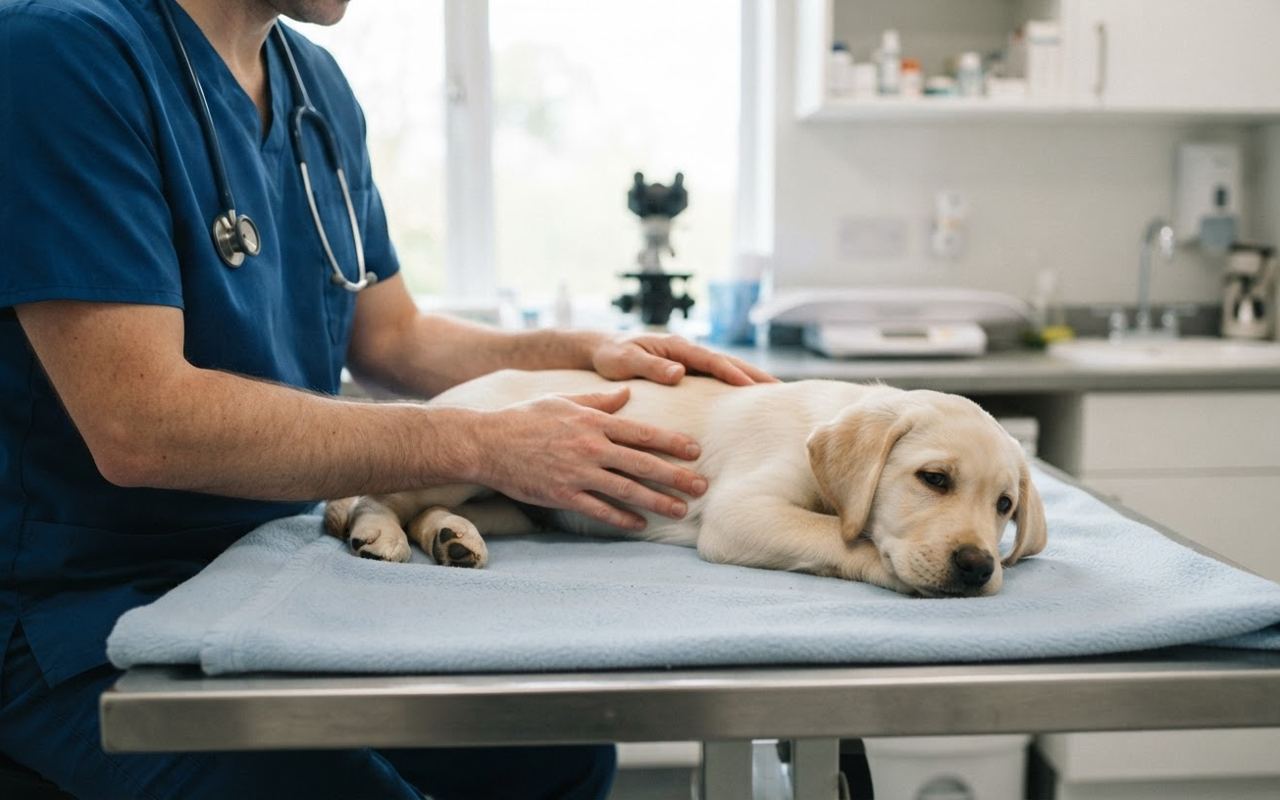
AI-generated editorial illustration of the subject; not a photograph of a specific animal, product or case.
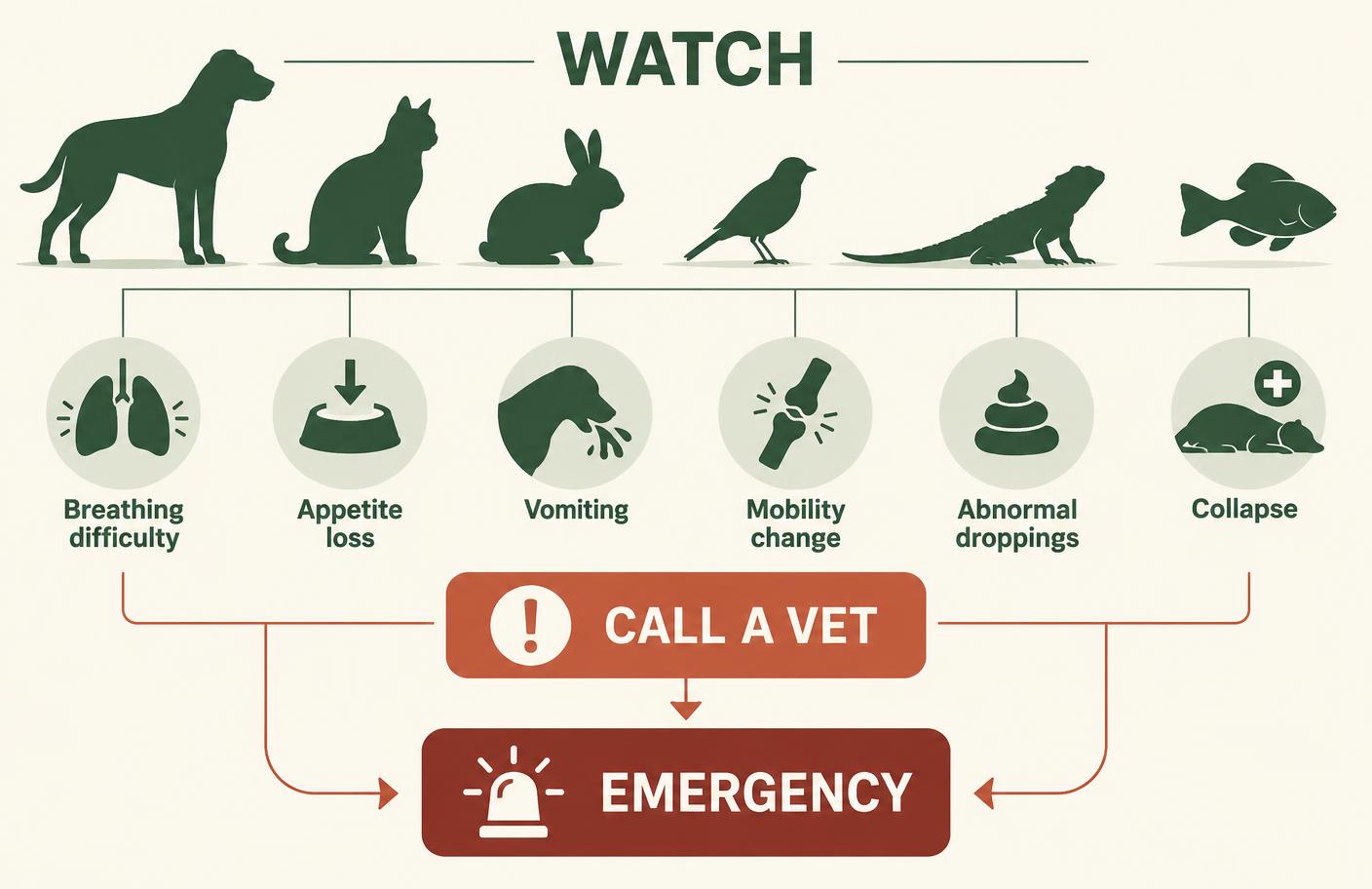
Signs to watch for
- Profuse or bloody diarrhoea
- Repeated vomiting
- Extreme lethargy
- Loss of appetite
- Fever or low temperature
- Rapid dehydration
Causes and risk factors
Canine parvovirus spreads through infected faeces and contaminated environments. The virus persists for long periods and unvaccinated puppies are at greatest risk.
How veterinarians diagnose it
Veterinarians use clinical findings, faecal antigen or PCR testing, and blood work. Early tests can occasionally be falsely negative.
Treatment and management
There is no home cure. Intensive fluids, anti-nausea treatment, nutrition, infection control and management of secondary complications are commonly required.
Prevention
Complete the veterinarian-recommended vaccine series, avoid high-risk areas before protection develops and use an effective disinfectant after exposure.
Outlook
Survival is substantially better with rapid hospital treatment. Untreated disease can be fatal.
Common questions
- What are the signs of canine parvovirus?
- Profuse or bloody diarrhoea; Repeated vomiting; Extreme lethargy; Loss of appetite; Fever or low temperature; Rapid dehydration.
- What causes canine parvovirus?
- Canine parvovirus spreads through infected faeces and contaminated environments. The virus persists for long periods and unvaccinated puppies are at greatest risk.
- How is canine parvovirus diagnosed?
- Veterinarians use clinical findings, faecal antigen or PCR testing, and blood work. Early tests can occasionally be falsely negative.
- How is canine parvovirus treated?
- There is no home cure. Intensive fluids, anti-nausea treatment, nutrition, infection control and management of secondary complications are commonly required.
- Can canine parvovirus be prevented?
- Complete the veterinarian-recommended vaccine series, avoid high-risk areas before protection develops and use an effective disinfectant after exposure.
- When should I contact a veterinarian?
- Isolate the dog and call an emergency veterinarian before travelling so the clinic can prevent exposure to other patients.
Parvovirus: time-critical decisions
| Situation | Next step |
|---|---|
| Unvaccinated puppy vomiting or with diarrhoea | Phone the vet now; say parvovirus is suspected. |
| Before the appointment | Isolate from other dogs; warn the clinic before arrival. |
| Cleaning | Use a parvovirus-effective disinfectant at the correct contact time. |
| Prevention | Complete the full vaccination course and boosters. |
| New puppy after a case | Ask a vet about environmental persistence and timing. |
There is no home treatment. A dull, vomiting puppy can deteriorate within hours.
Vomiting and diarrhoea in a young dog is an emergency call
Parvovirus typically strikes unvaccinated or incompletely vaccinated puppies, causing lethargy, loss of appetite, vomiting and often bloody diarrhoea. Dehydration can become life-threatening within hours, and there is no home remedy that substitutes for veterinary care. Phone the clinic before arriving and say you suspect parvovirus; staff will arrange isolation so other patients are protected. Do not wait overnight to see whether a quiet puppy perks up.
Testing at the clinic, together with examination, guides treatment. Treatment centres on supportive care: fluids, anti-nausea medication, nutrition and monitoring. Where available and appropriate, a veterinarian may also give a canine parvovirus monoclonal antibody injection that targets the virus. Costs and intensity vary, so discuss options honestly with the veterinary team. Puppies that survive the critical early days often recover well, but delay is the biggest avoidable risk.
Protect other dogs and break the contamination chain
The virus is shed in faeces in enormous quantities and persists in the environment for months, resisting many common disinfectants. During illness and for a period afterwards, keep the dog away from parks, pavements shared by other dogs, and homes with puppies or unvaccinated dogs. Ask the treating clinic how long isolation should last and which disinfectants are effective; follow product dilution and contact time exactly.
Wash hands, change clothing and clean footwear after handling a sick puppy, and dispose of faeces promptly. Vaccination is the reliable protection: follow the full puppy course and the recommended adult boosters rather than stopping after one injection. Until the course is complete, avoid high-traffic dog areas and choose socialisation with known healthy vaccinated dogs in clean private spaces. Do not bring a new puppy into a contaminated home without discussing timing and cleaning with a veterinarian.
After a puppy comes home
Recovering puppies usually need small, easily digested meals introduced gradually as advised. Report any return of vomiting, diarrhoea, weakness or refusal to eat promptly. Keep the puppy away from public dog areas until the clinic confirms when shedding risk has passed, and finish the vaccination course the veterinarian recommends for other dogs in the household.
Sources for this reference
AI-assisted educational guidance, updated 19 October 2026. Not professionally reviewed; sources do not imply endorsement of this page.
Preparing for a canine parvovirus consultation
- Record when these signs began and how they changed: Profuse or bloody diarrhoea; Repeated vomiting; Extreme lethargy. Record appetite, water intake, toileting and any medicines or supplements.
- The listed urgency is emergency; worsening breathing, collapse, seizures or severe pain can make any situation an emergency. Ask the clinic rather than relying only on this category.
- Ask what else could explain the signs, which tests would change the plan and how discomfort will be managed. Symptoms alone cannot confirm this condition.
- Before going home, agree what to monitor, when to recheck and which signs mean calling sooner. Follow the individual treatment plan; do not copy another pet's prescription.
Educational reference, not an individual diagnosis or a verified professional review. Read our editorial policy.
Guidance libraries and further reading
These organisations publish relevant guidance. Their links are further reading, not evidence that they have reviewed this page.