
Digestive disease · Updated 2026-09-29
Pancreatitis in dogs
Inflammation of the pancreas, often triggered by a fatty meal, causing vomiting and severe abdominal pain.
Urgent veterinary attentionDogs

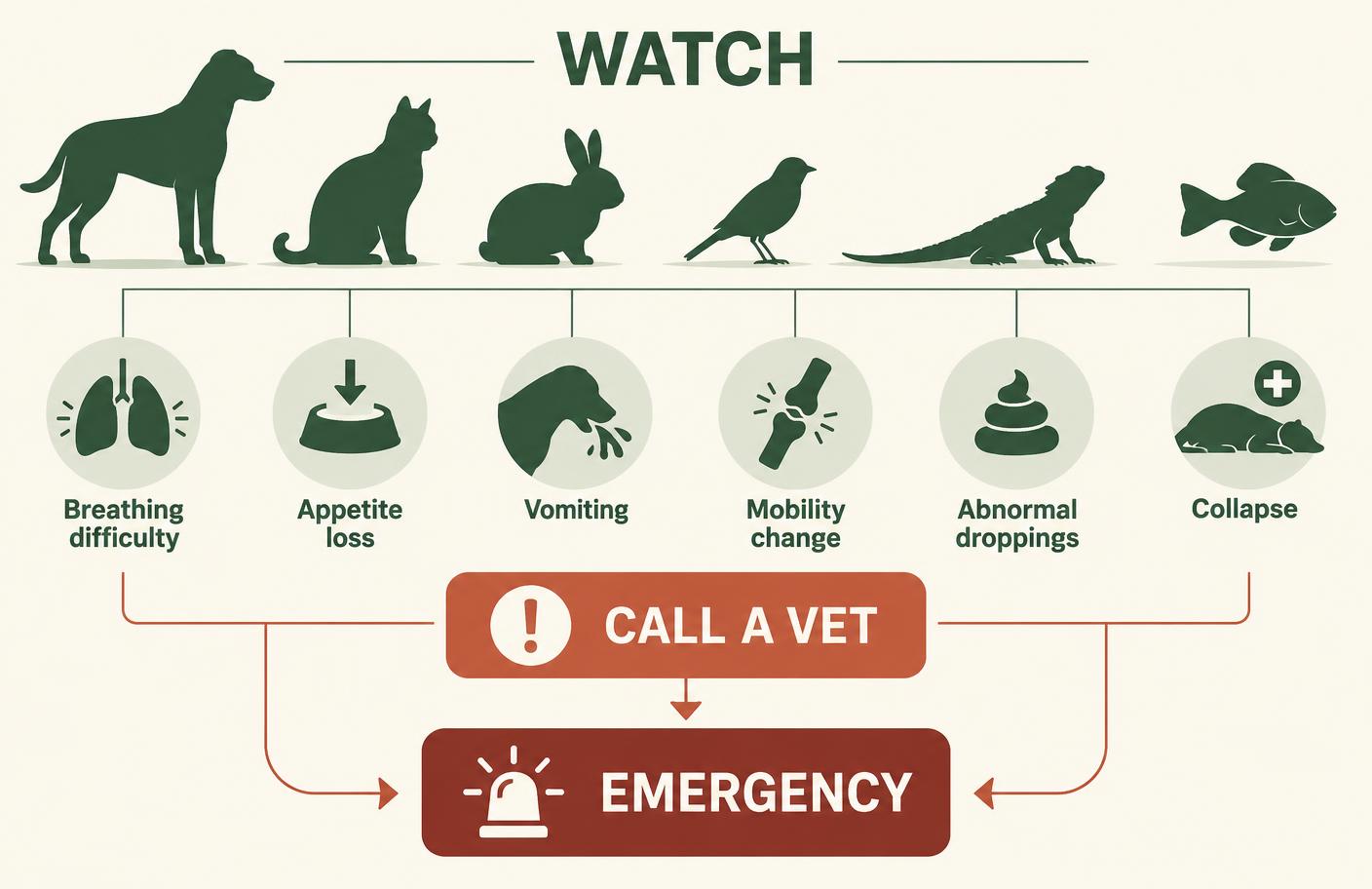
Signs to watch for
- Repeated vomiting
- Abdominal pain — hunched back or 'praying' posture
- Loss of appetite
- Diarrhoea
- Lethargy
- Fever
Causes and risk factors
Often follows fatty food or scavenging; obesity, some medications and hormonal disease raise risk. Many cases have no clear trigger.
How veterinarians diagnose it
Examination, blood tests including a pancreas-specific lipase test, and abdominal ultrasound.
Treatment and management
Supportive hospital care: fluids, pain relief, anti-sickness medication and early careful feeding of a low-fat diet.
Prevention
Avoid fatty table scraps, keep dogs lean and secure bins. Dogs with past episodes often stay on a low-fat diet.
Outlook
Mild cases recover well; severe cases can be life-threatening and some dogs have recurrent episodes.
Common questions
- What are the signs of pancreatitis in dogs?
- Repeated vomiting; Abdominal pain — hunched back or 'praying' posture; Loss of appetite; Diarrhoea; Lethargy; Fever.
- What causes pancreatitis in dogs?
- Often follows fatty food or scavenging; obesity, some medications and hormonal disease raise risk. Many cases have no clear trigger.
- How is pancreatitis in dogs diagnosed?
- Examination, blood tests including a pancreas-specific lipase test, and abdominal ultrasound.
- How is pancreatitis in dogs treated?
- Supportive hospital care: fluids, pain relief, anti-sickness medication and early careful feeding of a low-fat diet.
- Can pancreatitis in dogs be prevented?
- Avoid fatty table scraps, keep dogs lean and secure bins. Dogs with past episodes often stay on a low-fat diet.
- When should I contact a veterinarian?
- Repeated vomiting with abdominal pain needs same-day veterinary care. Do not give human pain relief.