
Heart disease · Updated 2026-09-29
Mitral valve disease in dogs
The most common heart disease in dogs: a leaky valve that can lead to heart failure, especially in small breeds.
Prompt veterinary attentionDogs

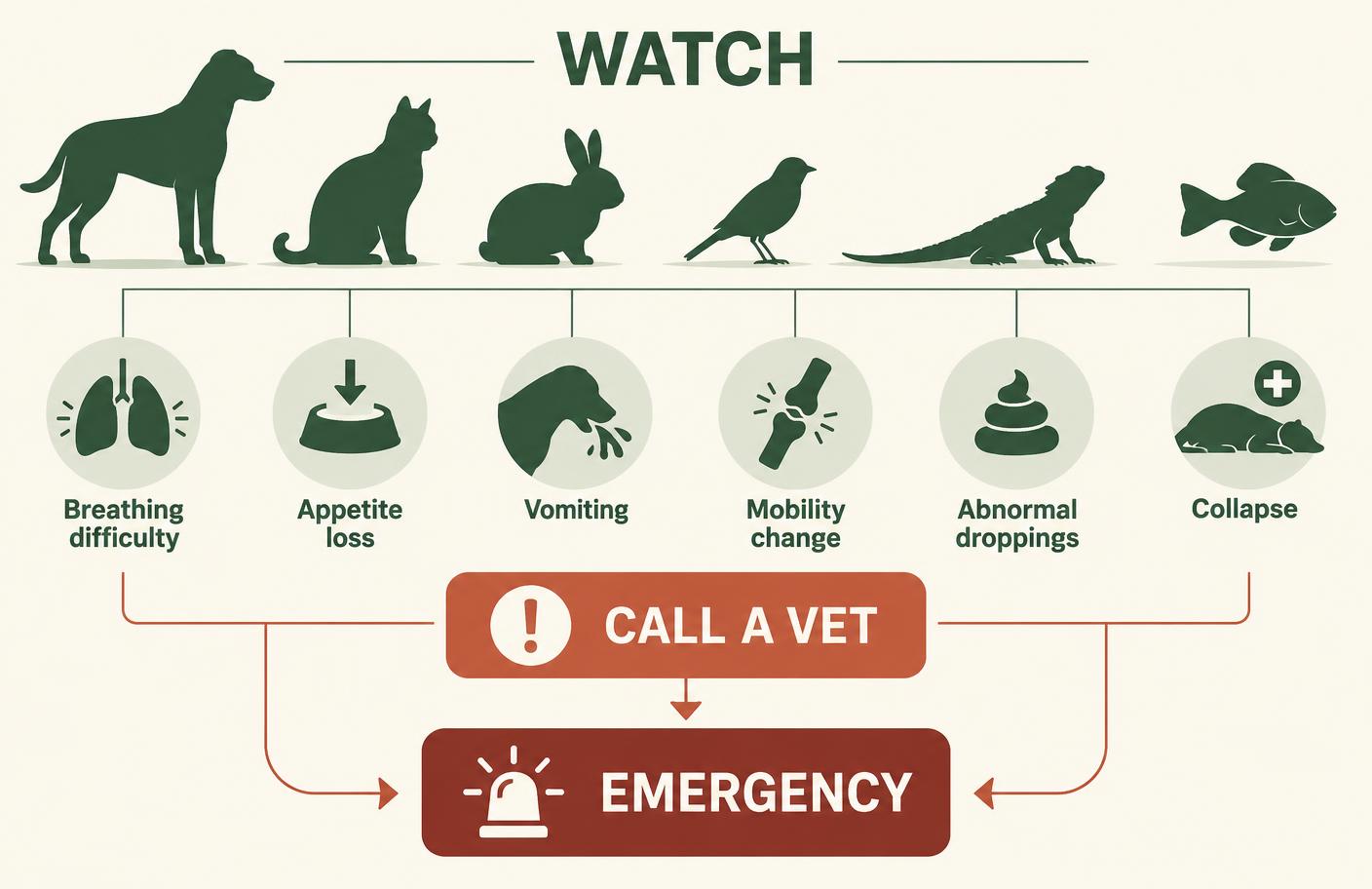
Signs to watch for
- Heart murmur found at a check-up
- Cough
- Faster breathing at rest
- Tiring on walks
- Fainting
Causes and risk factors
Age-related thickening of the mitral valve; strongly inherited in breeds such as the Cavalier King Charles Spaniel.
How veterinarians diagnose it
Listening to the heart, chest X-rays and heart ultrasound (echocardiography).
Treatment and management
Some dogs with an enlarged heart benefit from medication before signs appear; heart failure is treated with several medications.
Prevention
Not preventable; breeding schemes with heart screening reduce risk.
Outlook
Many dogs live years with a murmur; once heart failure develops, treatment extends good-quality life.
Common questions
- What are the signs of mitral valve disease in dogs?
- Heart murmur found at a check-up; Cough; Faster breathing at rest; Tiring on walks; Fainting.
- What causes mitral valve disease in dogs?
- Age-related thickening of the mitral valve; strongly inherited in breeds such as the Cavalier King Charles Spaniel.
- How is mitral valve disease in dogs diagnosed?
- Listening to the heart, chest X-rays and heart ultrasound (echocardiography).
- How is mitral valve disease in dogs treated?
- Some dogs with an enlarged heart benefit from medication before signs appear; heart failure is treated with several medications.
- Can mitral valve disease in dogs be prevented?
- Not preventable; breeding schemes with heart screening reduce risk.
- When should I contact a veterinarian?
- Count your dog's breaths while it sleeps. Over 30 breaths a minute, repeatedly, needs a vet call.