
Infectious disease · Updated 2026-09-29
Canine leptospirosis
A bacterial infection spread through contaminated water and urine that can cause sudden kidney and liver failure — and can infect people.
Signs to watch for
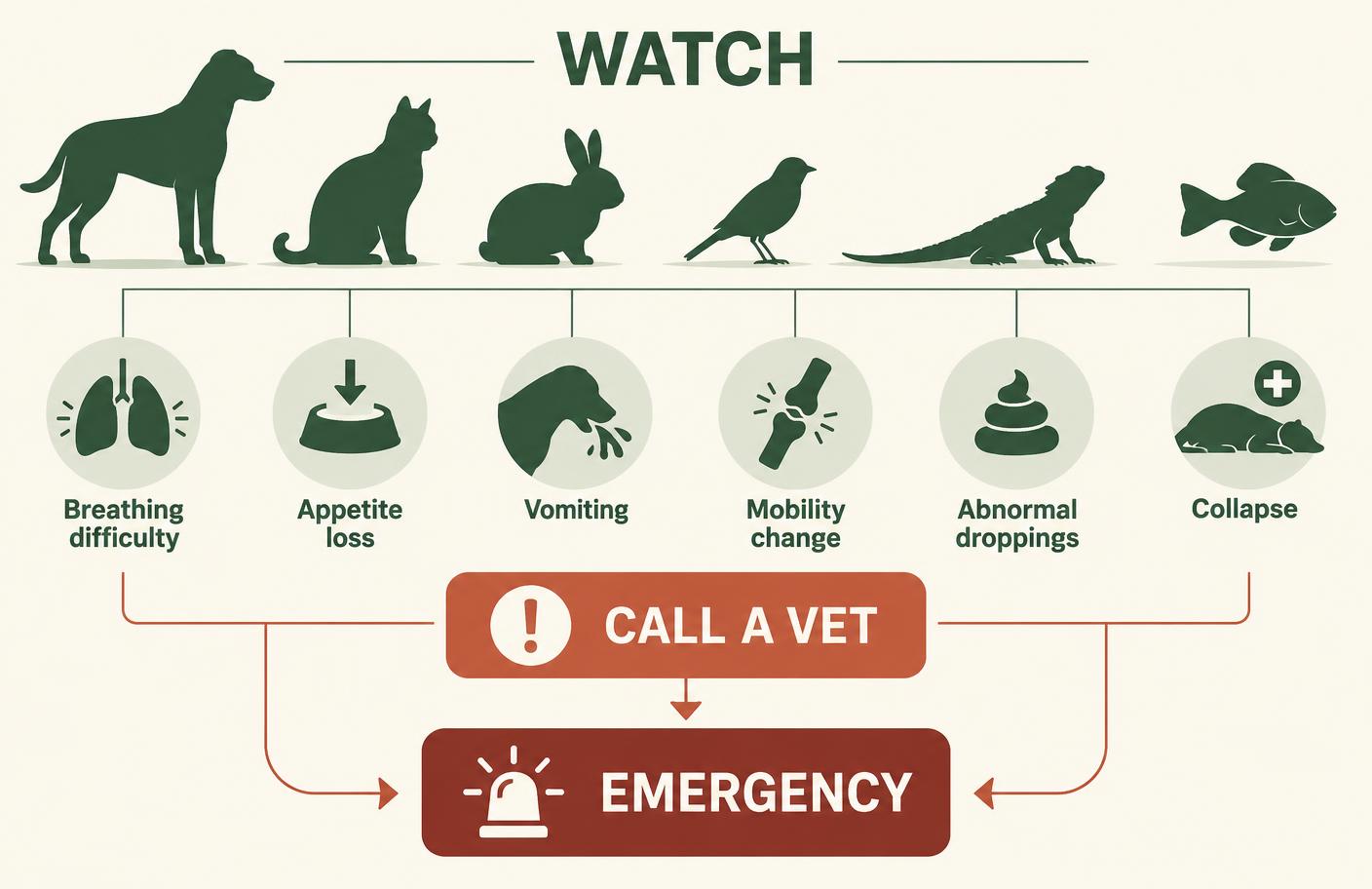
- Fever and shivering
- Vomiting and diarrhoea
- Marked thirst changes
- Jaundice (yellow gums or eyes)
- Muscle pain and reluctance to move
- Reduced urination
Causes and risk factors
Leptospira bacteria survive in stagnant water and wet soil and enter through mucous membranes or skin cuts. Rat urine is a classic source.
How veterinarians diagnose it
Blood and urine tests, including PCR and antibody titres, alongside kidney and liver values. Early treatment often begins before confirmation.
Treatment and management
Hospital care with intravenous fluids and specific antibiotics. Barrier nursing is needed because urine from infected dogs is contagious to people.
Prevention
Annual leptospirosis vaccination, avoiding stagnant water, and rodent control around the home.
Outlook
Guarded to good depending on organ damage; early intensive care greatly improves survival.
Common questions
- What are the signs of canine leptospirosis?
- Fever and shivering; Vomiting and diarrhoea; Marked thirst changes; Jaundice (yellow gums or eyes); Muscle pain and reluctance to move; Reduced urination.
- What causes canine leptospirosis?
- Leptospira bacteria survive in stagnant water and wet soil and enter through mucous membranes or skin cuts. Rat urine is a classic source.
- How is canine leptospirosis diagnosed?
- Blood and urine tests, including PCR and antibody titres, alongside kidney and liver values. Early treatment often begins before confirmation.
- How is canine leptospirosis treated?
- Hospital care with intravenous fluids and specific antibiotics. Barrier nursing is needed because urine from infected dogs is contagious to people.
- Can canine leptospirosis be prevented?
- Annual leptospirosis vaccination, avoiding stagnant water, and rodent control around the home.
- When should I contact a veterinarian?
- Suspected leptospirosis is an emergency. Wear gloves when handling the dog's urine and tell your doctor about exposure if you become unwell.