
Respiratory disease · Updated 2026-10-03
Kennel cough (infectious tracheobronchitis)
A contagious airway infection causing a harsh, honking cough.
Prompt veterinary attentionDogs

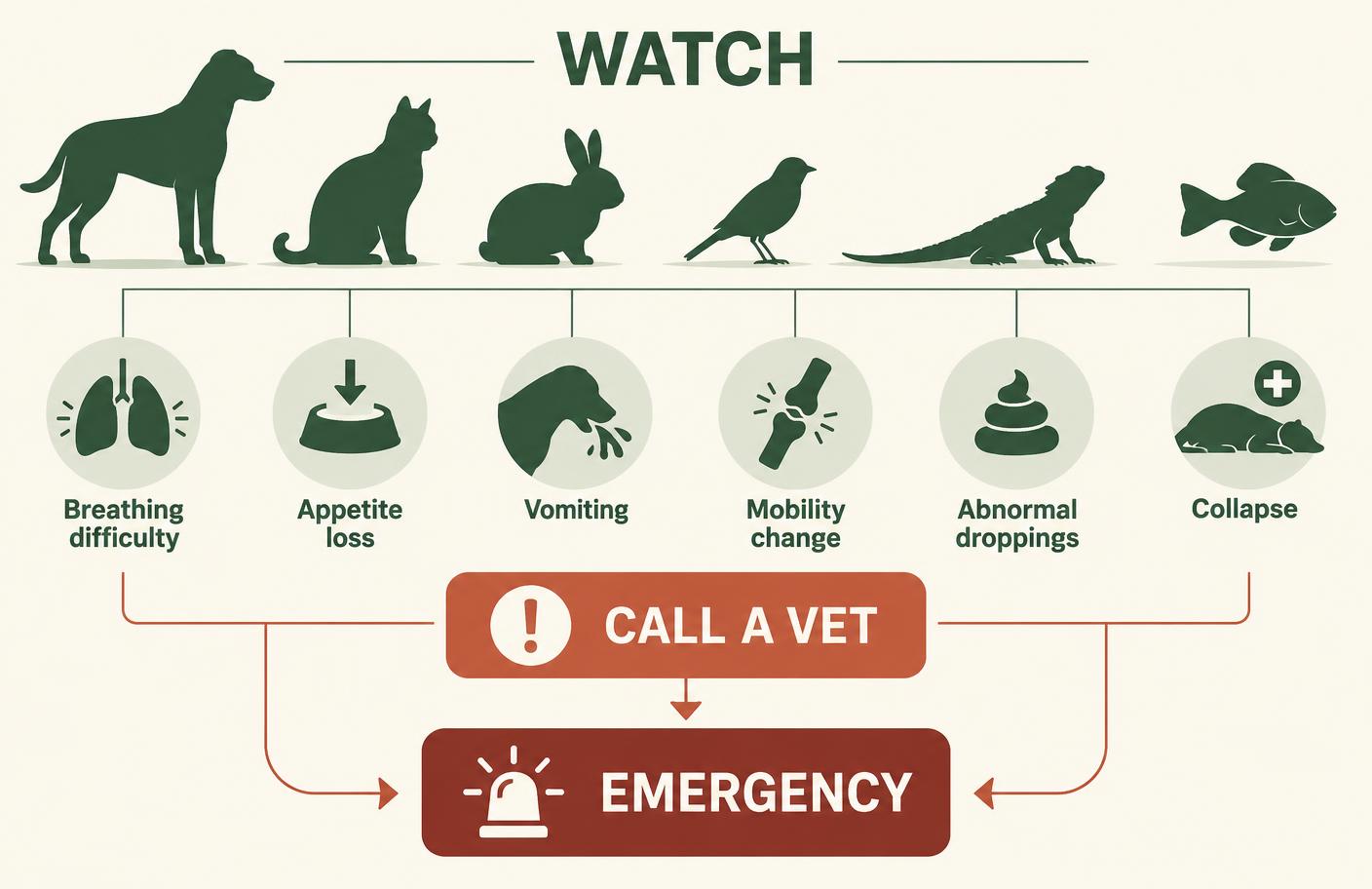
Signs to watch for
- Honking cough
- Retching after coughing
- Nasal discharge
- Mild lethargy
Causes and risk factors
Several viruses and bacteria, including Bordetella bronchiseptica and parainfluenza virus.
How veterinarians diagnose it
Usually from history and examination; tests for severe cases.
Treatment and management
Rest and supportive care; some dogs need anti-inflammatories or antibiotics.
Prevention
Vaccination and avoiding contact with coughing dogs.
Outlook
Most recover in one to three weeks.
Common questions
- What are the signs of kennel cough (infectious tracheobronchitis)?
- Honking cough; Retching after coughing; Nasal discharge; Mild lethargy.
- What causes kennel cough (infectious tracheobronchitis)?
- Several viruses and bacteria, including Bordetella bronchiseptica and parainfluenza virus.
- How is kennel cough (infectious tracheobronchitis) diagnosed?
- Usually from history and examination; tests for severe cases.
- How is kennel cough (infectious tracheobronchitis) treated?
- Rest and supportive care; some dogs need anti-inflammatories or antibiotics.
- Can kennel cough (infectious tracheobronchitis) be prevented?
- Vaccination and avoiding contact with coughing dogs.
- When should I contact a veterinarian?
- Seek prompt care if a dog has fever, stops eating or breathes fast — signs of pneumonia.