
Musculoskeletal · Updated 2026-09-21
Canine hip dysplasia
Abnormal development of the hip joint leading to laxity, inflammation and osteoarthritis over time.
Routine veterinary attentionDogs
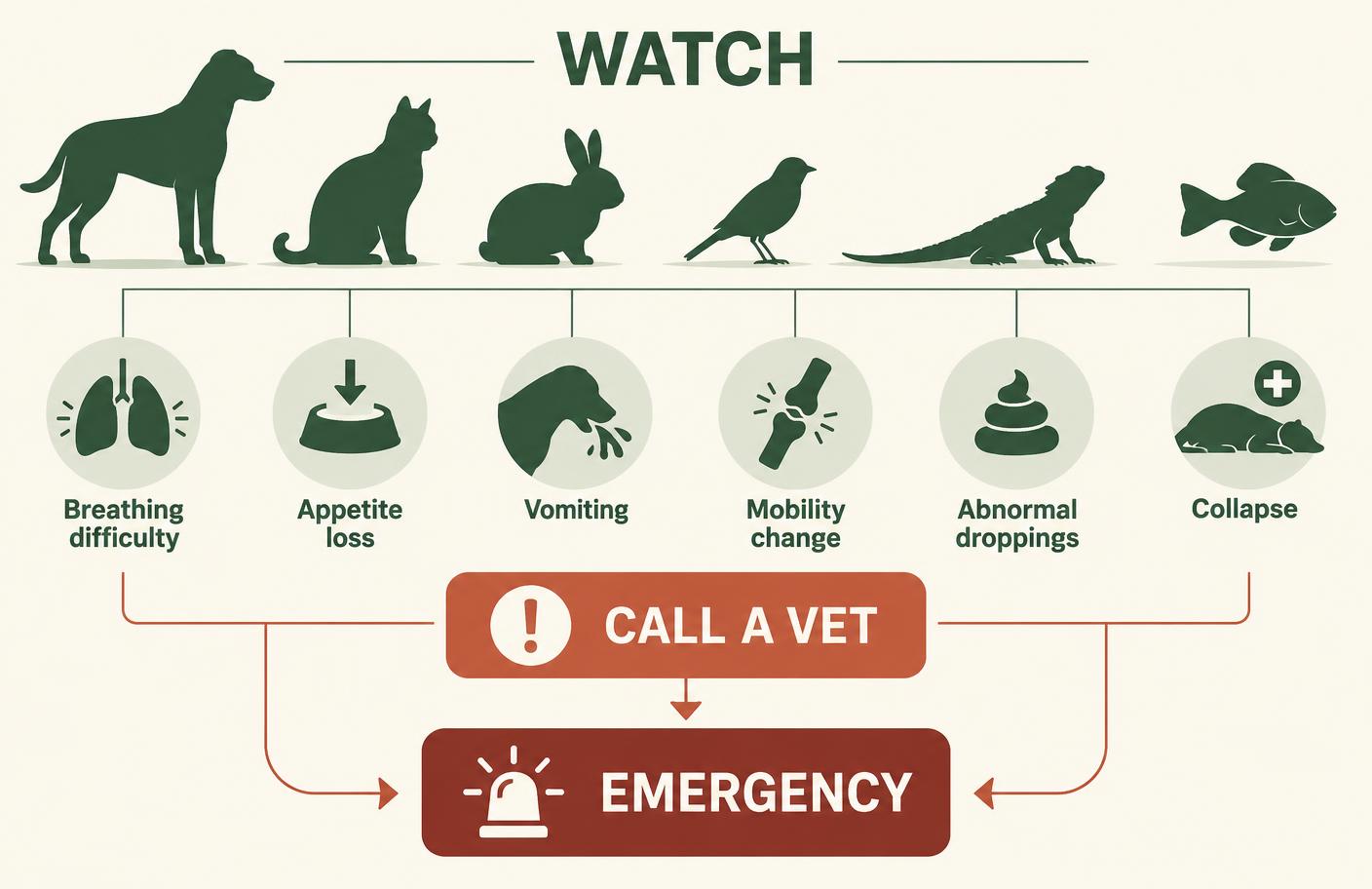
Signs to watch for
- Bunny-hopping gait
- Difficulty rising
- Reluctance to jump or climb stairs
- Narrow hind stance
- Reduced thigh muscle
- Stiffness after rest
Causes and risk factors
Genetics play the largest part, amplified by rapid growth, excess weight and inappropriate early exercise.
How veterinarians diagnose it
Orthopaedic examination and positioned radiographs, often supported by formal hip scoring schemes.
Treatment and management
Weight control, structured exercise, physiotherapy, pain relief and joint support; surgery is considered for selected dogs.
Prevention
Choose breeders who hip score, keep growing dogs lean, feed an appropriate large-breed diet and avoid repetitive high-impact exercise while young.
Outlook
Many dogs stay comfortable for years with weight and pain management; severe cases may need surgical options.