
Emergencies · Updated 2026-10-03
Heatstroke in dogs
A life-threatening rise in body temperature, most often triggered by exercise in warm weather.
Emergency veterinary attentionDogs
Signs to watch for
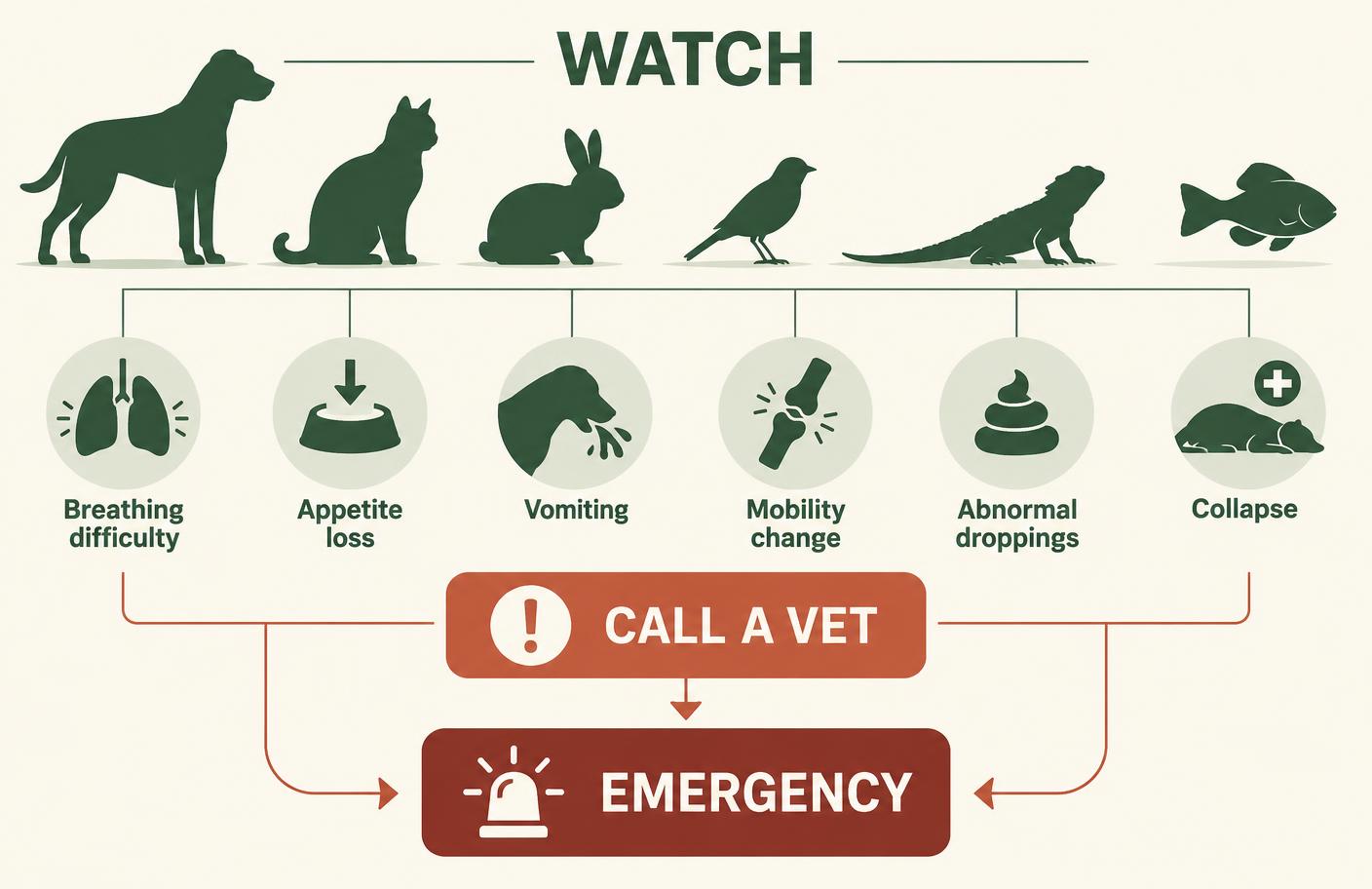
- Heavy panting that doesn't settle
- Red or dark gums
- Vomiting or diarrhoea
- Wobbliness or collapse
- Seizures
Causes and risk factors
Exercise, hot cars, humidity and poor ventilation; flat-faced breeds, obese and elderly dogs are at higher risk.
How veterinarians diagnose it
Rectal temperature, history and blood tests to look for organ damage and clotting problems.
Treatment and management
Controlled cooling, intravenous fluids and intensive monitoring for organ injury.
Prevention
Avoid exercise in heat, never leave dogs in cars, provide shade and water, keep dogs lean.
Outlook
Good with rapid cooling and treatment; delayed treatment can be fatal.
Common questions
- What are the signs of heatstroke in dogs?
- Heavy panting that doesn't settle; Red or dark gums; Vomiting or diarrhoea; Wobbliness or collapse; Seizures.
- What causes heatstroke in dogs?
- Exercise, hot cars, humidity and poor ventilation; flat-faced breeds, obese and elderly dogs are at higher risk.
- How is heatstroke in dogs diagnosed?
- Rectal temperature, history and blood tests to look for organ damage and clotting problems.
- How is heatstroke in dogs treated?
- Controlled cooling, intravenous fluids and intensive monitoring for organ injury.
- Can heatstroke in dogs be prevented?
- Avoid exercise in heat, never leave dogs in cars, provide shade and water, keep dogs lean.
- When should I contact a veterinarian?
- Start cooling with cool water immediately and go to a vet at once.