
Neurological · Updated 2026-09-29
Epilepsy in dogs
Recurrent seizures, usually starting between six months and six years of age; often well controlled with medication.
Urgent veterinary attentionDogs

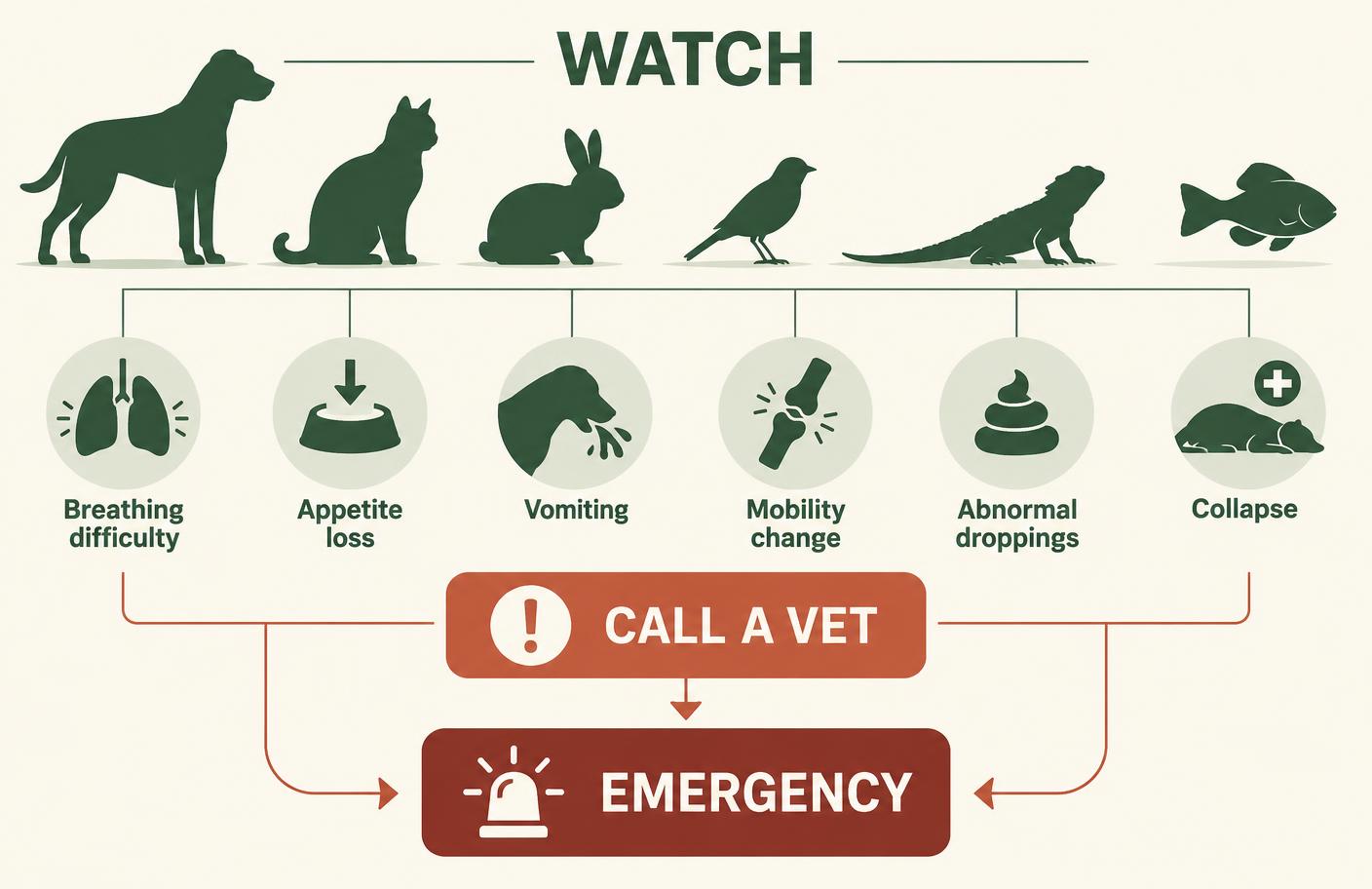
Signs to watch for
- Collapse with paddling legs
- Jaw chomping and drooling
- Loss of bladder control during a seizure
- Confusion or blindness afterwards
- Focal twitching of one area
Causes and risk factors
Idiopathic (inherited) epilepsy is most common; brain disease, toxins and metabolic problems must be ruled out.
How veterinarians diagnose it
Blood tests to exclude other causes; MRI and spinal fluid analysis in some dogs.
Treatment and management
Daily anti-seizure medication when seizures are frequent or severe, with blood monitoring. An emergency rescue plan for clusters.
Prevention
Not preventable; responsible breeding reduces inherited cases.
Outlook
Many dogs achieve good control and a normal lifespan.
Common questions
- What are the signs of epilepsy in dogs?
- Collapse with paddling legs; Jaw chomping and drooling; Loss of bladder control during a seizure; Confusion or blindness afterwards; Focal twitching of one area.
- What causes epilepsy in dogs?
- Idiopathic (inherited) epilepsy is most common; brain disease, toxins and metabolic problems must be ruled out.
- How is epilepsy in dogs diagnosed?
- Blood tests to exclude other causes; MRI and spinal fluid analysis in some dogs.
- How is epilepsy in dogs treated?
- Daily anti-seizure medication when seizures are frequent or severe, with blood monitoring. An emergency rescue plan for clusters.
- Can epilepsy in dogs be prevented?
- Not preventable; responsible breeding reduces inherited cases.
- When should I contact a veterinarian?
- A seizure lasting over five minutes, or several in a row, is an emergency. Keep hands away from the mouth and time the episode.