
Infectious disease · Updated 2026-10-03
Psittacosis (chlamydiosis) in birds
A bacterial infection of parrots and other birds that can also infect people.
Prompt veterinary attentionBirds
Signs to watch for
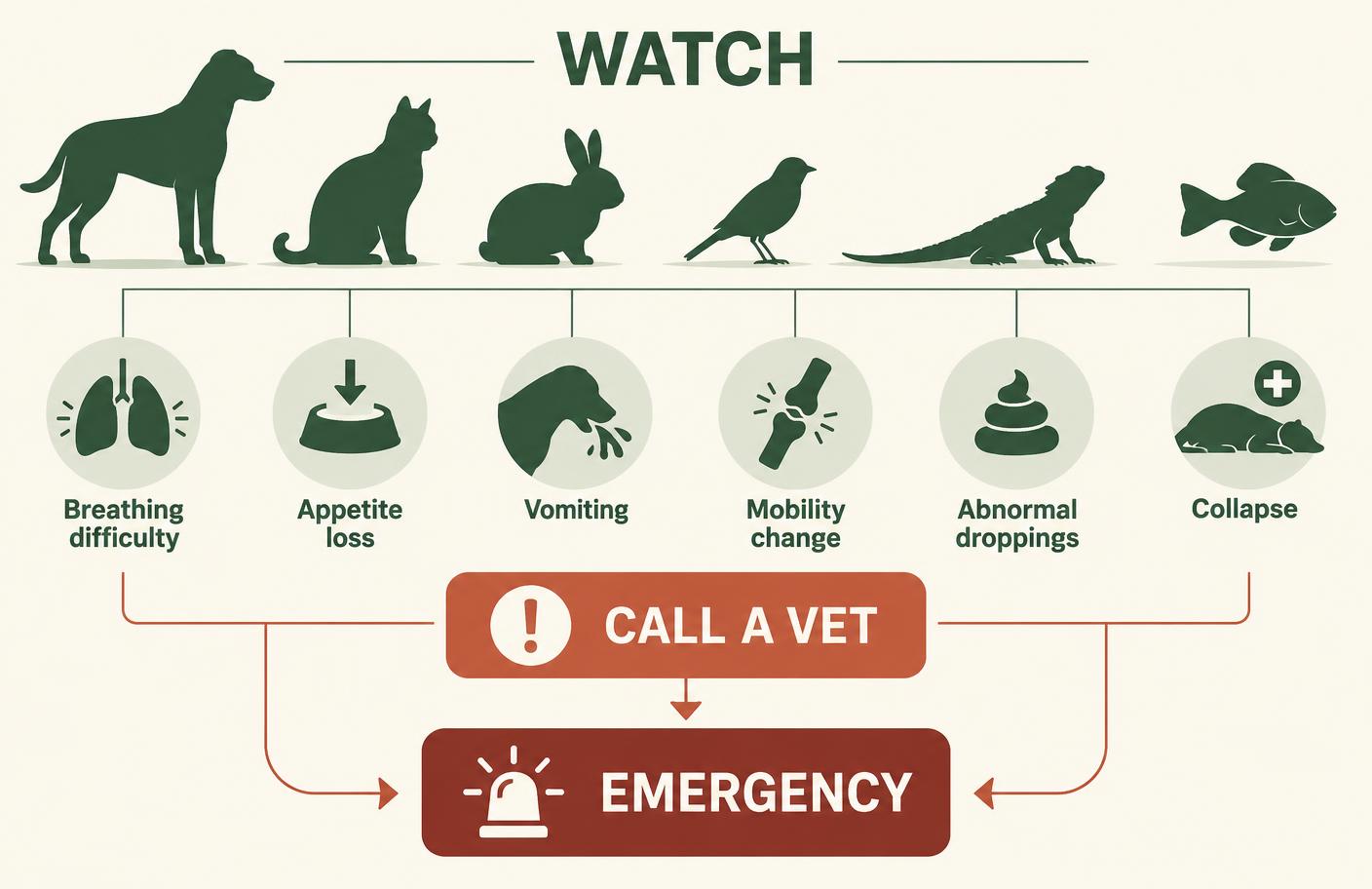
- Fluffed feathers
- Eye or nasal discharge
- Green droppings
- Breathing difficulty
- Weight loss
Causes and risk factors
Chlamydia psittaci, spread through droppings and feather dust; birds can carry it without signs.
How veterinarians diagnose it
PCR and blood tests by an avian vet.
Treatment and management
Long courses of antibiotics with hygiene measures.
Prevention
Quarantine new birds, buy from tested sources, clean cages well.
Outlook
Good with treatment.
Common questions
- What are the signs of psittacosis (chlamydiosis) in birds?
- Fluffed feathers; Eye or nasal discharge; Green droppings; Breathing difficulty; Weight loss.
- What causes psittacosis (chlamydiosis) in birds?
- Chlamydia psittaci, spread through droppings and feather dust; birds can carry it without signs.
- How is psittacosis (chlamydiosis) in birds diagnosed?
- PCR and blood tests by an avian vet.
- How is psittacosis (chlamydiosis) in birds treated?
- Long courses of antibiotics with hygiene measures.
- Can psittacosis (chlamydiosis) in birds be prevented?
- Quarantine new birds, buy from tested sources, clean cages well.
- When should I contact a veterinarian?
- Tell your doctor you keep birds if you develop flu-like illness.