
Nutrition and husbandry · Updated 2026-09-20
Metabolic bone disease in bearded dragons
A preventable disorder of calcium metabolism that weakens bones and muscles, usually because of incorrect UVB, diet or temperatures.
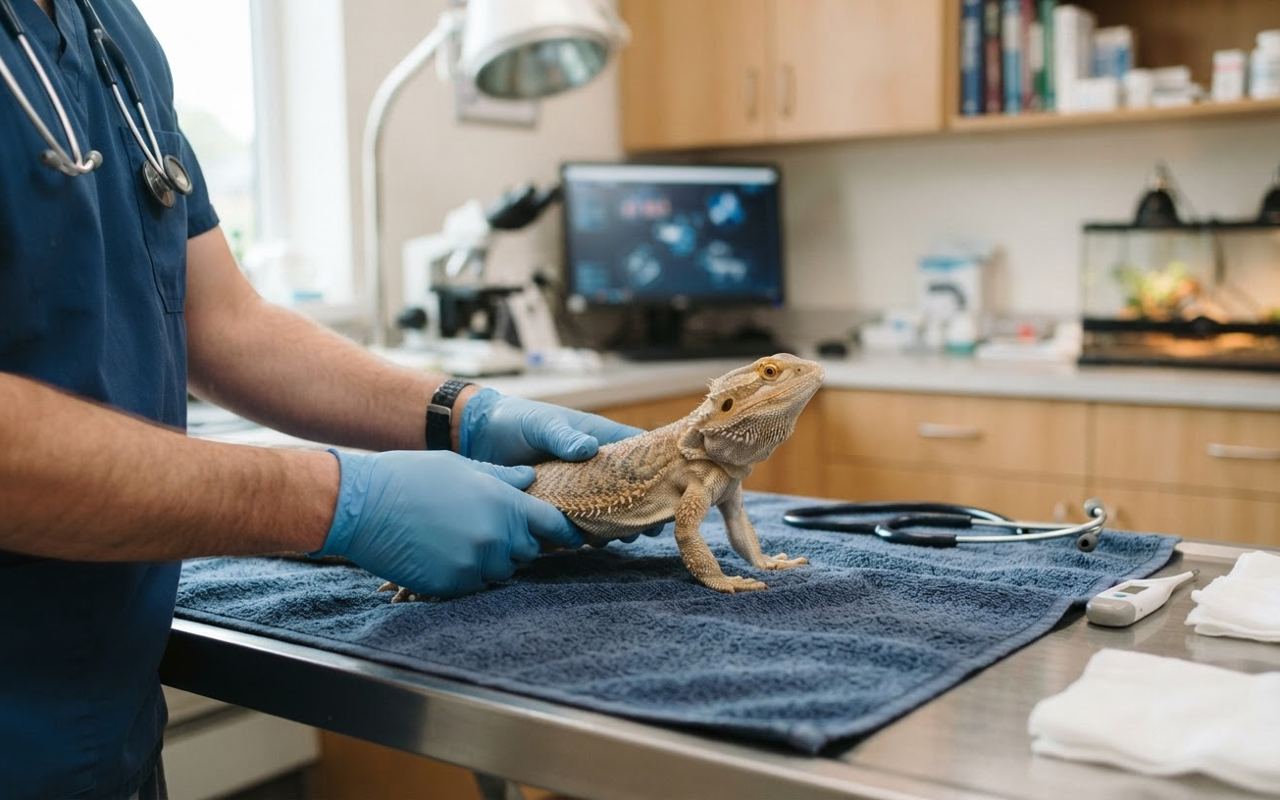
AI-generated editorial illustration of the subject; not a photograph of a specific animal, product or case.
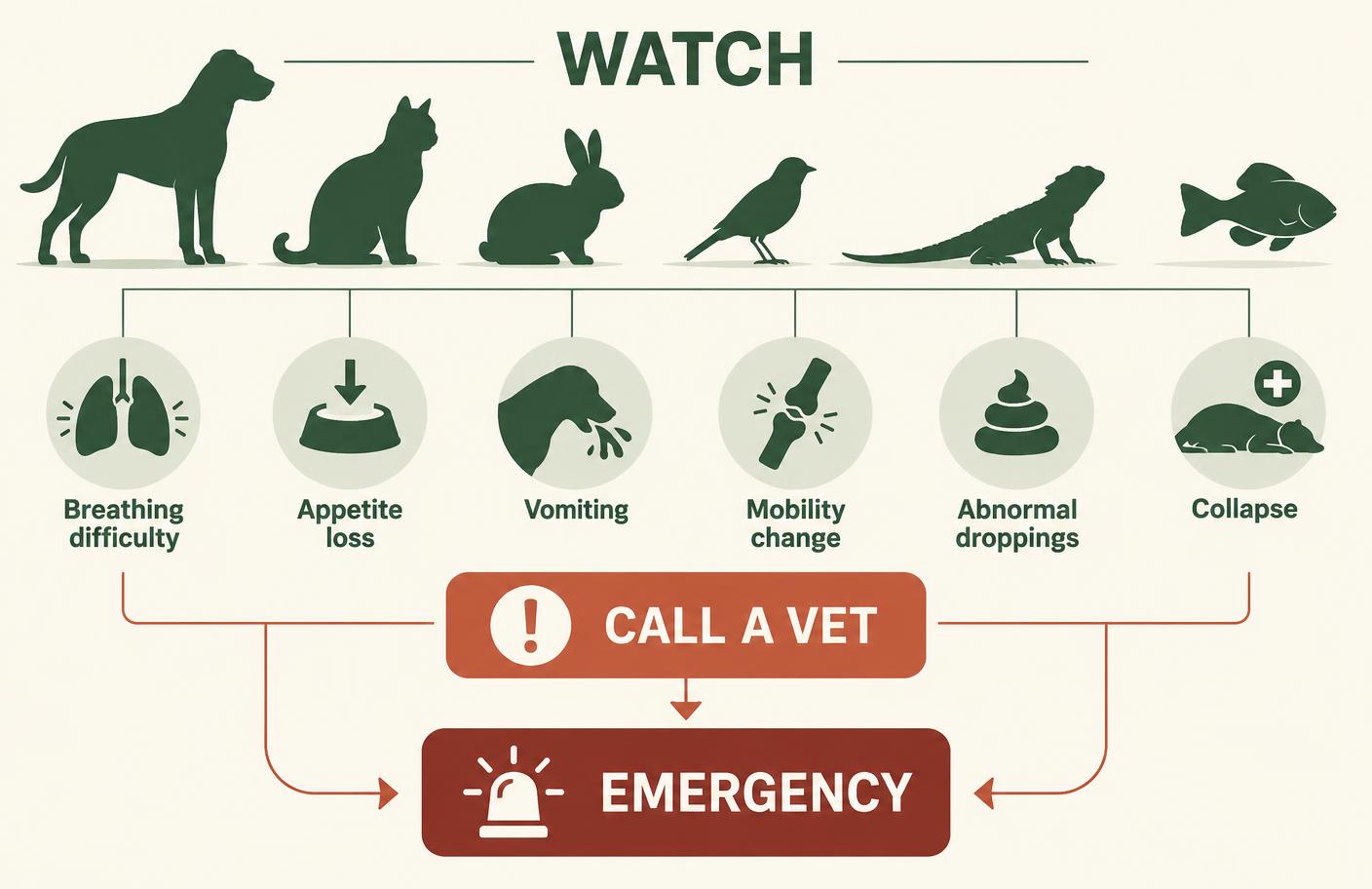
Signs to watch for
- Soft or swollen jaw
- Tremors
- Weakness
- Limb deformity
- Difficulty walking
- Fractures
Causes and risk factors
Inadequate effective UVB exposure, low dietary calcium, excess phosphorus and unsuitable basking temperatures disrupt calcium use.
How veterinarians diagnose it
A reptile veterinarian assesses husbandry, performs an examination and may use radiographs and blood tests.
Treatment and management
Treatment combines veterinarian-directed calcium support and pain care with immediate correction of UVB, heat and diet. Severe cases may require hospitalisation.
Prevention
Use an appropriate linear UVB lamp at the correct unobstructed distance, replace it on schedule, provide a measured temperature gradient and balanced supplementation.
Outlook
Early cases can improve; skeletal deformity and neurological damage may be permanent in advanced disease.
Common questions
- What are the signs of metabolic bone disease in bearded dragons?
- Soft or swollen jaw; Tremors; Weakness; Limb deformity; Difficulty walking; Fractures.
- What causes metabolic bone disease in bearded dragons?
- Inadequate effective UVB exposure, low dietary calcium, excess phosphorus and unsuitable basking temperatures disrupt calcium use.
- How is metabolic bone disease in bearded dragons diagnosed?
- A reptile veterinarian assesses husbandry, performs an examination and may use radiographs and blood tests.
- How is metabolic bone disease in bearded dragons treated?
- Treatment combines veterinarian-directed calcium support and pain care with immediate correction of UVB, heat and diet. Severe cases may require hospitalisation.
- Can metabolic bone disease in bearded dragons be prevented?
- Use an appropriate linear UVB lamp at the correct unobstructed distance, replace it on schedule, provide a measured temperature gradient and balanced supplementation.
- When should I contact a veterinarian?
- Tremors, fractures, inability to stand or seizures require urgent exotic-veterinary care.
Preparing for a metabolic bone disease in bearded dragons consultation
- Record when these signs began and how they changed: Soft or swollen jaw; Tremors; Weakness. Record appetite, water intake, toileting and any medicines or supplements.
- The listed urgency is urgent; worsening breathing, collapse, seizures or severe pain can make any situation an emergency. Ask the clinic rather than relying only on this category.
- Ask what else could explain the signs, which tests would change the plan and how discomfort will be managed. Symptoms alone cannot confirm this condition.
- Before going home, agree what to monitor, when to recheck and which signs mean calling sooner. Follow the individual treatment plan; do not copy another pet's prescription.
Educational reference, not an individual diagnosis or a verified professional review. Read our editorial policy.
Guidance libraries and further reading
These organisations publish relevant guidance. Their links are further reading, not evidence that they have reviewed this page.