
Digestive disease · Updated 2026-09-29
Impaction in reptiles
A blockage of the gut, often from swallowed substrate or poor husbandry.
Urgent veterinary attentionBearded dragonsLeopard geckos
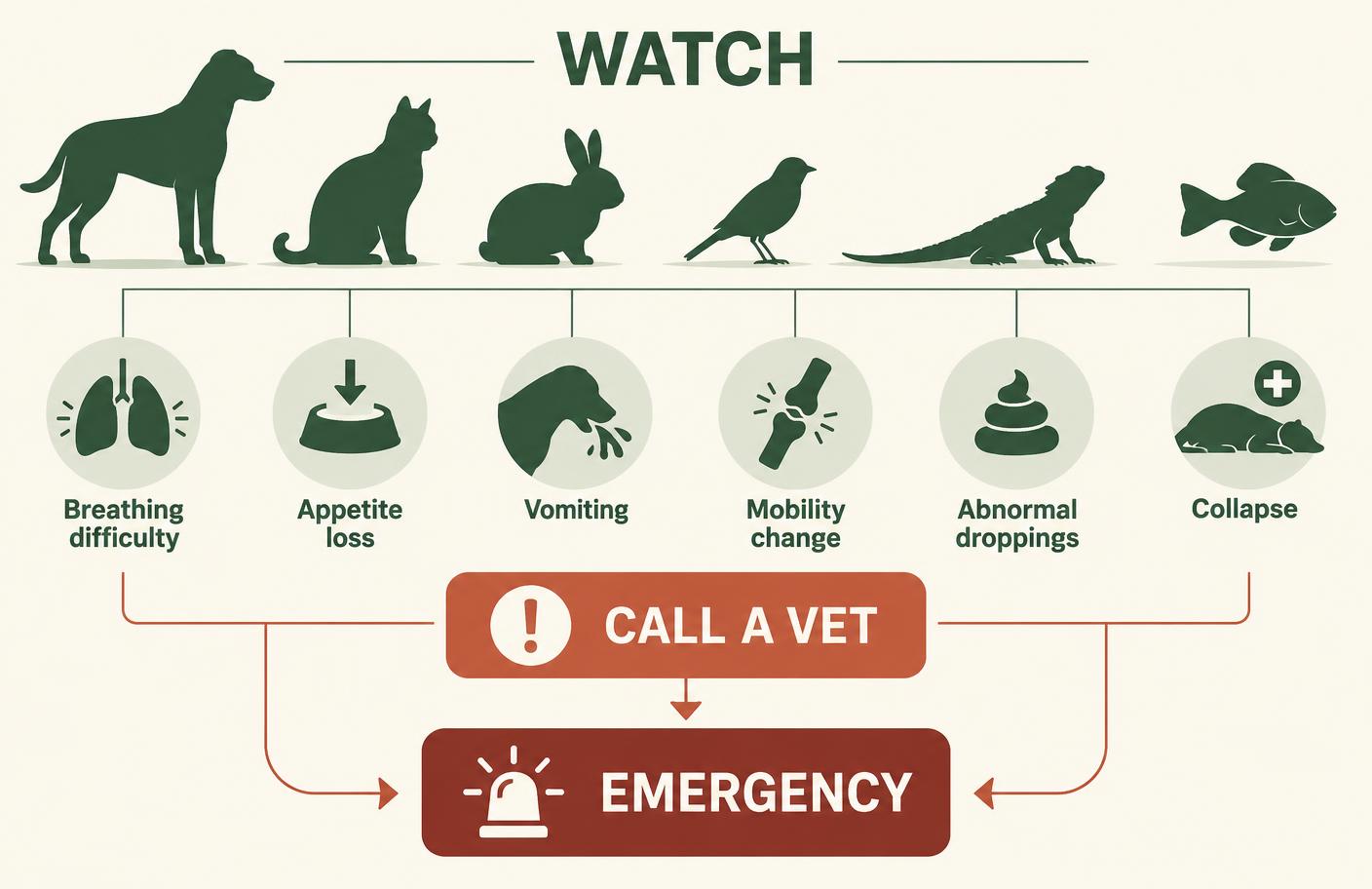
Signs to watch for
- No droppings
- Swollen belly
- Straining
- Loss of appetite
- Back-leg weakness
Causes and risk factors
Loose sand or particle substrate, large prey items, dehydration and low basking temperatures.
How veterinarians diagnose it
Examination and X-rays.
Treatment and management
Warm soaks, fluids and supportive care; surgery for severe blockages.
Prevention
Correct heating, feeding prey no wider than the space between the eyes, and safe flooring for young reptiles.
Outlook
Good if treated early.
Common questions
- What are the signs of impaction in reptiles?
- No droppings; Swollen belly; Straining; Loss of appetite; Back-leg weakness.
- What causes impaction in reptiles?
- Loose sand or particle substrate, large prey items, dehydration and low basking temperatures.
- How is impaction in reptiles diagnosed?
- Examination and X-rays.
- How is impaction in reptiles treated?
- Warm soaks, fluids and supportive care; surgery for severe blockages.
- Can impaction in reptiles be prevented?
- Correct heating, feeding prey no wider than the space between the eyes, and safe flooring for young reptiles.
- When should I contact a veterinarian?
- Reptiles hide illness; see an exotic vet if droppings stop for longer than usual.