
Infectious disease · Updated 2026-09-20
Avian psittacosis
A bacterial infection caused by Chlamydia psittaci that affects birds and can spread to people.
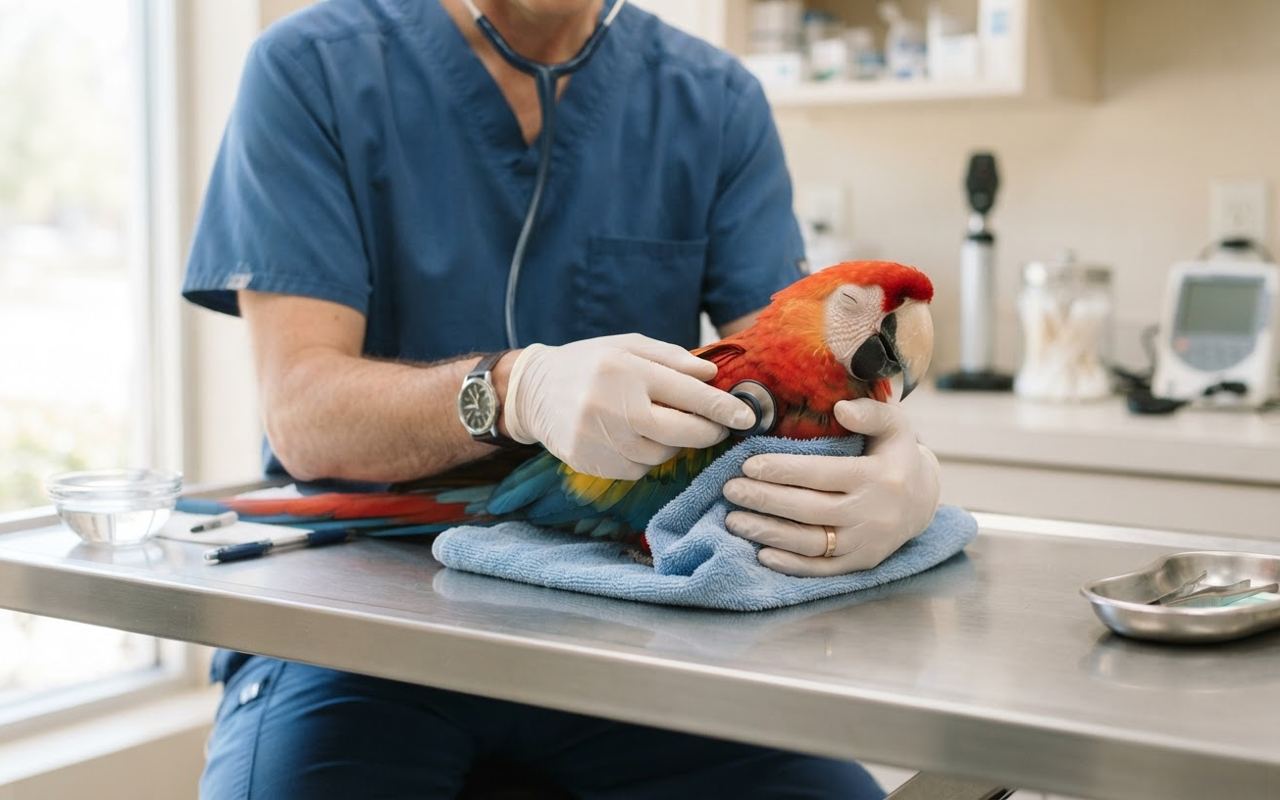
AI-generated editorial illustration of the subject; not a photograph of a specific animal, product or case.
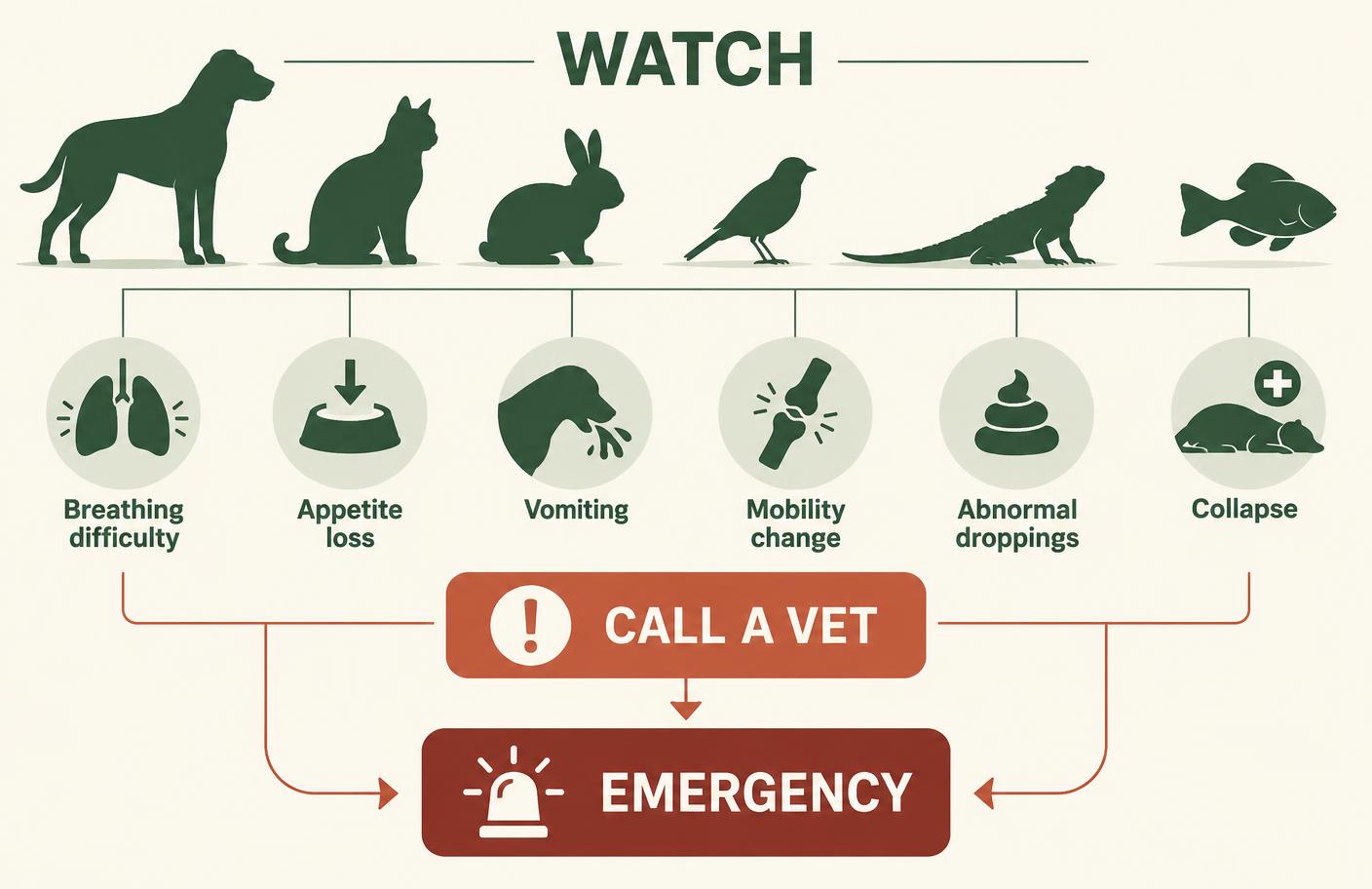
Signs to watch for
- Fluffed posture
- Reduced appetite
- Breathing difficulty
- Eye or nasal discharge
- Green droppings
- Weight loss
Causes and risk factors
Infected birds shed bacteria in respiratory secretions and droppings. Stress can trigger shedding in birds that appear healthy.
How veterinarians diagnose it
An avian veterinarian selects PCR, antibody and blood tests based on symptoms and exposure; one negative test may not exclude infection.
Treatment and management
Prolonged prescription antibiotics and strict environmental cleaning are usually required. Every exposed bird may need assessment.
Prevention
Quarantine and test new birds, reduce dust, practise hand hygiene and obtain birds from responsible sources.
Outlook
Often good with complete treatment, but incomplete courses can lead to relapse and continued shedding.
Common questions
- What are the signs of avian psittacosis?
- Fluffed posture; Reduced appetite; Breathing difficulty; Eye or nasal discharge; Green droppings; Weight loss.
- What causes avian psittacosis?
- Infected birds shed bacteria in respiratory secretions and droppings. Stress can trigger shedding in birds that appear healthy.
- How is avian psittacosis diagnosed?
- An avian veterinarian selects PCR, antibody and blood tests based on symptoms and exposure; one negative test may not exclude infection.
- How is avian psittacosis treated?
- Prolonged prescription antibiotics and strict environmental cleaning are usually required. Every exposed bird may need assessment.
- Can avian psittacosis be prevented?
- Quarantine and test new birds, reduce dust, practise hand hygiene and obtain birds from responsible sources.
- When should I contact a veterinarian?
- Contact an avian veterinarian promptly and tell your doctor about bird exposure if anyone develops flu-like illness.
Preparing for a avian psittacosis consultation
- Record when these signs began and how they changed: Fluffed posture; Reduced appetite; Breathing difficulty. Record appetite, water intake, toileting and any medicines or supplements.
- The listed urgency is urgent; worsening breathing, collapse, seizures or severe pain can make any situation an emergency. Ask the clinic rather than relying only on this category.
- Ask what else could explain the signs, which tests would change the plan and how discomfort will be managed. Symptoms alone cannot confirm this condition.
- Before going home, agree what to monitor, when to recheck and which signs mean calling sooner. Follow the individual treatment plan; do not copy another pet's prescription.
Educational reference, not an individual diagnosis or a verified professional review. Read our editorial policy.
Guidance libraries and further reading
These organisations publish relevant guidance. Their links are further reading, not evidence that they have reviewed this page.