
Feet and mobility · Updated 2026-09-21
Bumblefoot in birds
Inflammation and infection of the foot pad, often linked to unsuitable perches, excess pressure, injury or husbandry problems.
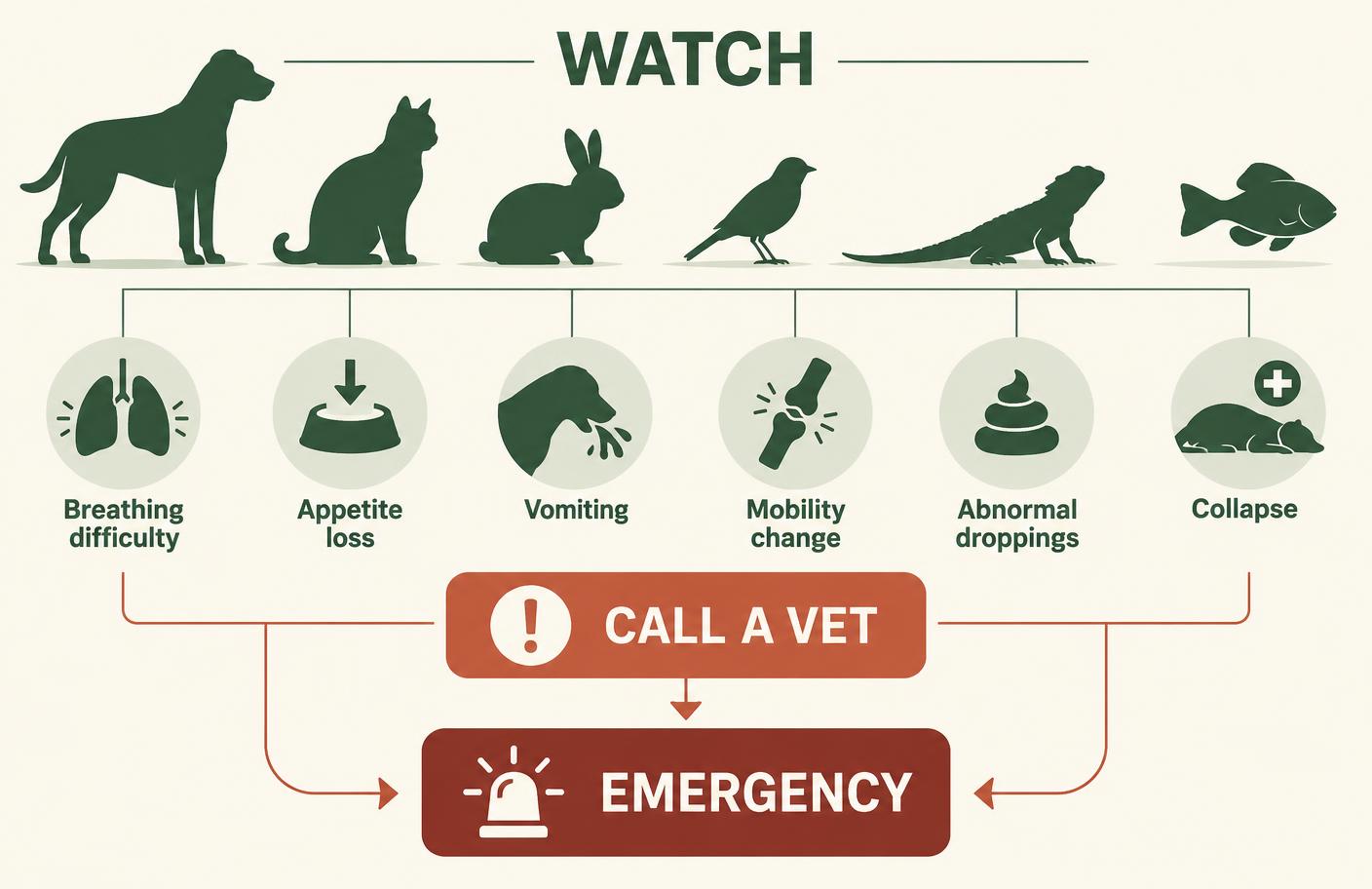
Signs to watch for
- Red or swollen foot pad
- Scab on the sole
- Lameness
- Reluctance to perch
- Holding one foot up
Causes and risk factors
Uniform or abrasive perches, obesity, inactivity, poor hygiene, nutritional imbalance and trauma increase pressure and allow infection.
How veterinarians diagnose it
An avian veterinarian examines both feet and overall husbandry; imaging and culture may be needed for deeper infection.
Treatment and management
Care can include pressure relief, perch changes, wound treatment, pain relief and targeted antibiotics. Home bandaging can worsen injury if applied incorrectly.
Prevention
Offer varied natural perches of suitable diameters, maintain hygiene, encourage movement and monitor weight and feet.
Outlook
Early superficial disease often resolves; deep bone or joint infection requires prolonged treatment.