
Emergencies
What to Put in a Pet First Aid Kit
A simple checklist for home and travel, and the first aid you should — and shouldn't — attempt.
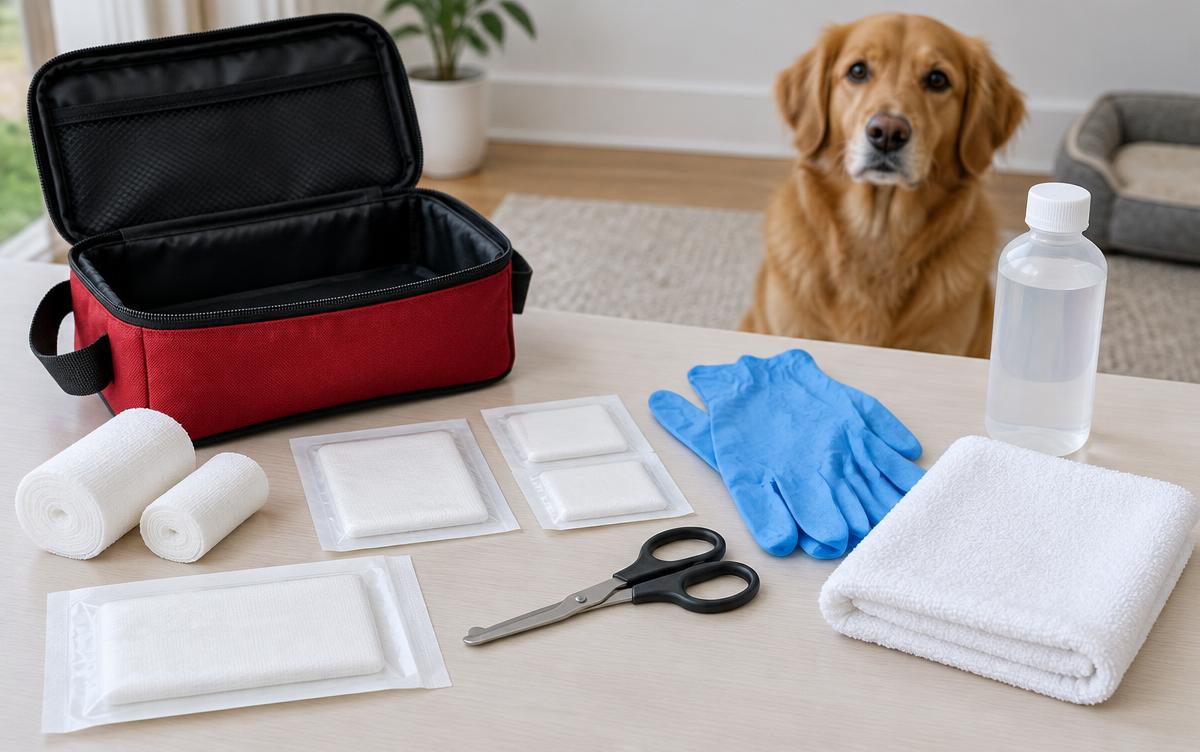
AI-generated editorial image; illustrative, not a clinical demonstration or documentary photograph.
Pack for temporary support and safe transport
| Kit group | Useful items |
|---|---|
| Contacts | Usual clinic, actual out-of-hours provider and transport plan. |
| Records | Medical conditions, current medicines and known allergies. |
| Clean supplies | Gloves, gauze, non-stick dressings and a clean towel. |
| Basic equipment | Blunt-ended scissors, tick tool and spare lead. |
| Transport | Blanket and a secure carrier suitable for the animal. |
A kit does not replace veterinary care. Do not give human medicines or induce vomiting unless a veterinarian specifically instructs you.
What a first aid kit is actually for
A pet first aid kit exists to stabilise an animal on the way to a vet, not to treat it at home. The most valuable items in it are often the least glamorous: your vet's phone number, the number of the nearest out-of-hours clinic, and a note of any medication your pet takes. Everything else buys time and prevents an injury from getting worse during transport.
Keep one kit at home and a smaller version in the car or with your walking gear. An injury is most likely to happen away from the hallway cupboard, and a kit you have to drive home to fetch is no kit at all.
The core contents
A sensible core kit covers wound care, restraint and transport. Buy from a pharmacy or pet supplier and check contents before you need them rather than discovering gaps beside an injured animal.
Gauze swabs, non-stick dressings and conforming bandage for covering wounds
Self-adhesive (cohesive) bandage that sticks to itself, not to fur — plus blunt-ended scissors
Saline solution for flushing eyes and dirty wounds; avoid hydrogen peroxide on open tissue
A digital thermometer and water-based lubricant (know your species' normal range before you need it)
Tick remover tool, tweezers, and a muzzle or soft tie — frightened, painful animals bite
A blanket or towel for warmth and improvised stretcher use, and a rigid carrier or box
Disposable gloves, a foil emergency blanket, and a written list of phone numbers
Species-specific additions
Cats need a towel large enough to wrap the whole animal securely and a carrier that opens from the top. Small mammals and birds chill quickly, so add a chemical heat pack wrapped in cloth. Rabbits and guinea pigs should never be given food after a period of not eating without veterinary advice — gut stasis is an emergency, not a reason to syringe-feed from the kit.
For dogs that hike or work, add a paw-safe bootee and extra bandaging; torn pads and grass seeds are the most common trail injuries. Whatever the species, never include human painkillers such as paracetamol or ibuprofen — they are dangerous to pets even in small doses.
Storage, checking and training
Store the kit somewhere cool, dry and memorable, and tell everyone in the household where it lives. Check it twice a year: saline and antiseptic expire, bandages lose elasticity, and phone numbers change. Replace anything used the same week, because the next emergency will not wait for a shopping trip.
A kit without skills is half a kit. A short pet first aid course — many charities and veterinary practices run them — teaches the two things that matter most: how to check breathing and circulation, and when to stop helping and start driving. Practice wrapping a towel around your own pet while it is calm and healthy.
Knowing the limits of first aid
First aid is the journey, not the destination. Difficulty breathing, collapse, seizures lasting more than a couple of minutes, suspected poisoning, bloat, a straining male cat unable to pass urine, uncontrolled bleeding and heatstroke are all 'phone ahead and travel now' situations, whatever the kit contains. Calling the clinic before you leave lets staff prepare and tells you whether moving the animal is safe.
For anything less dramatic, a covered wound, a muzzle for safety and a calm voice in the car are usually the whole job. If you find yourself wondering whether the situation is serious enough for a vet, that question is itself the answer: phone and ask.
Frequently asked questions
- Can I use a human first aid kit for my pet?
- Partly. Dressings, saline and scissors are shared, but human painkillers and many antiseptics are unsafe for animals. Keep a dedicated pet kit so nothing dangerous is within reach in a stressful moment.
- Should I keep hydrogen peroxide to make my dog vomit?
- No — do not induce vomiting unless a vet or poison service explicitly tells you to. For some poisons it causes more harm, and the dose and timing are not safe to guess.
- How tight should a bandage be?
- Snug enough to stay in place, loose enough to slide two fingers underneath. Check the limb below the bandage for swelling or coldness, and loosen it if either appears. Bandages are a transport measure, not a treatment.
- Is a muzzle really necessary for my gentle dog?
- Yes. Pain overrides training, and even the mildest animal may snap when an injured area is touched. A soft muzzle or a tie used as a temporary muzzle protects everyone, including the dog.
References
- Pet first aid: basic procedures — American Veterinary Medical Association
- Pet help and advice, including first aid — PDSA