
Seasonal care
Hot Weather Safety for Pets
Heatstroke kills quickly and is entirely preventable. Recognising the early signs and acting fast.
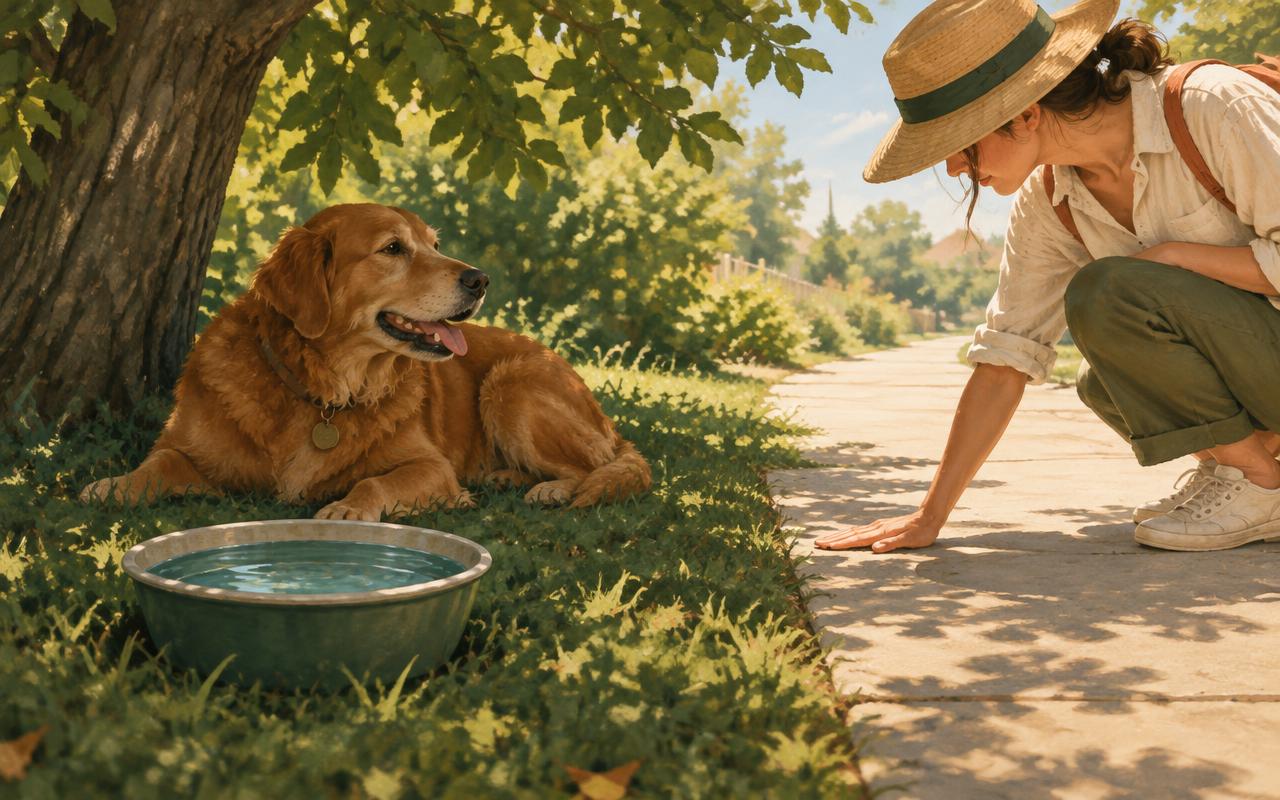
AI-generated editorial illustration of the subject; not a photograph of a specific animal, product or case.
Hot-weather checks by species
| Animal | Watch for |
|---|---|
| Dogs | Heavy or noisy panting and slowing down; shift walks to early morning or late evening. |
| Cats | Panting or drooling is abnormal; provide cool rooms and constant fresh water. |
| Rabbits and guinea pigs | Lethargy above roughly 25°C; check shade all day and rear ends for flystrike twice daily. |
| Birds, reptiles, fish | Overheating enclosures, open-beak breathing, gasping at the surface; verify thermometers and aeration. |
Caged and tank animals cannot move somewhere cooler — their safety in a heatwave is entirely the keeper's job.
Heat affects every species differently
Dogs overheat mainly through exercise and confinement; cats usually cope better but suffer in closed rooms and carriers; rabbits and guinea pigs are genuinely fragile above roughly 25°C because they cannot sweat and barely pant; birds are vulnerable to direct sun through glass; and reptiles and fish depend entirely on their enclosure temperatures staying in range. A single 'summer rule' for all pets does not exist — plan per species.
The common thread is that animals in hutches, cages, tanks and carriers cannot move themselves to somewhere cooler. Outdoor pets depend on you to notice that the shade has moved or the water has warmed.
Housing, shade and water
Walk the garden at midday and mid-afternoon to see where shade actually falls — a hutch shaded at 9am can be in full sun by 1pm. Provide shade that lasts all day, freeze water bottles wrapped in a towel for small mammals to lie against, and refresh drinking water at least twice daily: warm water is drunk less, which compounds the risk.
Indoors, close curtains on sun-facing rooms, and remember that upstairs rooms, conservatories and sheds heat fastest. Glass magnifies heat: an indoor cage or tank in a sunny window can overheat even on a mild day.
Exercise, travel and grooming
Shift dog walks to early morning and late evening, shorten them, and choose shaded routes on grass rather than pavement. Skip the car journey that is not essential, and never leave any animal in a parked vehicle. Rabbits and guinea pigs should not be expected to exercise in the heat of the day either — let them choose to rest.
Brushing out dead undercoat helps dogs, cats and rabbits shed excess insulation. Do not shave double-coated dogs without professional advice, and never wet-shave a rabbit. Long-haired rabbits and guinea pigs benefit from a careful tidy trim around the rear for hygiene, which also reduces flystrike risk.
Species-specific heat checks
Dogs: watch for heavy, noisy panting and reluctance to keep walking — see the heatstroke guide
Cats: restlessness, panting or drooling is abnormal in a cat and needs attention
Rabbits and guinea pigs: check twice daily; watch for lethargy, wet mouths and rapid breathing — and check rear ends for flystrike, which peaks in hot weather
Birds: wings held away from the body and open-beak breathing mean the bird is too hot
Reptiles and amphibians: verify the thermometer — a heatwave can push a vivarium above the safe maximum even with the heater off
Fish: warm water holds less oxygen; watch for gasping at the surface and add aeration
When hot weather becomes an emergency
Collapse, unresponsiveness, vomiting, seizures or obvious distress in the heat is an emergency for any species: move the animal somewhere cool, begin gentle cooling with cool (not iced) water where the species guide advises it, and phone a vet immediately. Small mammals and birds deteriorate extremely fast — do not wait to see whether they improve.
After any significant overheating episode, have the animal checked even if it appears to recover; internal damage can appear later. In prolonged heatwaves, ask your vet practice whether they offer specific advice for fragile species such as rabbits, guinea pigs and birds.
Frequently asked questions
- What temperature is too hot for a rabbit?
- Rabbits begin to struggle above roughly 25°C and heatstroke becomes a real risk in the high 20s, especially with humidity or direct sun. Provide shade, airflow and cool surfaces well before those temperatures.
- Is it safe to walk my dog at midday if it is only 21°C?
- Often yes for a fit dog on a shaded route, but humidity, still air, hard exercise and individual risk factors matter more than the number. Flat-faced, overweight, very young and elderly dogs need caution at lower temperatures.
- Should I put ice in my pet's water bowl?
- A few ice cubes are fine for most healthy animals that choose to drink or play with them. Do not force chilled water on an overheated, distressed animal — offer cool water and let it drink voluntarily.
- My fish tank is overheating in a heatwave — what can I do?
- Switch off the tank lights, remove the lid for airflow, float a sealed bag of ice or a frozen bottle to cool the water gradually, and add aeration. Avoid sudden large water changes with cold water, which can shock the fish.
References
- Heatstroke in pets — American Veterinary Medical Association
- Rabbit care and welfare — RSPCA