
Pogona vitticeps
Bearded Dragon
Bearded dragons are the most popular pet lizard for good reason: handleable, expressive and hardy when their heat and UVB needs are met precisely.
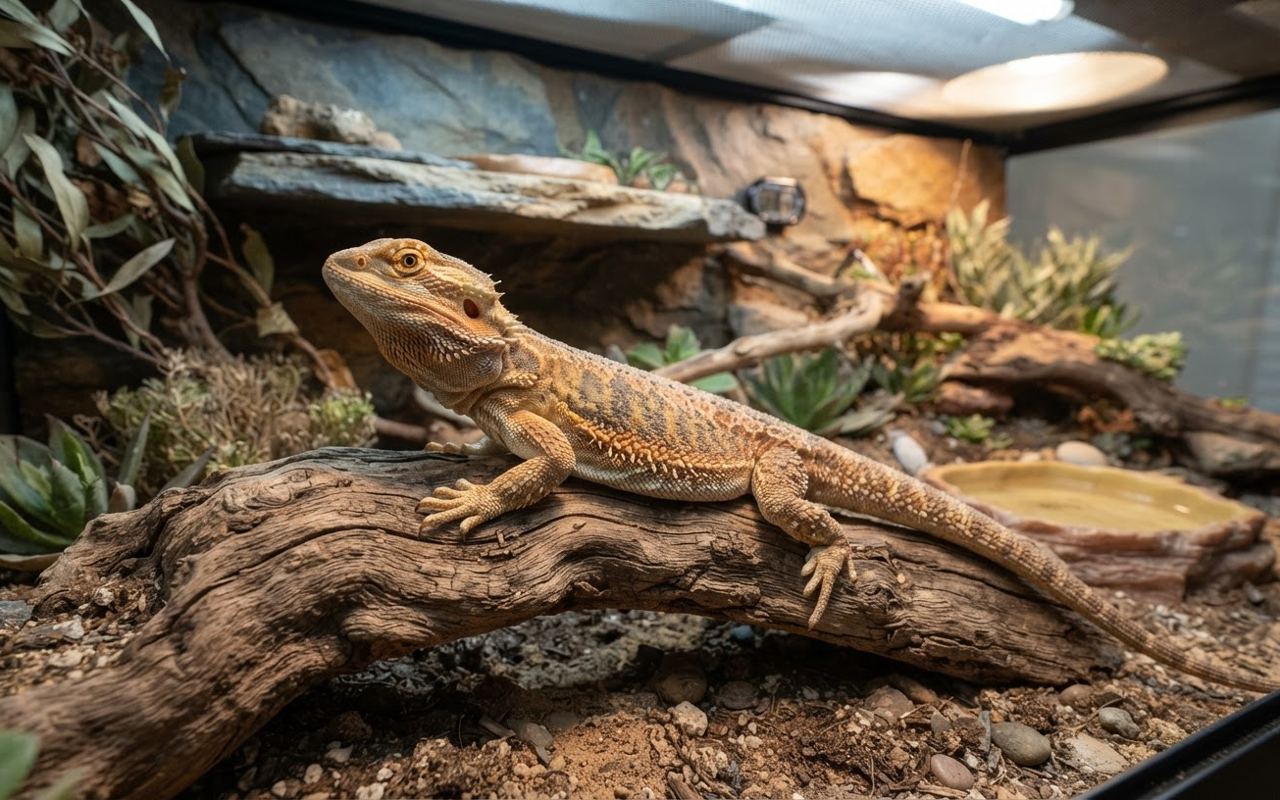
AI-generated editorial illustration of the subject; not a photograph of a specific animal, product or case.
At a glance
- Scientific name
- Pogona vitticeps
- Family
- Agamidae
- Origin
- Arid and semi-arid inland Australia
- Lifespan
- 8–15 years
- Adult size
- 45–60 cm including tail
- Weight
- 300–600 g
- Temperament
- Calm, tolerant of handling and interactive
- Activity level
- Diurnal and moderately active
- Social needs
- Solitary — never house two together
- Intelligence
- Capable of learning by imitation in laboratory studies
- Noise
- Silent
Housing and environment
- Housing
- Minimum 120 x 60 x 60 cm for an adult, with a proper thermal gradient
- Space requirement
- Floor space and basking height with clear hot and cool ends
- Temperature
- Basking surface 38–42°C, cool end 22–26°C, night 18–22°C
- Humidity
- 30–40%
- Exercise
- Daily supervised time outside the enclosure in a safe warm room
- Grooming
- Regular shed monitoring and occasional warm soaks
Life stages and changing needs
Expanded care guidance · Updated 7 October 2026 · Not professionally reviewed
Young animals and settling in
Juvenile bearded dragons need a diet higher in appropriately sized live insects than adults, alongside measured leafy greens, since rapid early growth has different protein needs. Provide a correctly specified UVB tube across most of the basking area from day one, since inadequate UVB in this life stage is strongly linked to metabolic bone disease. Handle gently and briefly at first to build tolerance without causing prolonged stress to a newly arrived animal.
Adult care and reproductive changes
Adults shift toward a more plant-based diet with a smaller proportion of insects, and overfeeding insects to an adult can cause obesity and liver strain. Sexually mature females can produce infertile eggs even without a male present; this can be nutritionally demanding and occasionally requires veterinary intervention if egg-binding occurs. Two bearded dragons should not be housed together long-term, since even apparently calm pairs can show hidden stress, resource competition or injury.
Later life and changing needs
Older bearded dragons remain reliant on a correctly functioning UVB tube, which must be replaced on the manufacturer's schedule even if it still produces visible light, since UVB output declines before the bulb visibly fails. Reduced appetite, dark bulging under the jaw unrelated to brumation signs, or sudden lethargy in an older animal should be assessed by a reptile vet rather than assumed to be a normal slowing of age.
Diet and feeding
Juveniles mainly insects with greens; adults mainly greens with insects two or three times weekly
Bearded dragons need a diet that shifts with age: juveniles eat proportionally more appropriately sized gut-loaded insects, while adults need more fibrous leafy greens and vegetables with insects as a smaller supplement. Dust feeder insects with calcium regularly and use a vitamin D3 supplement as advised, since correct supplementation works alongside UVB rather than replacing it. Avoid insects collected from the garden, which may carry pesticides or parasites, and never feed avocado or rhubarb leaves, which are toxic.
Offer food at a time that matches this diurnal species' active basking period, since a bearded dragon that is too cool will not digest food properly and can become seriously unwell. Remove uneaten insects from the enclosure, since loose crickets or mealworms can bite and distress the animal overnight. A persistent refusal to eat, alongside darkened beard colour and lethargy, needs a reptile-vet check rather than being treated solely as a sign of upcoming brumation.
Daily care and ongoing checks
Every day
Check basking and cool-zone temperatures with a reliable thermometer every day, since an incorrect gradient affects digestion and immune function, not just comfort. Replace water and check UVB tube function, noting the replacement date, since this is the single most important preventive measure against metabolic bone disease in this species. Observe activity, basking behaviour and faecal output for early signs of illness.
Regular maintenance and prevention
Offer supervised out-of-enclosure time in a warm, secure and hazard-free space if desired, and inspect toes and tail tip for shed retention or injury. Clean substrate and furnishings regularly to limit bacterial buildup, and quarantine any new reptile completely separately before introduction to existing animals. Keep a written log of weight, shed cycles and feeding to help a reptile vet identify subtle downward trends early.
Behaviour and compatibility
Basking, arm-waving, beard darkening and brumation in cooler months
- With children
- One of the better reptiles for supervised family keeping
- With other animals
- House alone
- Training difficulty
- Low — tolerates handling and target training
Health
- Metabolic bone disease
- Impaction
- Atadenovirus
- Mouth rot
- Yellow fungus disease
Needs a reptile vet, correct UVB and calcium supplementation from the start
Special care requirements
Replace UVB tubes every six to twelve months even though they still emit visible light
UVB maintenance and age-appropriate diet ratios
Bearded dragons need a correctly specified UVB tube replaced on the manufacturer's schedule, since output declines before the bulb visibly fails; inadequate UVB is strongly linked to metabolic bone disease in this species. Diet ratios shift with age, with juveniles needing proportionally more insects and adults needing more fibrous vegetables.
Two bearded dragons should not be housed together long-term, since even apparently calm pairs can hide stress or resource competition. Limb swelling, a soft jaw or sudden lethargy needs a reptile-vet assessment rather than being dismissed as normal slowing with age.
Before you take one on
Sources and further guidance
These welfare and veterinary resources inform general husbandry advice; they do not certify this profile or replace a species-experienced professional. Confirm exact environmental settings and feeding plans for your animal.
Quick answers
- How long do bearded dragons live?
- With correct heating, UVB lighting and diet, bearded dragons commonly live 8–12 years in captivity, and some reach 15. Poor UVB and an unbalanced diet are the most common reasons they develop metabolic bone disease and die young. RSPCA bearded dragon care
- What do bearded dragons eat?
- Bearded dragons are omnivores. Adults eat mostly leafy greens and vegetables with insects such as crickets and dubia roaches a few times a week; juveniles need insects daily. Food should be dusted with calcium, and a UVB lamp is essential so they can use it. RSPCA bearded dragon care
Can your home meet bearded dragon needs?
- Plan for a lifespan of 8–15 years, including holiday cover and, where one is available, a vet familiar with this species. Lifespan ranges are not guarantees.
- Arrange the social setting before arrival. Social guidance for this species: Solitary — never house two together. Do not assume another animal of any species is a suitable companion.
- Habitat priority for this species: Floor space and basking height with clear hot and cool ends. Make sure your setup can provide this consistently. Measure temperatures and humidity with thermometers and a hygrometer rather than guessing.
- Key care point: Replace UVB tubes every six to twelve months even though they still emit visible light. Discuss diet and any specialist needs with the supplier, rescue and a vet who treats this species, and check local legal requirements before acquiring an animal.
Educational reference, not an individual diagnosis or a verified professional review. Read our editorial policy.
Guidance libraries and further reading
These organisations publish relevant guidance. Their links are further reading, not evidence that they have reviewed this page.
Related reading
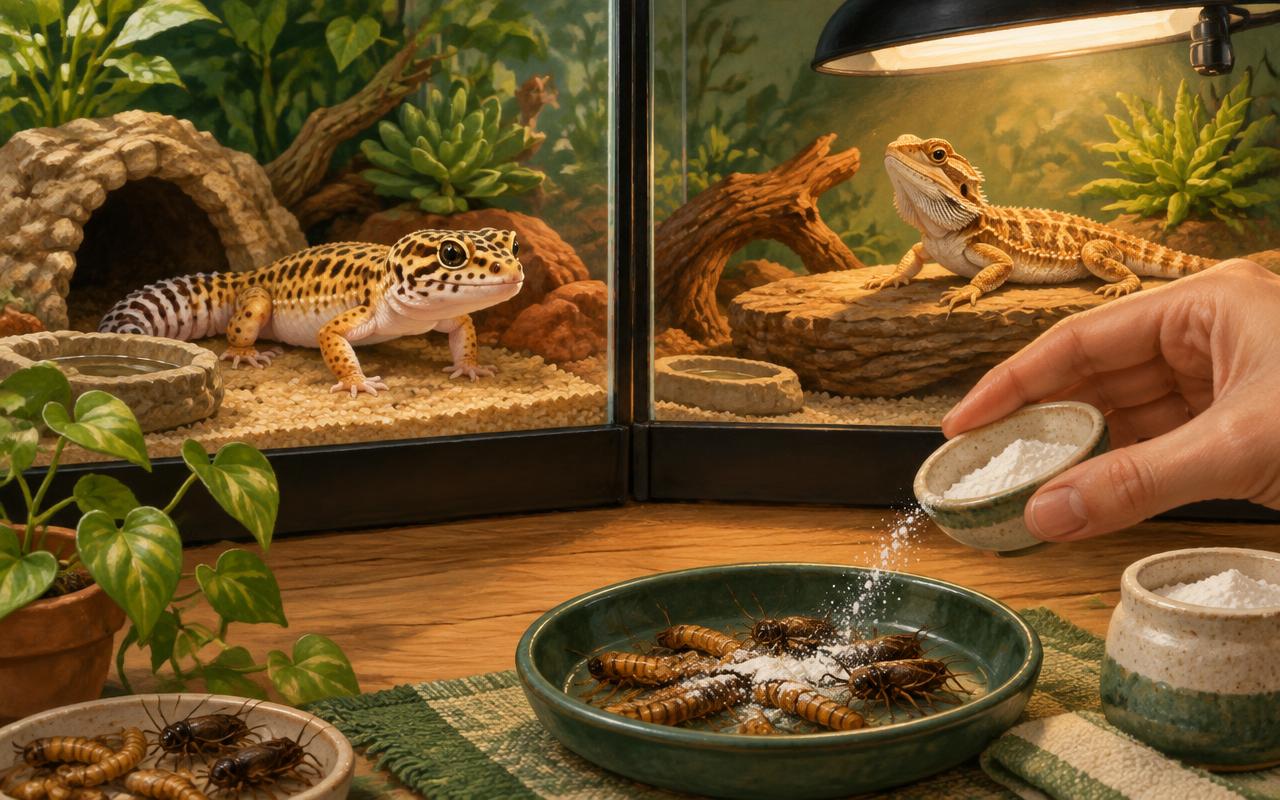 Reptile health
Metabolic Bone Disease in Reptiles
The most common husbandry-related illness in captive reptiles, and how correct lighting and diet prevent it.
Petarium Editorial · 4 min read · Updated 2026-10-07
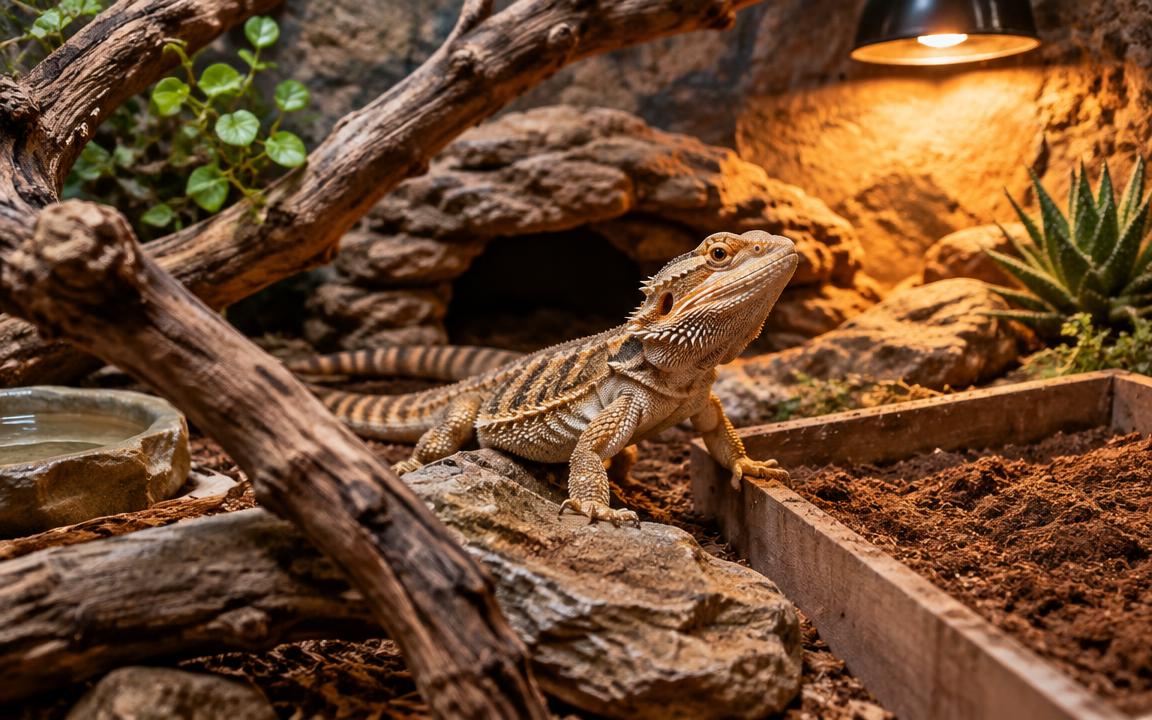 Exotic pets
Enrichment for Bearded Dragons
Simple ways to give a bearded dragon more choice, exercise and natural behaviour.
Petarium Editorial · 3 min read · Updated 2026-10-07