
Aquarium husbandry
Quarantining New Fish Before Adding Them to an Established Tank
Run a proper quarantine period to protect existing fish from disease, with practical setup, monitoring and timing guidance.
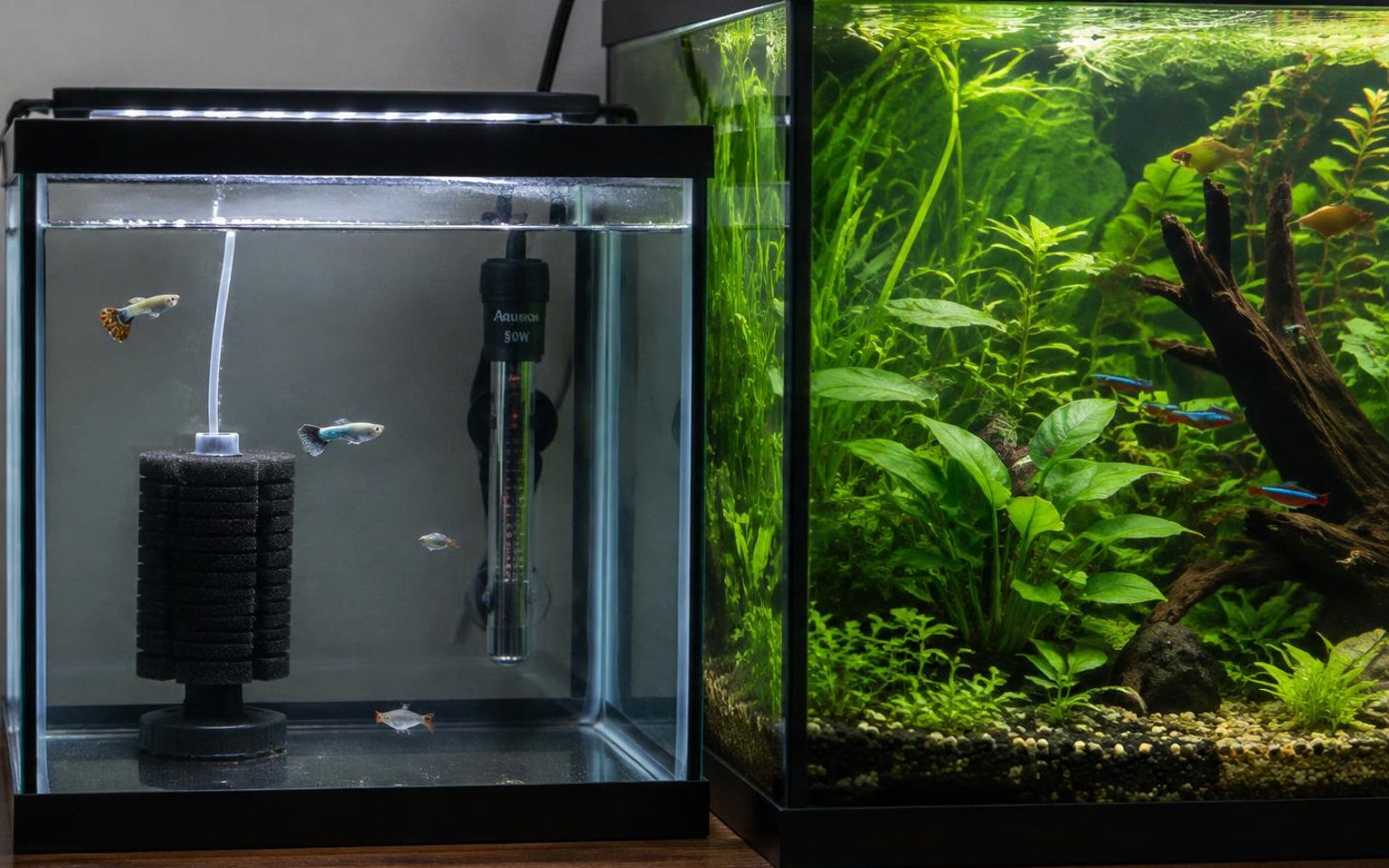
AI-generated editorial image; illustrative, not a clinical demonstration or documentary photograph.
Why quarantine matters even for healthy-looking fish
Newly purchased fish can carry parasites, bacterial infections or other pathogens without showing obvious symptoms immediately after transport stress, and introducing them directly into an established tank risks the whole existing population. Quarantine gives time for latent problems to surface in a controlled, separate setting.
This applies to fish from any source, including reputable shops, because stress from transport and mixed holding tanks increases disease risk regardless of where a fish was purchased. Plants, substrate and decorations moved from another tank can also carry pathogens or hitchhiking pests.
Set up a simple, functional quarantine tank
A bare-bottom quarantine tank with a sponge filter, heater matched to the species' needs and simple hiding spots, such as a short length of pipe, is usually sufficient; elaborate decor is not necessary and makes cleaning and observation harder. Cycle the quarantine filter in advance where practical, or plan for more frequent water changes to manage ammonia during an uncycled quarantine period.
Keep quarantine equipment, including nets and buckets, entirely separate from your main tank's equipment, or disinfect thoroughly between uses, to avoid cross-contaminating your established system while monitoring the new arrivals.
Typical quarantine duration and monitoring
A commonly recommended quarantine period is around two to four weeks, though some keepers and sources suggest longer for certain higher-risk species or sources; check species-specific guidance where available. Observe feeding response, breathing rate, colouration, fins and any visible spots, lesions or unusual behaviour daily.
Test water parameters regularly throughout the quarantine period, since a fish under stress is more sensitive to poor water quality, and problems can compound quickly in a smaller, uncycled tank.
- Observe feeding behaviour daily
- Check fins, gills and skin for abnormalities
- Test ammonia, nitrite and nitrate regularly
- Maintain stable, species-appropriate temperature
- Avoid introducing to the main tank at the first sign of illness
Respond appropriately if illness appears
If signs of illness appear during quarantine, treat within the quarantine tank rather than the main display, which both protects established fish and avoids dosing medication into a tank with beneficial bacteria, plants or invertebrates that could be harmed. Identify the likely problem as specifically as you can, or seek advice from an experienced aquatic vet or knowledgeable fish health resource, before choosing a treatment.
Extend the quarantine period if any new symptoms appear, restarting the observation window from the point symptoms resolve rather than the original start date, to ensure the fish is genuinely stable before introduction.
Transition to the main tank carefully
Once the quarantine period is complete without any signs of illness, acclimatise the fish to the main tank's water temperature and chemistry gradually, using a drip acclimation method for sensitive species or significant parameter differences.
Continue watching the newly introduced fish and the existing population closely for the first week or two after transfer, since some problems can still take time to appear. Maintaining a consistent quarantine habit for every new addition, including plants where relevant, is one of the most effective ways to protect long-term tank health.
Frequently asked questions
- Do I need to quarantine fish bought from a trusted shop?
- Yes. Even healthy-looking fish from reputable sources can carry pathogens that surface under the stress of transport, so quarantine remains worthwhile regardless of source.
- How long should quarantine last?
- A commonly used guideline is two to four weeks of symptom-free observation, though some sources recommend longer for higher-risk species; restart the clock if new symptoms appear.
- Can I quarantine new plants and decorations too?
- Yes, a plant-only quarantine period or a thorough rinse and inspection can reduce the risk of introducing pests, parasites or algae along with new greenery.
- Is a basic sponge filter and heater enough for a quarantine tank?
- Yes, a simple setup with a sponge filter, appropriate heater and basic hiding spot is usually sufficient; the priority is easy cleaning and close observation, not elaborate decoration.
References
- Quarantine procedures for new fish — PetMAC / fish health extension guidance
- Fish health and disease prevention — World Organisation for Animal Health (WOAH)