
Emergency planning
Pet Disaster Planning for Medical and Exotic Needs
Prepare evacuation supplies, treatment records and species-specific backup plans before flooding, fires or power cuts happen.
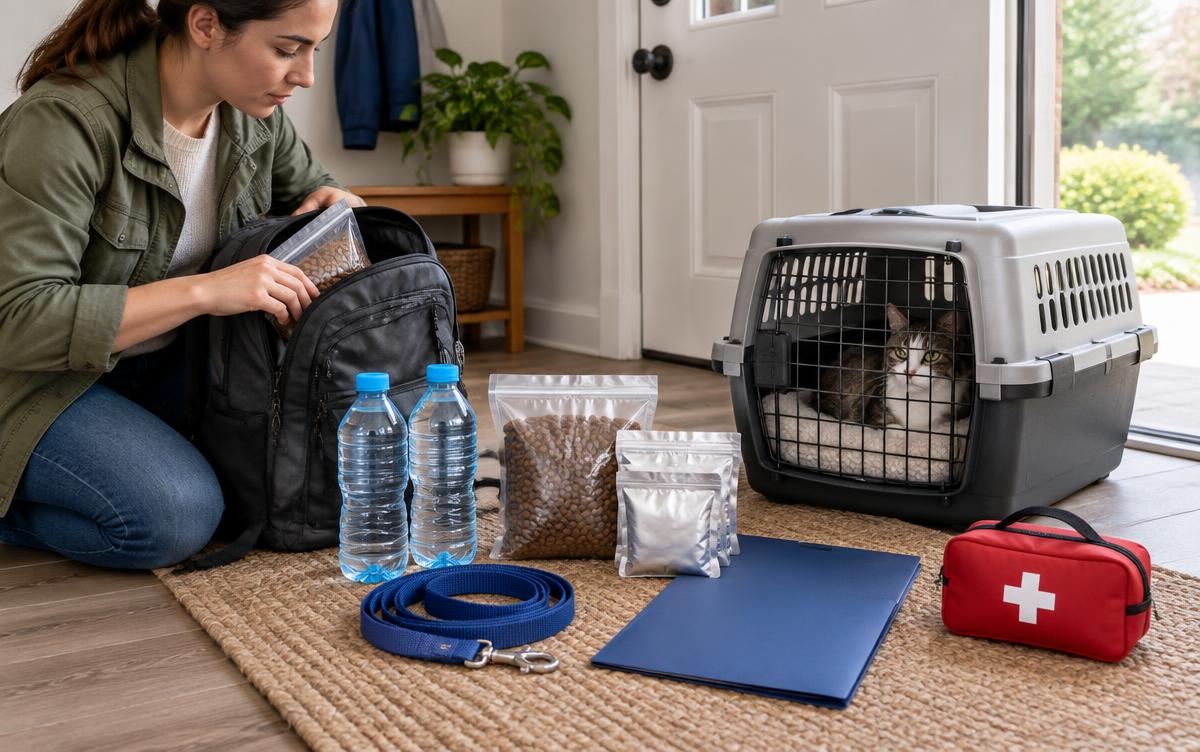
AI-generated editorial image; illustrative, not a clinical demonstration or documentary photograph.
Make an evacuation plan before an alert
Find out which local evacuation centres accept animals and identify alternative accommodation. Many ordinary emergency shelters cannot meet every animal's needs. Write down at least two options, including an out-of-area contact, and check their policies directly.
Assign one adult to each carrier or enclosure and agree where the household will meet. Keep carriers accessible rather than buried in a loft. Practise placing animals inside calmly using rewards; the first attempt should not happen beside a smoke alarm.
Build a portable care record
Keep copies of vaccination records, current medicines, veterinary contacts, ownership details and clear recent photographs in a waterproof folder. Record each animal's normal diet, allergies and handling needs. Store a second copy somewhere you can access away from home.
Check microchip registration details, including the phone number. A chip is an identifier, not a GPS tracker. A collar tag can provide a quicker contact route where safe and appropriate for the species.
- Regular and out-of-hours veterinary numbers
- Medicine name, prescribed dose and schedule
- Carrier labels with contact details
- Backup carer familiar with the animal
- Destination and alternative destination
Ask the vet about medicine continuity
Ask your veterinary team how to maintain an emergency supply of prescribed treatment within local rules. Some medicines need temperature control, special storage or a consistent schedule. Obtain a written plan for power failures and delayed travel rather than guessing or substituting human medicines.
An animal needing oxygen, frequent injections or specialist feeding may require a veterinary destination rather than a general shelter. Do not stop or double a dose to compensate for disruption without professional advice.
Prepare for species-specific environmental needs
Reptiles may need a planned source of safe heat during transport, while aquariums depend on water quality, oxygenation and functioning equipment. Discuss suitable transport containers and backup systems with an experienced veterinary team or knowledgeable species specialist. Never improvise an unregulated heat source against an animal's body.
Birds and small mammals need escape-proof, ventilated carriers, familiar food and protection from fumes. Keep predator and prey species separated. Aquarium transport is not interchangeable with dog or cat evacuation; moving an established tank may require a separate plan.
Pack and review the kit
AVMA guidance recommends an emergency supply of food and water alongside the animal's care records. Adjust the amount for local disaster planning advice, household size, the animal's needs and what you can transport. Include bowls, cleaning supplies, bedding and safe restraint equipment.
Review the kit after any medicine change and replace used or out-of-date supplies. During an emergency, leave early when advised and do not return to a hazardous area to retrieve possessions. Tell responders about animals left behind rather than putting yourself at risk.
Frequently asked questions
- Can my pet come to an evacuation shelter?
- Policies vary. Confirm local arrangements in advance and identify pet-friendly alternatives, especially for exotic species or animals with complex treatment needs.
- Should I change medicines during evacuation?
- No. Follow the prescribed plan and ask the veterinary team about missed doses, refrigeration or shortages.
References
- Pets and disasters — American Veterinary Medical Association